Choosing the best rug for a dining room sounds simple…until you actually live with one. Chairs scrape the rug. Spills happen. Rugs can bunch or catch when you push a chair back. And suddenly the rug that looked perfect online becomes the most annoying thing in the room.
Here’s the truth most people don’t hear:
The right dining room rug makes your room feel grounded, finished, and intentional. The wrong one becomes a daily frustration you quietly regret.
This isn’t a post about trends or what looks good in styled photos. It’s about what actually works in real homes.
Designers choose dining room rugs differently than living room rugs, and once you understand why, the decision gets a whole lot easier.

The #1 Rule for Dining Room Rugs (Most People Get This Wrong)
Size Comes Before Style
If there’s one thing you take away from this post, let it be this:
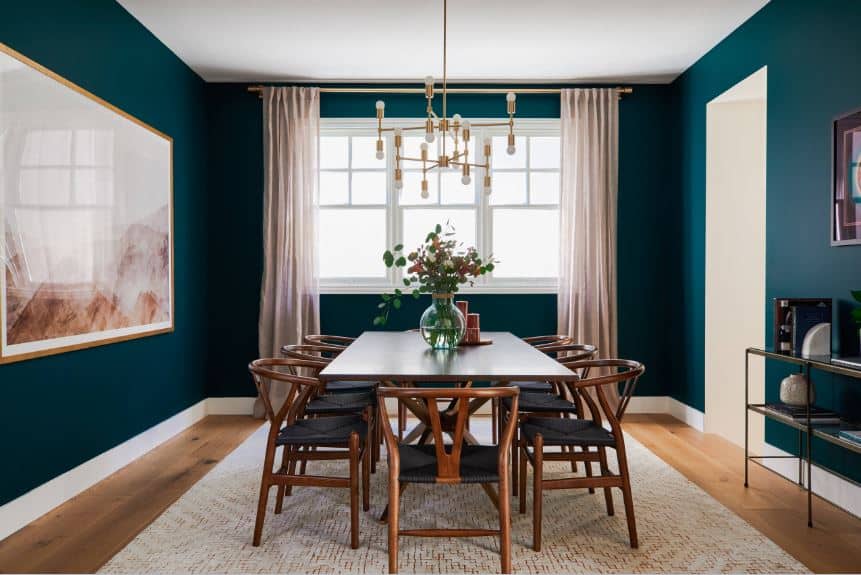
A dining room rug must fit the table and the chairs—when they’re pulled out.
Not “almost.”
Not “most of the time.”
Always.
If chairs catch on the rug edge, the rug is too small. Period.
This is the most common mistake I see, and it’s also the reason so many people think they “hate rugs under dining tables.” They don’t hate rugs. They hate rugs that fight their furniture, and rugs that are hard to clean.
Dining Room Area Rug Size Guidelines (Simple + Practical)
When choosing a new rug under a dining table, use these rules to ensure you buy the right rug size for your space:
- The rug should extend 24–30 inches beyond the table on all sides
- All chair legs should stay on the rug when chairs are tucked in AND when chairs are pulled back and someone is seated.

Common Table → Rug Size Pairings
- 4–6 person rectangular table (up to 72″ long) → 8′ × 10′ rectangular rug
- 6–8 person table (greater than 84″ long) → 9′ × 12′ rug
- Round table (48–54″ diameter) → 8′ round rug
If your chairs fall off the rug when you pull them out, or catch when you pull them in, the rug isn’t “almost right.” It’s the wrong size, and it will never stop bothering you.
Rug Shape: Match the Table (and Keep It Simple)
When it comes to dining room rug shape, this is one area where simple rules actually work best.
In most cases, your rug should mirror the shape of your table. This keeps the layout visually balanced and prevents awkward overhangs or tight corners where chairs catch.
Here’s the designer shorthand:
- Rectangular tables → Rectangular rug
The most common (and forgiving) option. Easy to size correctly and works well in both closed dining rooms and open-concept spaces. - Round tables → Round rug
Creates a clean, intentional look and allows chairs to move evenly in all directions. Make sure the rug is large enough (round rugs feel too small very quickly). - Square tables → Square or round rug
If you have a square table, the best option is a square rug. Square rugs feel structured and tailored. Round rugs could soften the space and work well if the room feels boxy.
What to avoid:
- Oval rugs (harder to size correctly and often feel dated)
- Forcing a round rug under a rectangular table (chairs almost always catch)
Designer rule of thumb:
If the rug shape fights the table shape, the room will always feel a little “off”, even if you can’t quite explain why.

Best Rug Materials for Dining Rooms
When it comes to your dining room rug material, durability and maintenance matter more than softness or trendiness. Here’s how designers really think about it.
Wool
Pros
- Naturally stain resistant
- Durable and resilient
- Classic, timeless look
Cons
- Higher upfront cost
- Some initial shedding
Wool Rugs are Best for:
A formal or semi-formal dining space that gets regular use and where you want longevity.
Flatweave (Cotton, Wool, or Blends)
Pros
- Chairs slide easily (huge win)
- Low profile, which is ideal for dining rooms
- Often more affordable
Cons
- Less cushioning
- Can show wear sooner than thicker rugs
Best for:
Everyday dining rooms, open-concept homes, families who actually use their table.
Synthetic (Polypropylene, PET, Performance Fibers)
Pros
- Highly stain resistant
- Budget-friendly
- Easy to clean
Cons
- Quality varies a lot
- Can feel less substantial if poorly made
Synthetic Fibers are Best for:
Homes with kids, pets, frequent spills, or anyone who wants low stress.
Natural Fibers (Jute, Sisal, Seagrass)
Here’s the honest designer take.
Pros
- Beautiful texture
- Timeless, neutral look
Cons
- Stain easily
- Chairs don’t slide well
- Can snag, fray, or feel rough under chairs
Designer honesty moment:
These are beautiful, but often impractical for dining rooms unless the space is lightly used. They photograph well. They don’t always live well.

Carpet Tiles & Rug Squares: A Smart (and Underrated) Dining Room Option
If you’ve ever wished your dining room rug could survive spills without stressing you out, carpet tiles (also called rug squares) are worth a serious look.
Brands like Flor allow you to create a custom-size rug using individual tiles that lock together. From a design standpoint, they function like an area rug, but with a lot more flexibility.
Why Carpet Tiles Work Surprisingly Well in Dining Rooms
From a function-first perspective (which is how designers evaluate dining room rugs), carpet tiles solve several common pain points:
- Easy replacement
If one tile gets stained or damaged, you can replace just that tile instead of the entire rug. - Custom sizing
You can build the exact dimensions your table needs, which is especially helpful for large tables, awkward room layouts, and open-concept dining spaces. - Low-profile construction
Most carpet tiles are flat and dense, making chair movement easier than on thick, plush rugs. - Durable, performance materials
Many tiles are designed for commercial or high-traffic spaces, so spills and wear are less of a concern.

Design Considerations (So It Still Looks Intentional)
Carpet tiles work best when they’re treated like a designed surface, not a temporary fix. Here’s a few designer tips:
- Stick to subtle patterns or textured solids rather than busy graphics.
- Choose neutral or tonal colorways that won’t compete with your table or chairs.
- Use a clean, rectangular layout that aligns with your table shape.
When done well, carpet tiles read as modern dining room rugs (especially in contemporary or transitional homes).
When Carpet Tiles Might Not Be the Best Choice
They’re not for everyone. You may want to skip carpet tiles if:
- You love the look of vintage or traditional rugs
- You want visible fringe or a soft, layered aesthetic
- Your dining room is more formal and lightly used
Designer honesty:
Carpet tiles lean practical first, decorative second. But in the right home design, that’s exactly the point.
Chair Clearance & Pile Height (The Silent Dealbreaker)
This matters more in dining rooms than anywhere else. The best pile height for dining rooms is low-pile or flatweave.
You’ll want to avoid thick shag or plush, high-pile rugs under your dining table. Why? Because your dining chairs will catch instead of glide, and your chair legs can permanently dent your rug.
If your dining chairs can’t move smoothly, the rug will become a daily irritation…no matter how pretty it looks.

Pattern vs. Solid: What Actually Hides Messes
This is where designer experience really comes in.
Solid Rugs
- Clean and timeless
- Show crumbs, stains, and chair marks easily
Patterned Rugs
- More forgiving
- Better at hiding spills and wear
- Age better in high-use spaces
Designer guidance:
In dining rooms, a patterned rug almost always works better and lasts longer than a solid rug.

Maintenance & Real-Life Cleaning Considerations
If you want an easy-to-clean dining room rug, here’s what you need to keep in mind:
What to Look For
- Tight weave
- Low pile
- Some color variation
- Natural or treated stain resistance
What to Avoid
- Very light solid colors
- Loose loops
- Heavy texture under chairs

Washable Rugs: Are They Worth It?
Washable rugs, like ones from Ruggable, have become a popular choice in recent years. But, are they worth it for dining rooms? Let’s talk about the pros and cons.
Pros
- Easy cleanup (usually machine washable)
- Helpful for families with kids and pets
Cons
- Often thinner
- Difficult to vacuum because they’re so thin
- Can wrinkle or curl
- Not always large enough for dining tables
Designer take:
Washable rugs can be a good solution in the right space, but they’re not a cure-all.

Should You Use a Rug Pad Under a Dining Room Rug?
Yes. Always. Rug pads are a great way to protect your floors and keep your dining table rugs from slipping at the edges.
Choose a rug pad that is thin, firm, and non-slip.
Why it matters:
- Prevents shifting
- Protects floors
- Extends the life of the rug
Skip the cushy pad here. Dining rooms need stability, not cushiony bounce.
My Go-To Dining Room Rugs (That Hold Up in Real Life)
After years of designing dining rooms, and seeing how rugs actually perform once the chairs start sliding and real life kicks in, there are a few very clear winners when it comes to dining room rugs.
Rather than endlessly scrolling or guessing, I encourage clients to start with proven categories that work well in high-use dining spaces. These are the types of rugs I come back to again and again because they balance function, longevity, and style.
If you want to skip trial-and-error, this is a good place to focus your search.
Dining Room Rug Styles I Consistently Recommend
These aren’t trend-driven picks…they’re reliable, real-life-friendly options that perform well over time.
Low-pile or flatweave rugs
This is my top recommendation for most dining rooms. Chairs slide easily, crumbs don’t disappear into the fibers, and the rug keeps its shape. If you eat at your dining table regularly, this style will make your life easier. Here are a few top picks:

- Loloi Layla Collection LAY-03 Olive/Charcoal Rug
- Lulu and Georgia Keziah Flatweave Jute-Blend Rug
- Annie Selke Malta Handwoven Wool Rug
Wool rugs with subtle pattern
Wool is naturally durable and more forgiving than people expect. I look for soft pattern or color variation rather than solids, because it hides wear and minor spills much better and tends to age more gracefully. Here are a few designer favorites:

- Pottery Barn Kendall Hand-Knotted Wool Rug
- Pottery Barn Nicolette Hand-Knotted Wool Rug
- West Elm Cozy Striped Wool Rug
Performance or indoor/outdoor rugs
If spills are frequent (kids, pets, entertaining), these can be a smart solution. Many newer options look surprisingly refined and are much easier to maintain than traditional rugs. These are some of the best indoor/outdoor rugs for a dining room:

- Annie Selke Diamond Handwoven Indoor/Outdoor Rug
- Jaipur Living Tejal Gethin Grey (TEJ-06) Indoor/Outdoor Area Rug
- Amber Lewis x Loloi Indoor / Outdoor Topanga Natural / Bone Area Rug
Designer perspective:
If a rug feels difficult to live with, it’s not the right rug for a dining room…no matter how beautiful it looks online. Function should always comes first here.
The Rug Pad I Use Under Dining Room Rugs (This Matters More Than You Think)
A good rug pad makes a bigger difference in a dining room than almost anywhere else in the house. I’ve seen beautiful rugs feel awkward, unstable, or annoying simply because the wrong pad was underneath them.

What I Look for in a Dining Room Rug Pad
When I’m specifying rug pads for dining spaces, I always choose one that’s:
- Thin and firm (not cushy) – Soft pads make chairs harder to move and can cause wobbling under the table.
- Non-slip – This keeps the rug from creeping as chairs slide in and out.
- Cut slightly smaller than the rug – This keeps edges clean and prevents the pad from peeking out.
A quality rug pad protects your floors, extends the life of your rug, and (most importantly) makes the whole dining setup feel solid and intentional. If you’re investing in a dining room rug, pairing it with the right pad is one of those small decisions that pays off every single day.
Here are a few of my favorite rug pads for dining room rugs:
- Wayfair Basics® Non-Slip Rug Pad 1/4″
- Mohawk Home Non Slip Dual Surface Felted Rug Pad
- Durahold Plus Rug Pad
Putting It All Together: A Designer Shortlist
If you’re deciding between options, here’s how designers narrow it down to choose the perfect rug:
- Correct size comes first
- Low-pile or flatweave construction
- Durable material
- Subtle pattern for everyday use
When in doubt, choose function over trends. Your future self will thank you every time you pull out a chair.
For more pro tips, check out my post on dining room decorating.
For more of my favorite rugs, check out my Area Rugs shop page.
A Final Thought (And Your Next Steps)
If choosing things like rugs, paint colors, or furniture feels harder than it should, it’s usually not because you’re bad at decorating. It’s because decisions are happening in the wrong order.
That’s exactly what I teach homeowners…how to follow clear steps and make design choices in a way that creates clarity instead of second-guessing.
If you want help getting unstuck:
- You can watch my free training that explains why decorating feels so confusing, and what actually works instead
- Or you can book a Design Clarity Session, and we’ll talk through your space and next steps together
Either way, you don’t have to figure it all out alone.
* This post contains affiliate links for your shopping convenience. See my full privacy policy for details.