
Decorating your home should feel exciting and fun. But for many of us, it feels paralyzing and stressful. The thought of choosing the “wrong” sofa, paint color, or rug can trigger serious anxiety. After all, this is your home! You want to get it right. If you’ve been stressing, here are some designer tips to help you avoid making decorating mistakes you’ll regret.

Why So Many of Us Get Stuck
When you’re spending real money and living with your choices every day, it’s no wonder we second-guess ourselves. You might worry about:
- Picking furniture that is the wrong size for the room
- Choosing colors that don’t work together
- Committing to a style or trend you’ll regret in a year
- Wasting money on something you won’t love long-term
So, you scroll Pinterest and Instagram, fill up shopping carts online, and then…close the tab. You don’t want to make the wrong move, so you make no move at all. That’s where a little expert guidance, and a simple process, can make a huge difference.

Most Common Decorating Mistakes (And What You Can Learn From Them)
Here are a few home decorating slip-ups I see people make all the time, and how to avoid them:
1. Decorating Without a Plan
Hands down, this is the #1 mistake I see. I know it’s tempting to dive in and start shopping, but without a plan, you’re more likely to end up with a mismatched style in your room, furniture that doesn’t fit, or a space that just doesn’t feel right. A plan gives you confidence to go out and buy exactly what your room needs, helping you avoid returns and costly do-overs.

2. Choosing Rugs and Art That Are Too Small
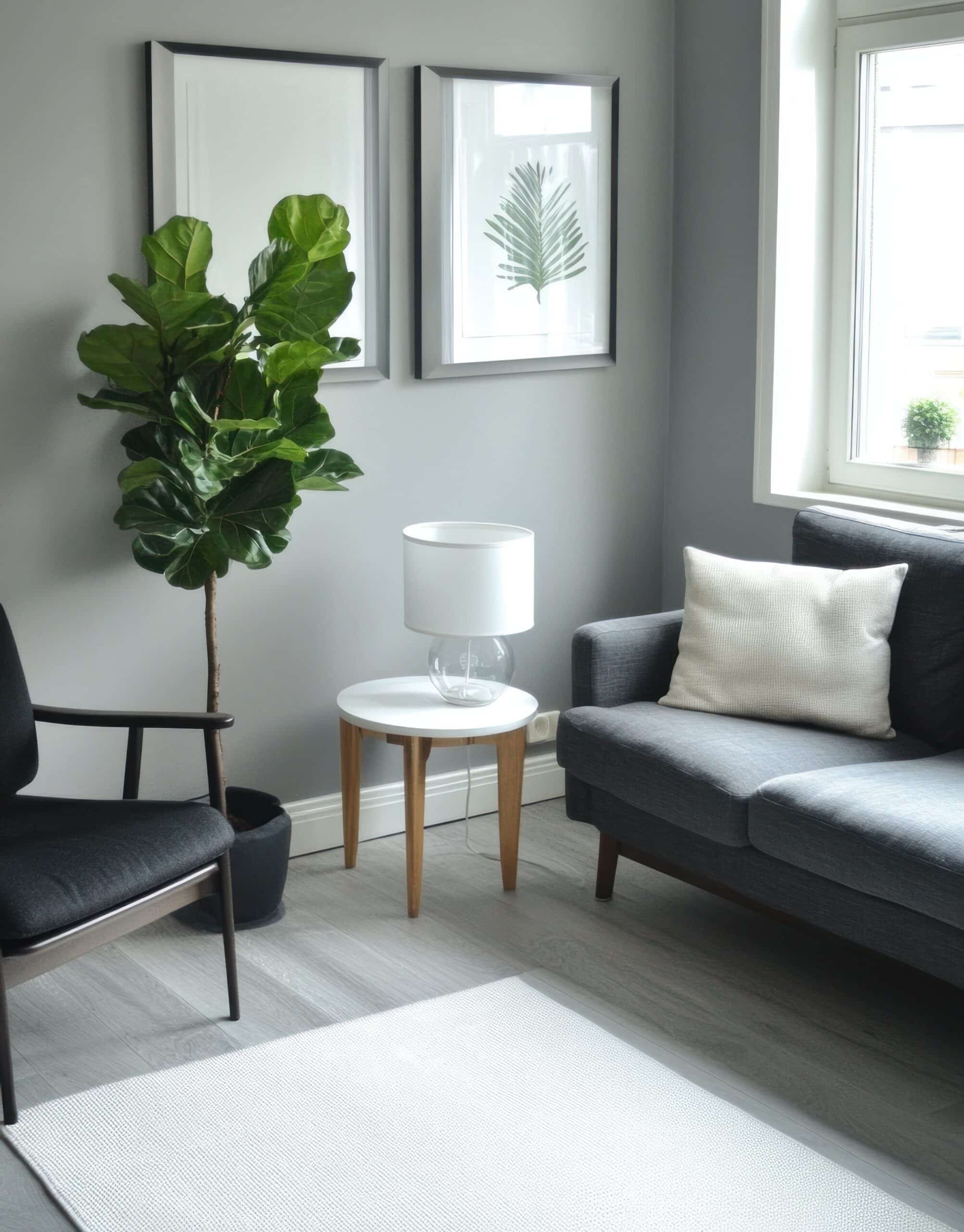
Size matters! Rugs that are too small for the furniture, or artwork that floats too high or too small on the wall, make a room feel off-balance. One of my clients bought a 5×7 rug for her living room. and It made the space feel tiny and disconnected. We upsized to an 8×10 that fit all the furniture, and just like that, the room felt so much better.
Pro Tip: Measure your room and walls first, than buy the right size artwork and rugs for your space. In this case, bigger is usually better!
3. Skipping a Set Color Scheme
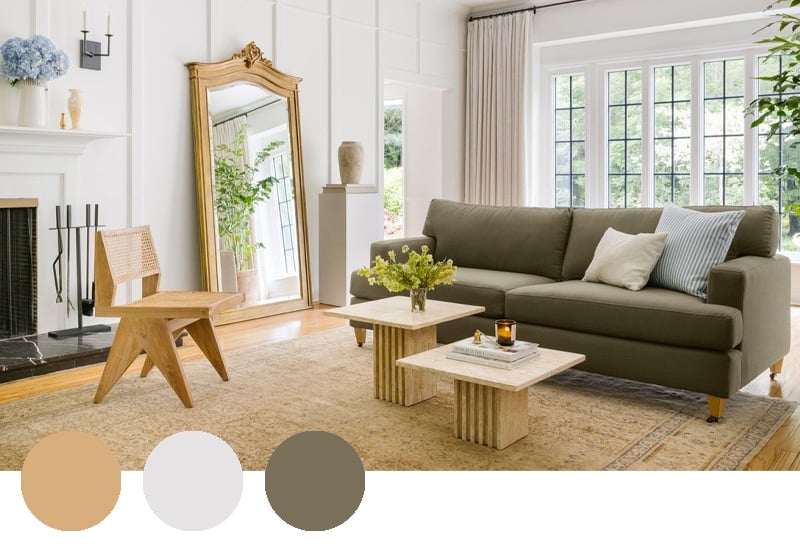
A clear color palette is one of the easiest ways to make your room feel more pulled together. Without it, things start to look disjointed, even if each piece is beautiful on its own. Choose 3–4 colors and repeat them throughout the room for a more polished, cohesive look.
4. Buying Furniture That is Too Big or Too Small
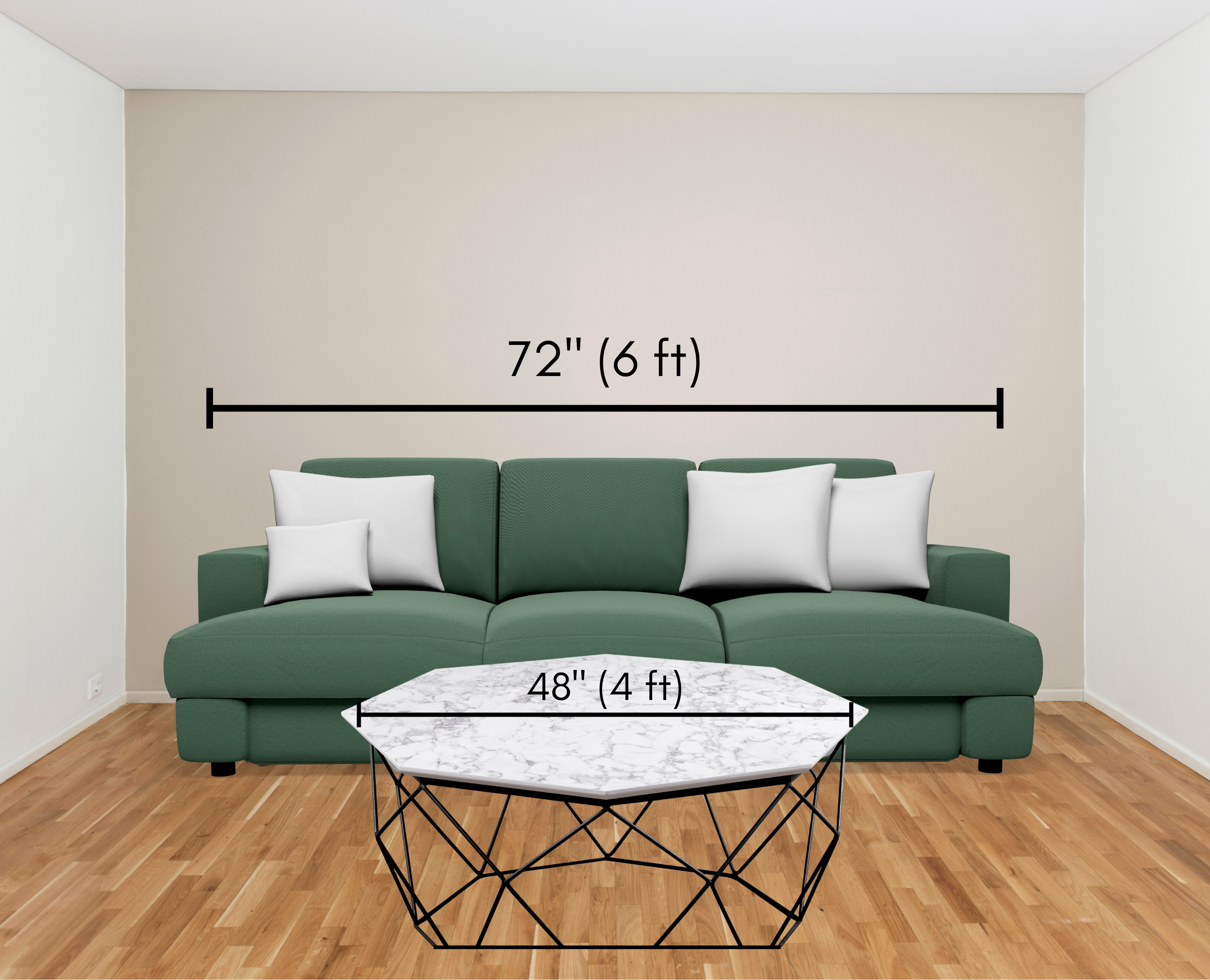
I had another client who splurged on a leather sectional that looked amazing in the store. But at home? It completely overwhelmed the room. We did our best to balance out the space so the sectional didn’t look quite so ginormous, but there’s an important lesson to be learned there. It’s essential that you always measure your room first before buying any furniture!
Pro Tip: Use blue painter’s tape on the floor to outline the size of a sofa in your room. This will help you visualize the scale of the piece and decide if it looks right in your space.
Another Pro Tip: The 2/3 Rule is a great safety net for interior design. Learn more about the 2/3 Rule and how to apply it in your home, and you’ll be well on your way to choosing the best size furniture pieces for your rooms.
5. Too Many Accessories!
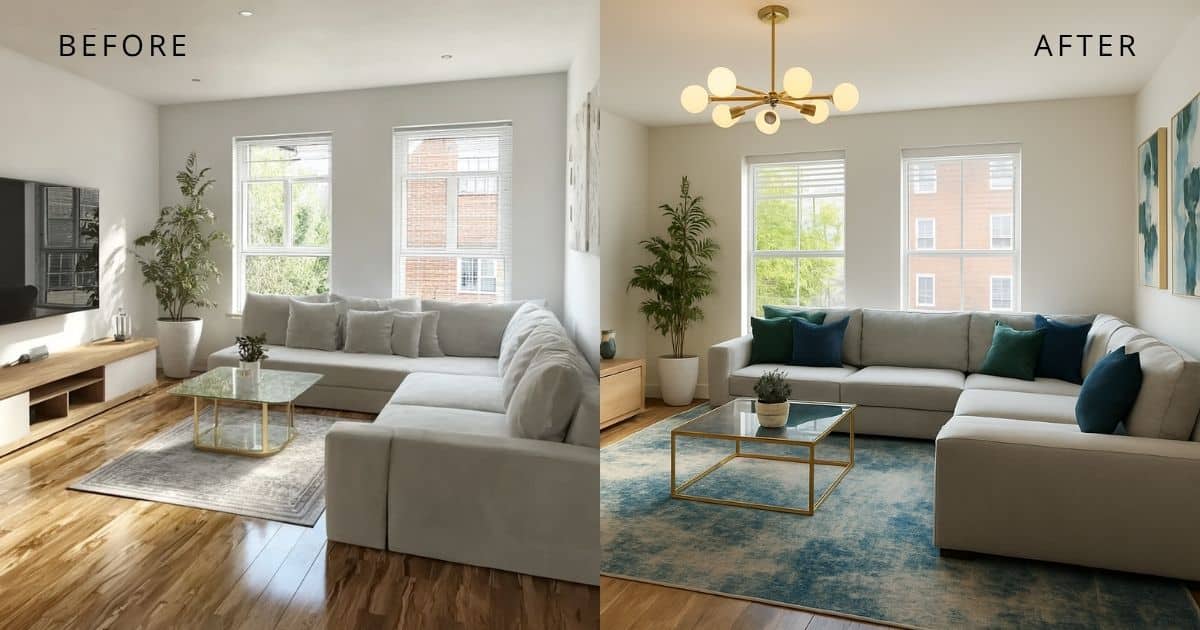
When it comes to interior design, less is more! If you love a clean look, resist the urge to fill every inch of space in your rooms with furniture and accessories. Stop piling on throw pillows and buying more trendy decor, without also paring down what you already have. I edited one client’s bedroom by removing half the accessories—and instantly it felt cleaner, calmer, and larger. Here’s another great example of a living room that had too much going on, and how much more relaxing and bigger it looks without all the stuff.

Foolproof Tips for Avoiding Major Decorating Mistakes
Create a Mood Board
Collect images of rugs, furniture pieces, colors, and accessories that you like. Do this for each room to visualize how things will look together before going out and buying things. Shopping without a plan rarely gets you a pulled-together room. But, creating a mood board ahead of time, and seeing the items next to each other helps you decided exactly what works and what doesn’t…before you buy!

Use Painter’s Tape to Plan Furniture Layouts
Tape out that sofa, rug, or dining table size on the floor before you buy. It’s a simple step that prevents so many size-related regrets. If you want to learn more about how to create furniture layouts like a pro, for any room in your home, check out my Space Planning 101 mini course.

Choose a Color Palette—And Stick to It
Color is the number one way to make a room feel cohesive. Pick 3–4 main colors and repeat them in your rug, artwork, furniture, and accessories. This one change will get you a pulled-together room that won’t look overly matchy-matchy.
Leave Some Breathing Room
Blank spaces in a room does not necessarily mean that it’s unfinished or needs to be filled with something. You don’t need to fill every wall or corner. In fact, letting your space (and your eyes) breathe in the room will make the space feel more relaxing. An easy rule of thumb…aim for a balance (or close to equal amount) of filled and empty wall space in your rooms.

Mindset Shifts That Build Confidence
Tips are one thing, but maybe you just don’t feel confident in your ability to decorate, and it’s holding you back. Here are a few mindset shifts you can make to help you build confidence. Because the thing is…if you don’t ever try new things or experiment with design, you’ll continue to stay stuck exactly where you are.
Done Is Better Than Perfect
Waiting for the perfect piece can stall your progress. Start with something good—and improve as you go. To avoid perfectionism getting in the way, I teach my Room Design Recipe students to ask themselves 4 simple questions when considering buying something:
- Does it work with the style of my room?
- Does it work with my color palette?
- Is it the right size for the space?
- Does it bring me joy?
If you can answer yes to those questions, then it’s the right piece for your room! Could there be something better out there…maybe. But how long are you going to spend looking for perfect, when you have something perfectly great right in front of you?
Your Home Isn’t a Museum
Your home should reflect your life! Display those family photos, vacation finds, and favorite colors. Great design isn’t about following trends or a certain style. It’s all about understanding essential design ingredients that make a room shine, and following a step-by-step process for decorating. You don’t have to be a designer to do this…I teach these steps inside my online courses.

Every Mistake Is a Lesson
You know the saying, “You have to play to win.”? Same goes for interior design. The more you decorate the better you’ll be at decorating. The more you learn about the essential ingredients, or the steps you need to take to decorate like a pro, the more your home will look like a place that make your guests ask, “who is your designer?” Decorating mistakes are part of the learning process, and most of them can be fixed. The more you exercise your decorating muscles, the easier it will be!
When You’re Feeling Overwhelmed with Decorating, Try This
- Start With One Spot – Focus on one wall, one corner, or one surface. Small wins build momentum.
- Use Pinterest With Intention – Don’t just scroll and pin. Look for themes in what you save. What colors do you see? What does the furniture look like? Those are your style breadcrumbs.
- Ask This Key Question – How do you want to feel in this room? Come up with 3 descriptive words for how you want the space to look (expensive, casual, unique, etc.). Let those words guide your choices.
Decorating FAQs
What’s the biggest mistake new decorators make?
Buying things without a plan! Taking time to plan saves money and stress, and avoids major decorating mistakes.
How do I know if pieces go together?
They don’t have to match—but they should share a common thread, like color, style, or material.
Where should I splurge or save?
I’ve got a great post all about when to splurge and when to save on your home decor. In general, pplurge on comfort and durability (like your sofa). Save on trend-driven items like pillows and art.
What if I make a mistake?
Most things can be fixed. Paint can be redone. Furniture can be moved or returned. You’re never really stuck. And, if you have to live with something, there’s lot of ways to minimize it with design tricks.
Can I mix design styles?
Absolutely. It’s your home—just keep a consistent thread (like color) to tie it together.
Is hiring a designer worth it?
Hiring a designer is a great investment if you don’t have the time, or don’t want to take the time, to plan out or manage your home decorating.
I teach all the steps you need to know to design your rooms like a pro inside my Room Design Recipe program, which includes weekly Q&A sessions with me. It’s the perfect hybrid approach between DIY and hiring a designer!
Final Thoughts
You don’t need to be a professional designer to create a beautiful home—you just need a plan, a little confidence, and then slow down and take it step-by-step. You’ve got great taste. Let’s turn that into a home you love living in!
Tell me in the comments, what’s something that’s keeping you stuck or stressing you out with your home decorating?




The tip that ‘decorating without a plan’ is the #1 mistake really resonated with me.
Also the example of upsizing a 5×7 rug to an 8×10 was practical and eye-opening.
I found this piece quite thought-provoking. It’s always interesting to explore well-researched topics. Keep up the good work.