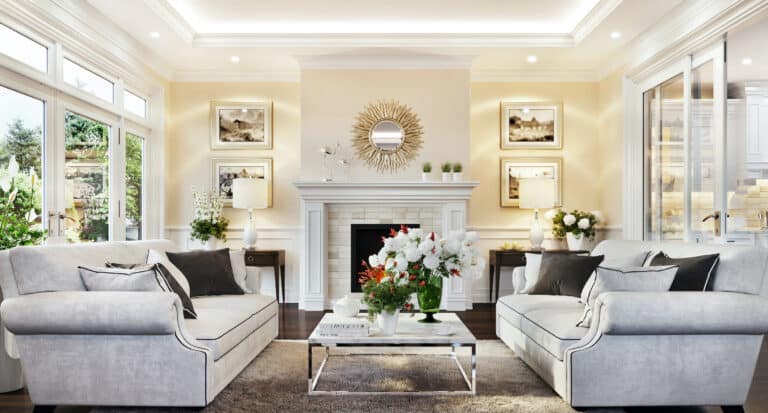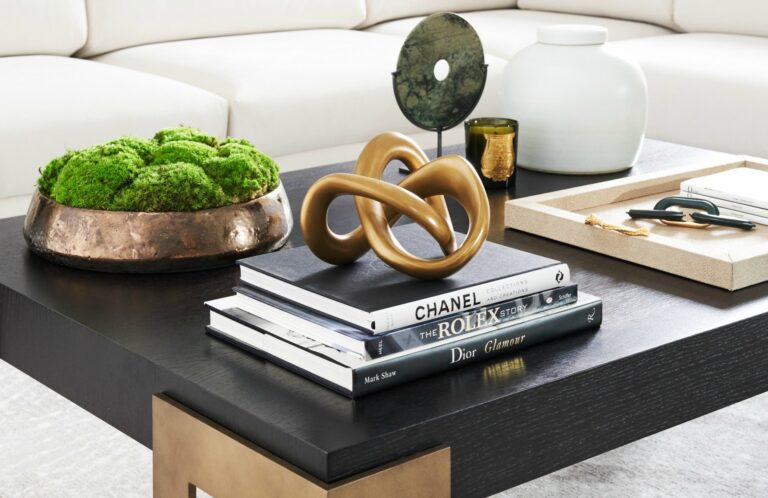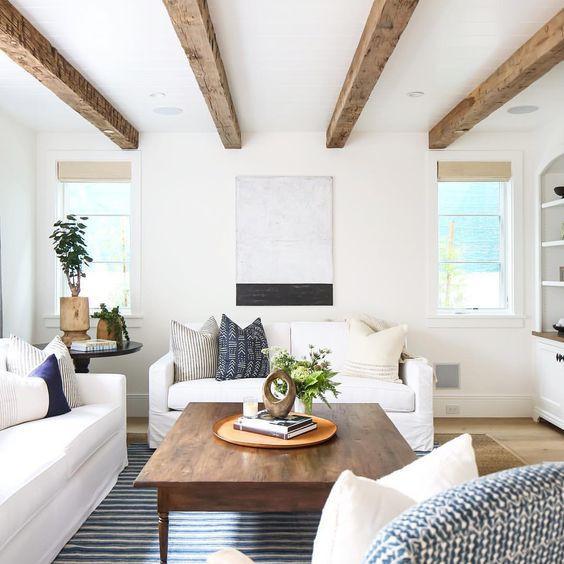
You’ve cleaned.. You’ve organized. You may have even decluttered the entire house. And yet… your home still feels busy, overwhelming, or just a little chaotic. In this post, we’re talking about why your house feels cluttered, even when it’s clean, and how to fix it.
Here’s the part most people don’t realize:
It’s not just about how much stuff you have.
It’s about how your living spaces are visually processed.
In other words, this isn’t just a clutter problem, or the need for more storage space. It’s visual clutter.
And once you understand what’s actually happening to make your room look cluttered, it becomes so much easier to fix.
What “Cluttered” Really Means (It’s Not What You Think)
When most people think of clutter, they picture:
- piles of stuff in the living room
- things out of place on the kitchen countertop
- visible mess, like piles of laundry or dishes
That’s physical clutter. But there’s another layer that matters just as much (and honestly, more when it comes to how your home feels). Let’s break it down…
Visual clutter
Visual clutter is when you have too much visual information competing for your attention at once.
That can look like:
- lots of small decor items
- too much furniture
- too many colors or patterns
- open or flat surfaces with scattered items
- mixed finishes that don’t relate
And here’s why this matters:
👉 A home can be perfectly clean… and still feel cluttered.
That’s the disconnect so many homeowners feel…and can’t quite explain. I’m here to help you understand what’s going on so you can fix it, and make your home look more polished and relaxing at the end of the day.
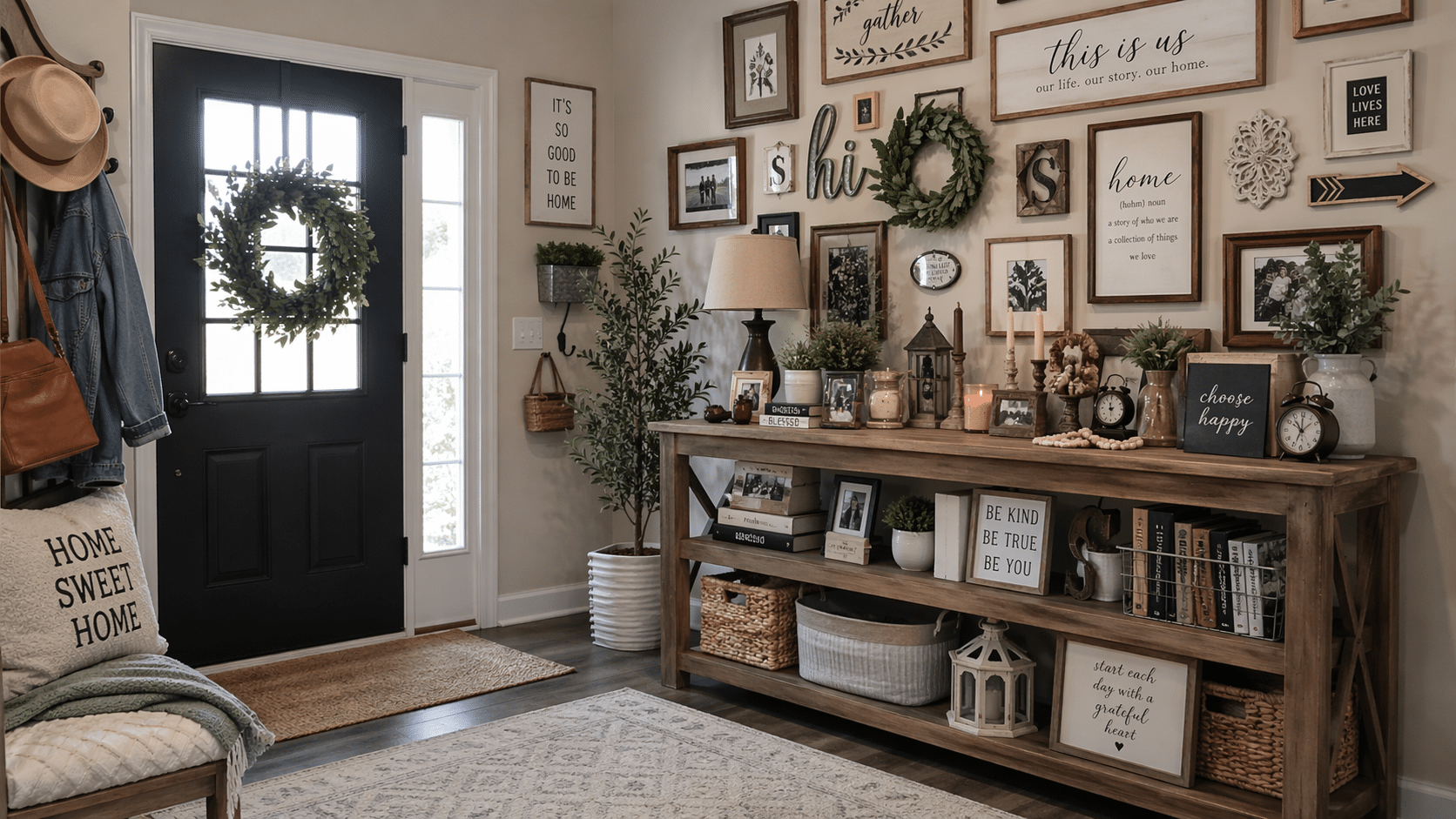
Why Your House Feels Cluttered (The Brain Connection)
You’re not imagining things… your house feels cluttered because of the way your brain is processing the room. Your brain is constantly scanning your environment, looking for:
- patterns
- structure
- clarity
When those things are present, your home will feel:
- calm
- organized
- easy to be in
But when they’re missing? Your brain has to work harder to process everything, and that creates the feeling of:
- stress
- chaos
- overwhelm
This is why a room can feel “too busy” even when nothing is technically wrong. You can have nice furniture and beautiful home decor, but your house can still feel messy or unfinished.
Visual clutter = overstimulation
It’s not just a design issue. It’s a human brain processing issue.
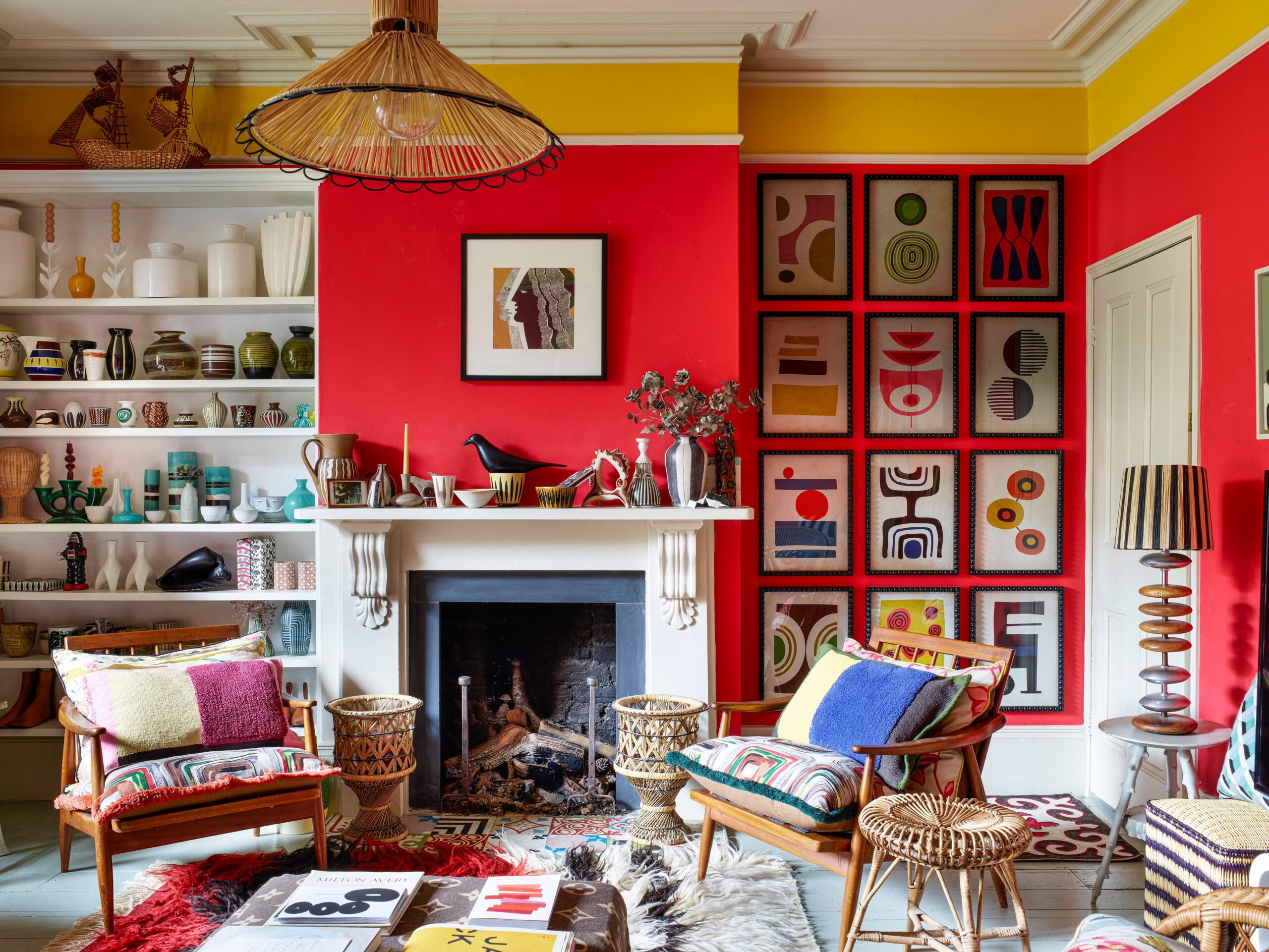
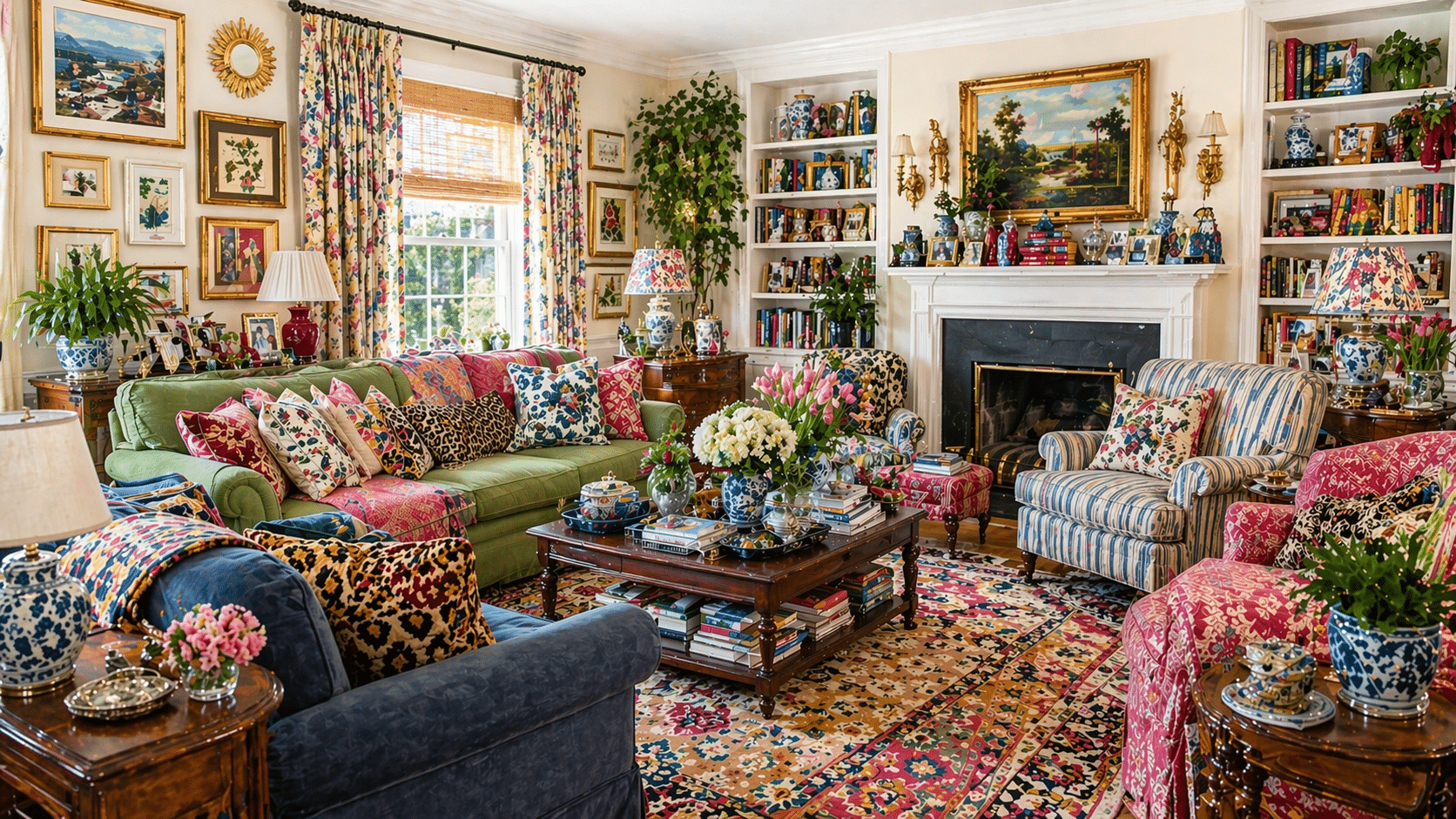
Take a look at the living room picture below, and ask yourself, “how does this room make me feel?” Notice how hard your eyes and brain have to work when you look at this space. That’s the effect of visual clutter.
Why Minimalist Homes Feel So Calm
There’s a reason minimalist homes and hotel rooms are appealing to so many homeowners. It’s not necessarily because people love having less stuff. It’s because those spaces:
- are less stimulating with fewer competing elements
- have clear focal points that make a room feel more structured
- include intentional empty space which lets your eyes rest
And that gives your brain a break… which makes a huge difference in how your feel in your own home.
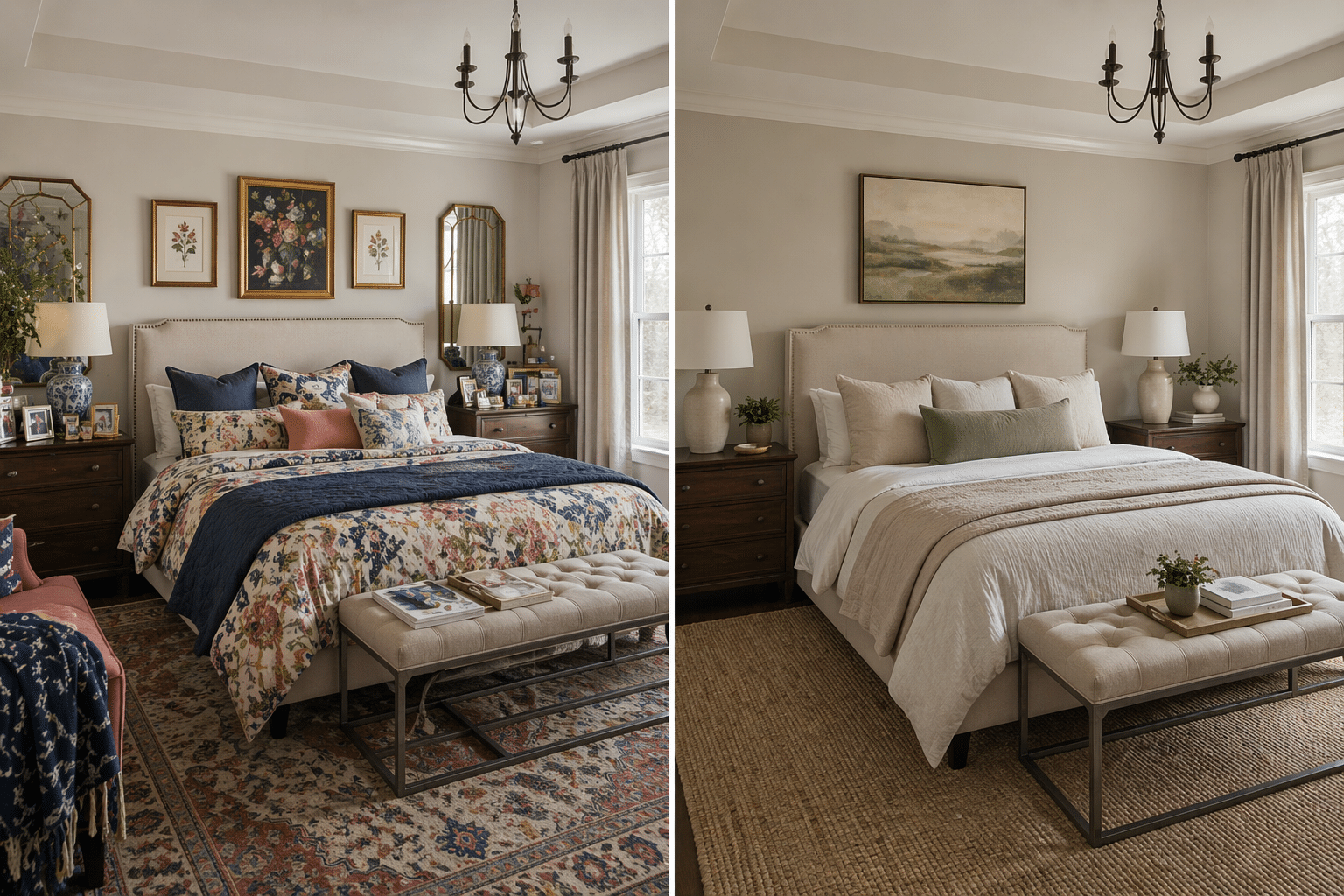
This is where most people get it wrong:
👉 It’s not about owning less
👉 It’s about creating less visual noise
Interior designers know that a well-designed home (even a layered, cozy one) feels calm because it has:
- structure
- hierarchy
- breathing room
The Most Common Causes of Visual Clutter
Let’s break this down into the most common mistakes I see all the time as an interior designer. These are the reasons you feel like you have a cluttered house, even when it’s clean.
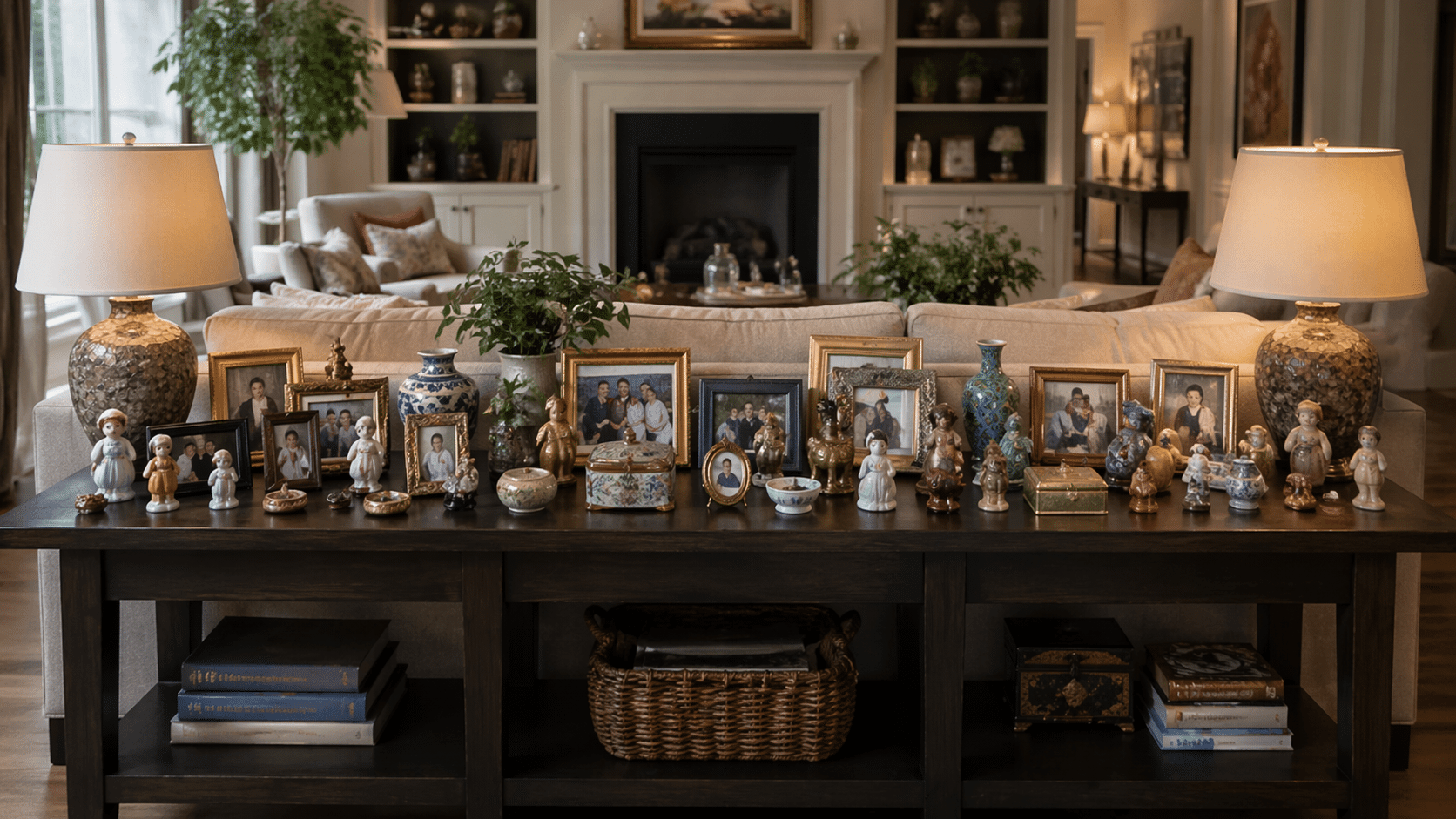
Too Many Small Items
This is probably the biggest one. A little decor here, a little there…and suddenly you have excess stuff, but nothing stands out. Everything competes (not in a good way), which gives the entire room a cluttered look.
👉 Your eye doesn’t know where to land, and the room is overstimulating.
What works better:
- fewer, larger pieces (one large piece is often better than lots of little decorative items)
- intentional groupings (grouping things together makes things look more structured)
- giving items space (resist the urge to fill every inch of your home with decor)
Too Many Colors and Patterns
When there are too many different colors in a room, or the colors don’t relate to each other, your room will feel “noisy.”
Same goes for patterns. When there are too many different patterns (even if each item is beautiful on its own), it’s just too chaotic for our brains.
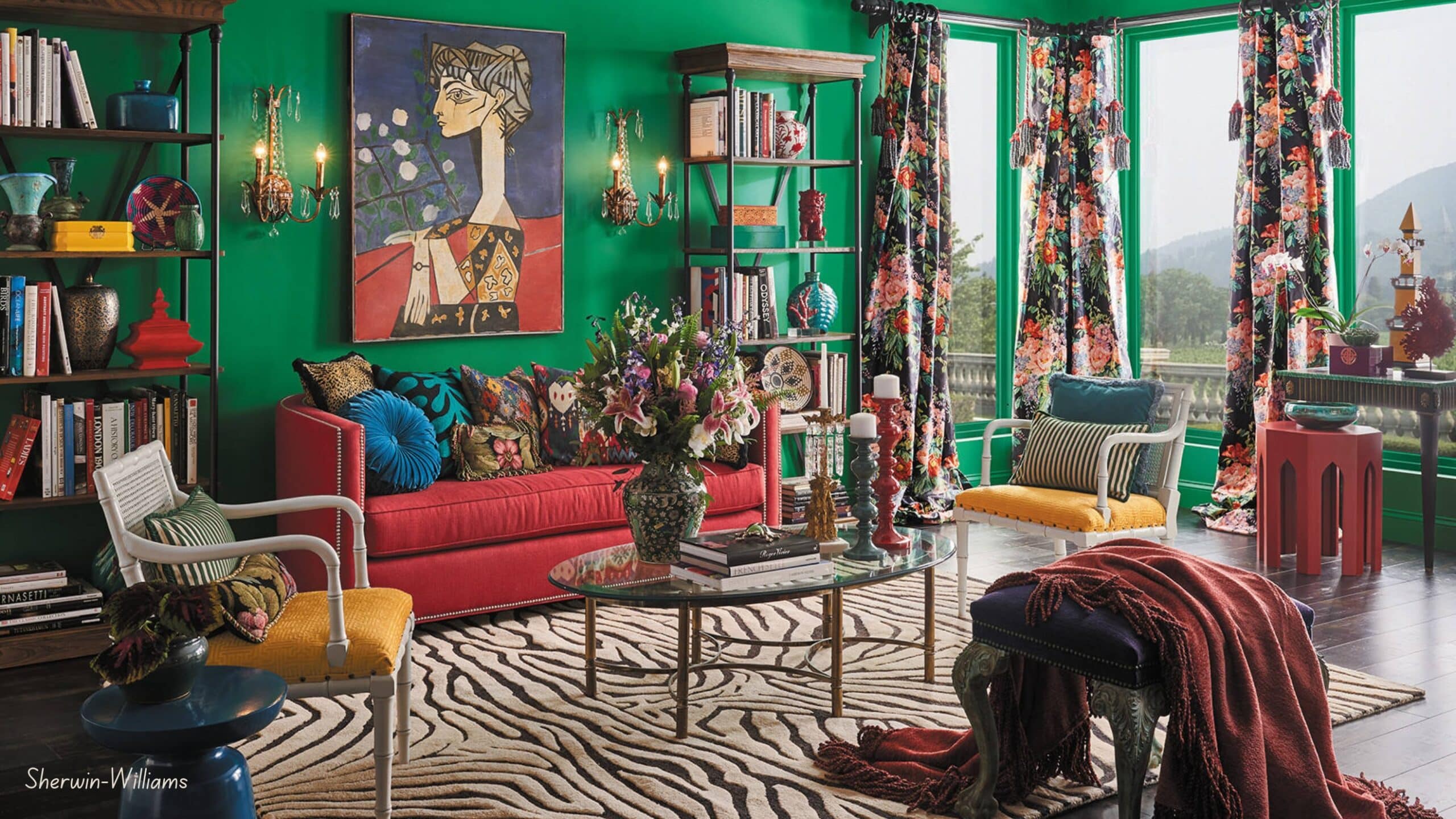
👉 This is why random decorating (buying things you like one by one) often doesn’t work. Because you end up with too many colors or patterns that don’t relate well to each other, creating the feeling of clutter.
What works better:
- a cohesive, well-defined color palette for every room
- repeating colors in your palette 2-3 times throughout the room
- limiting competing patterns
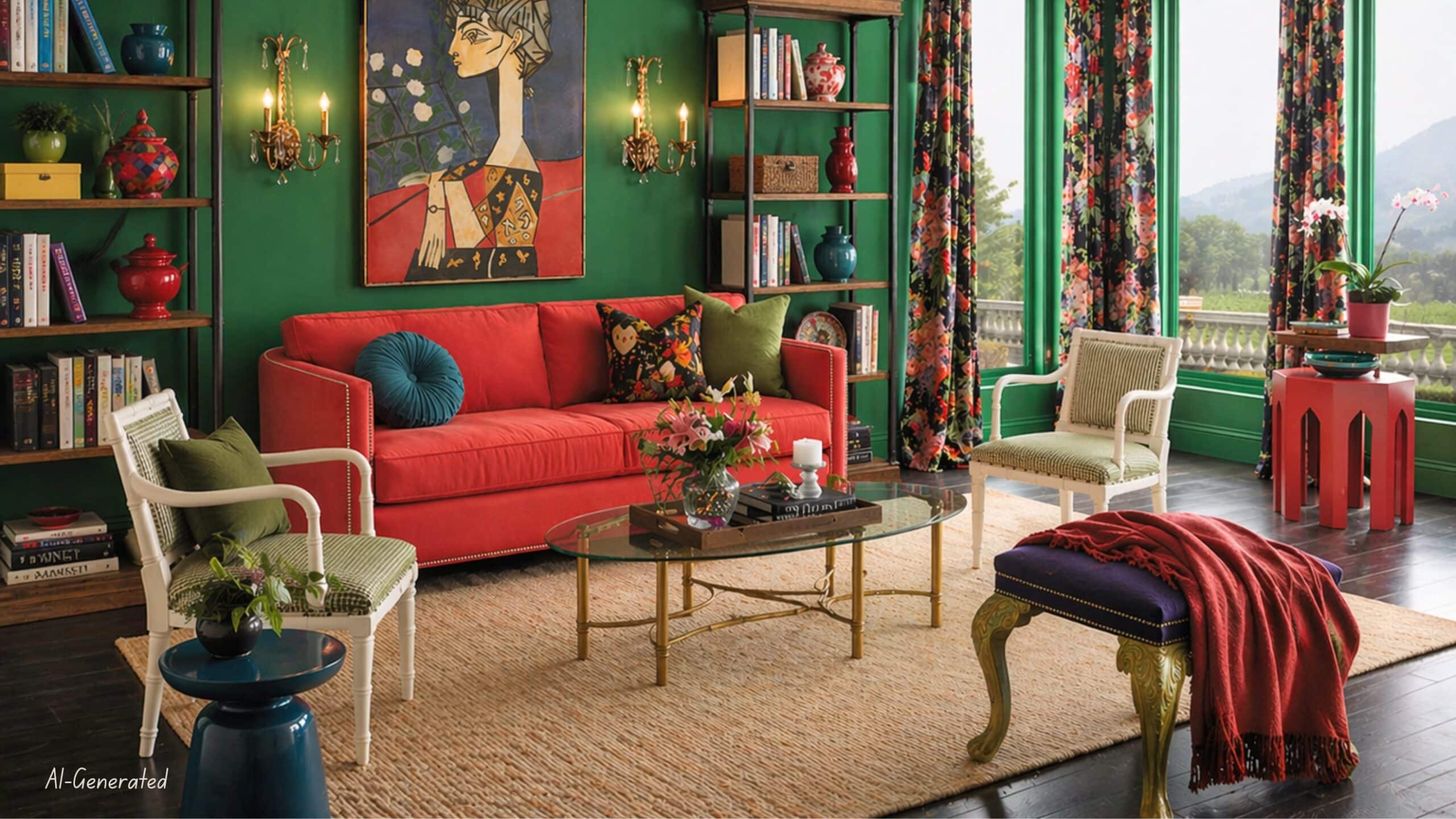
Open, Uncontained Surfaces
If you’re not careful, open, uncontained surfaces can quickly contribute to a cluttered look. When we think of open or flat surfaces, we think of things like:
- kitchen counters
- bookshelves
- open or floating shelving
- coffee table or console
When everything is spread out with no structure, it makes things feel chaotic.
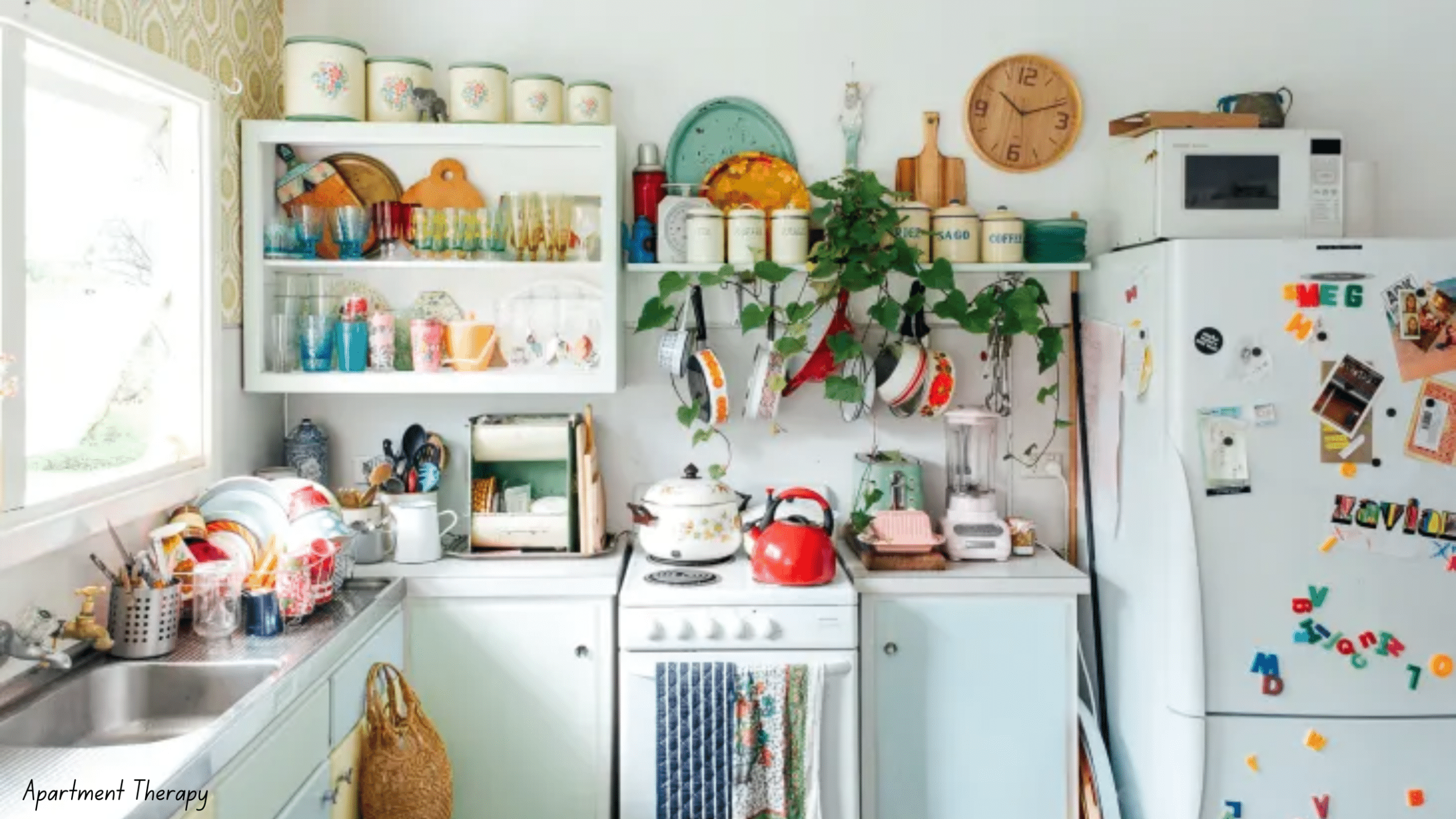
What works better:
- kitchen cabinets for closed storage rather than open shelving
- using trays to group items together
- bowls or baskets to hold small items
- grouping decorative items together on tables
Mixed Materials and Finishes
It’s perfectly ok to mix wood tones and metal finishes in a room. But, too many different wood tones, materials, metals, or styles that don’t relate can make a space feel disconnected.
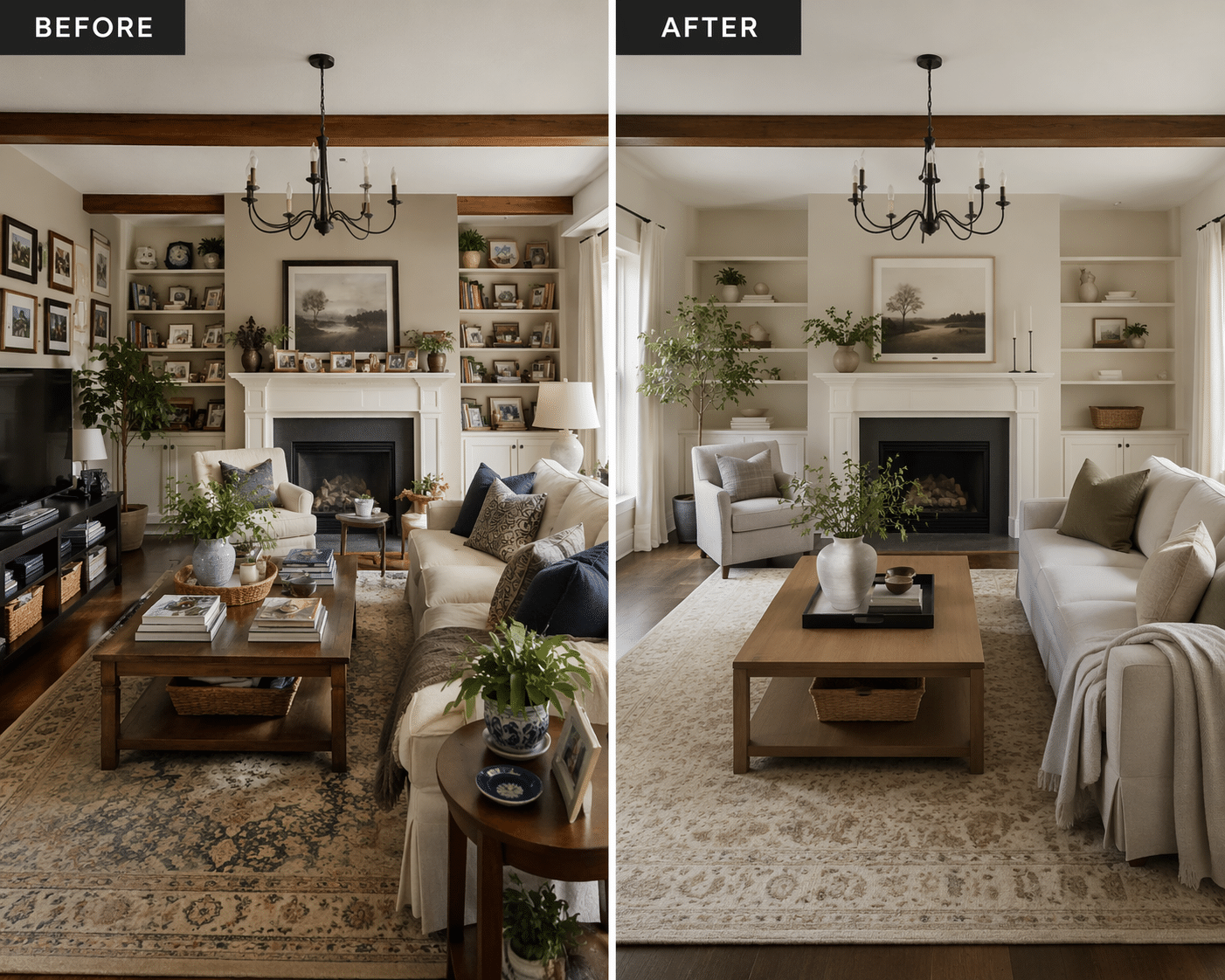
In this living room example, there are just too many competing metals, materials, and finishes, creating a feeling of overwhelm.
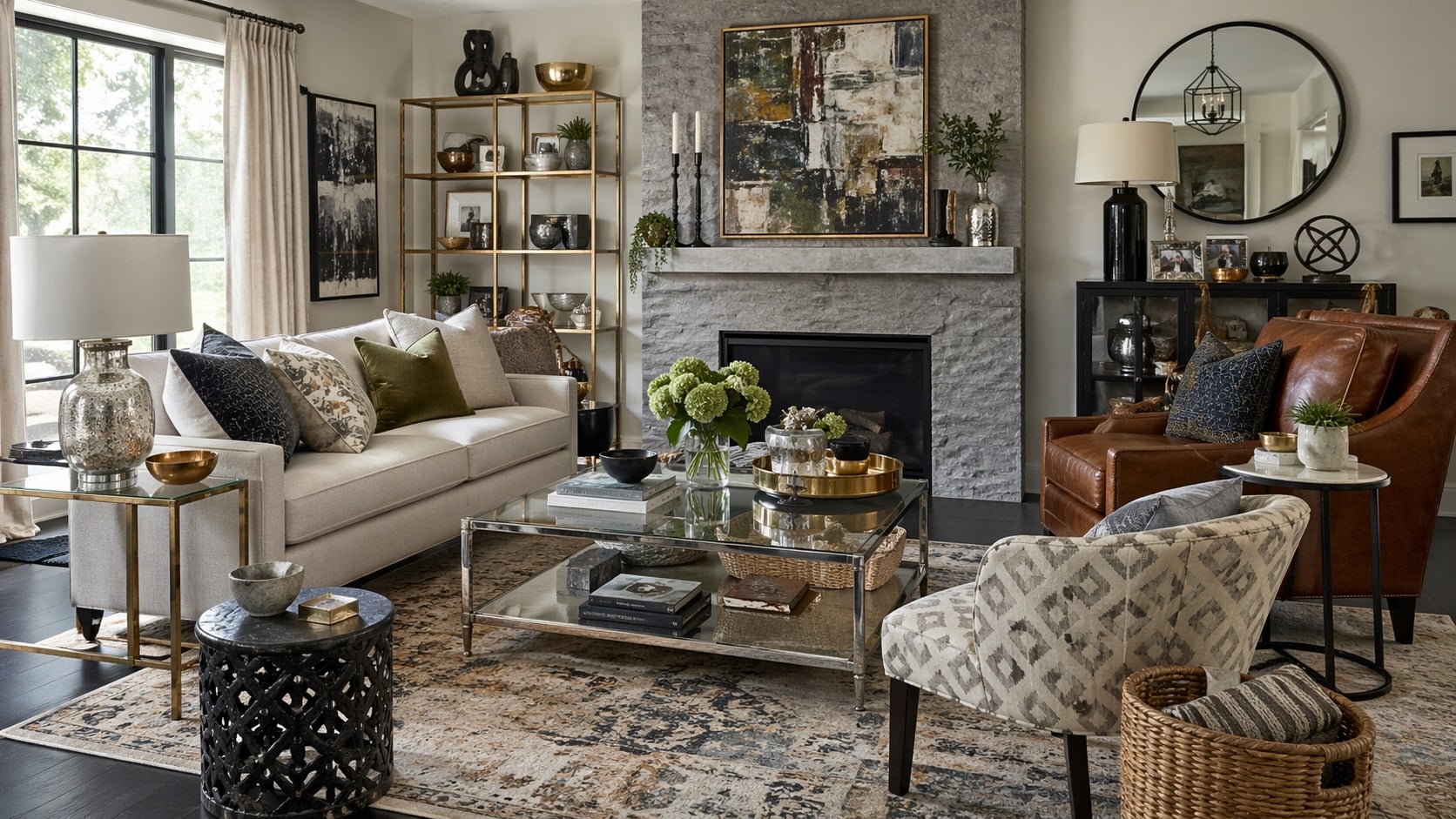
What works better:
- repeating finishes throughout a space
- choosing a consistent direction (warm vs cool wood tones)
Here is the same living room example with consistent materials and finishes. Can you see and feel the difference?
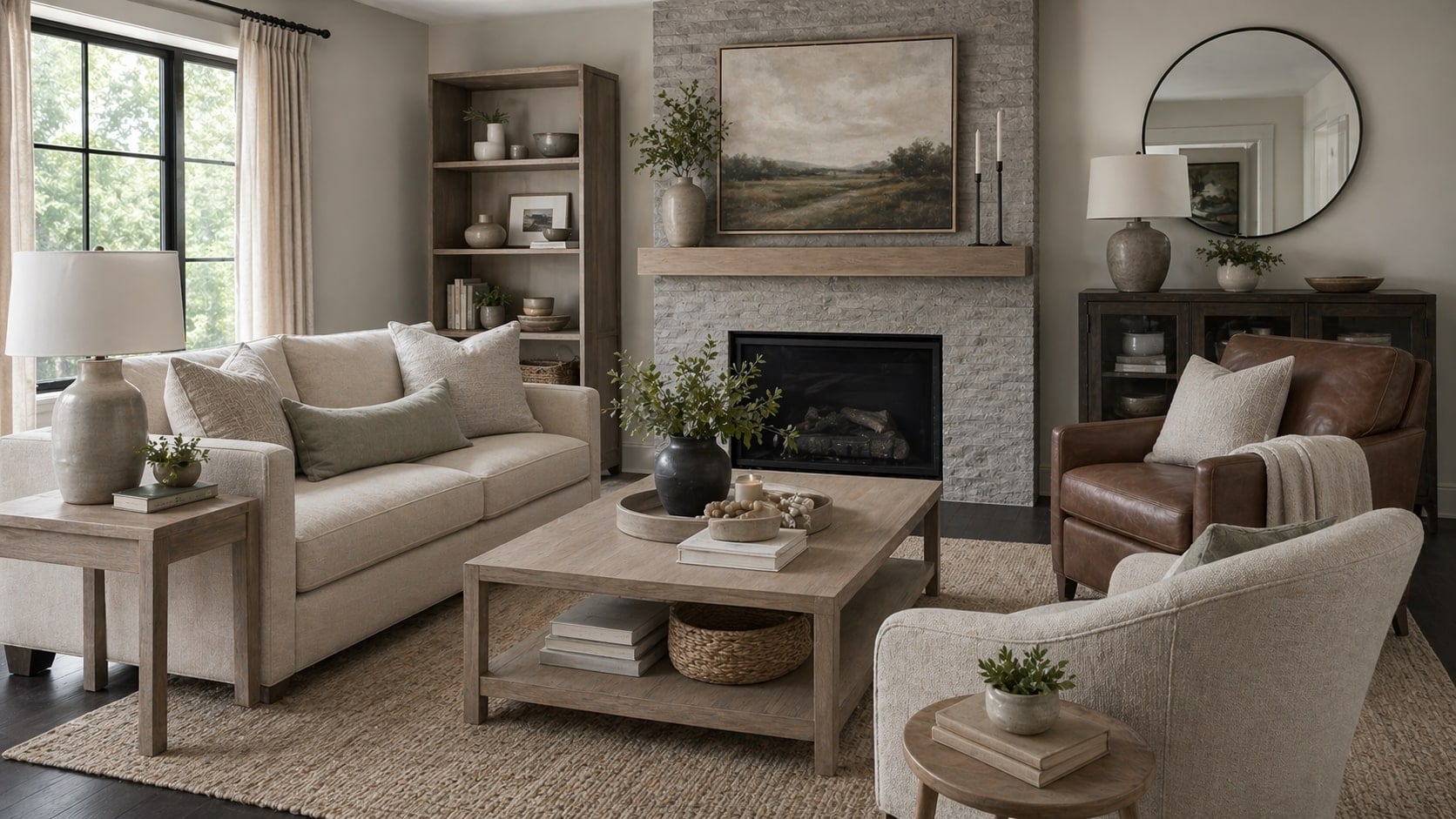
Visible Functional Clutter
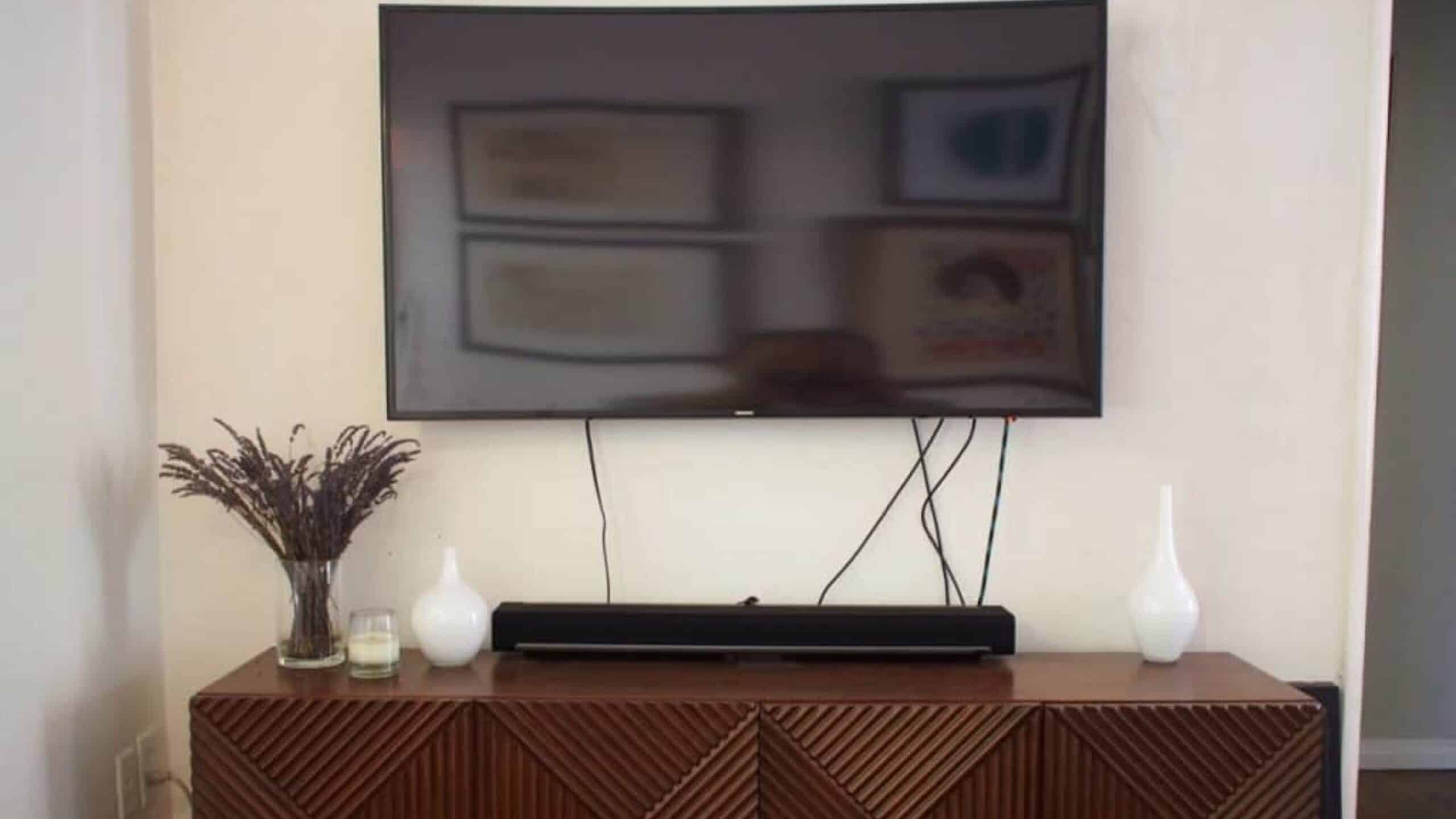
There are certain things in our home that make it look cluttered that we often ignore. It’s kind of like becoming nose-blind to certain smells in our home.
It’s easy to overlook things like electrical cords, everyday kitchen appliances, and other things we use all the time in our house. They’re just there – always visible – in their designated spot.
However, these things often signal to our brains: “This space is unfinished.”
Finding storage solutions, or ways to hide our everyday functional clutter is a great way to make things look less messy overall.
The Missing Piece — Visual Hierarchy
This is the part no one teaches… and once you understand it, everything changes.
What is visual hierarchy in design?
It’s simply what stands out vs what supports it. Every room needs a clear focal point. A focal point is something that immediately draws your eye when you enter a room, and should be something you want people to notice.
Focal point examples:
- a centerpiece on your dining table
- your upholstered bed frame
- the living room fireplace
- a favorite piece of art
Here’s an example of a visually cluttered living room that doesn’t have a clear focal point. There’s just too many competing elements.
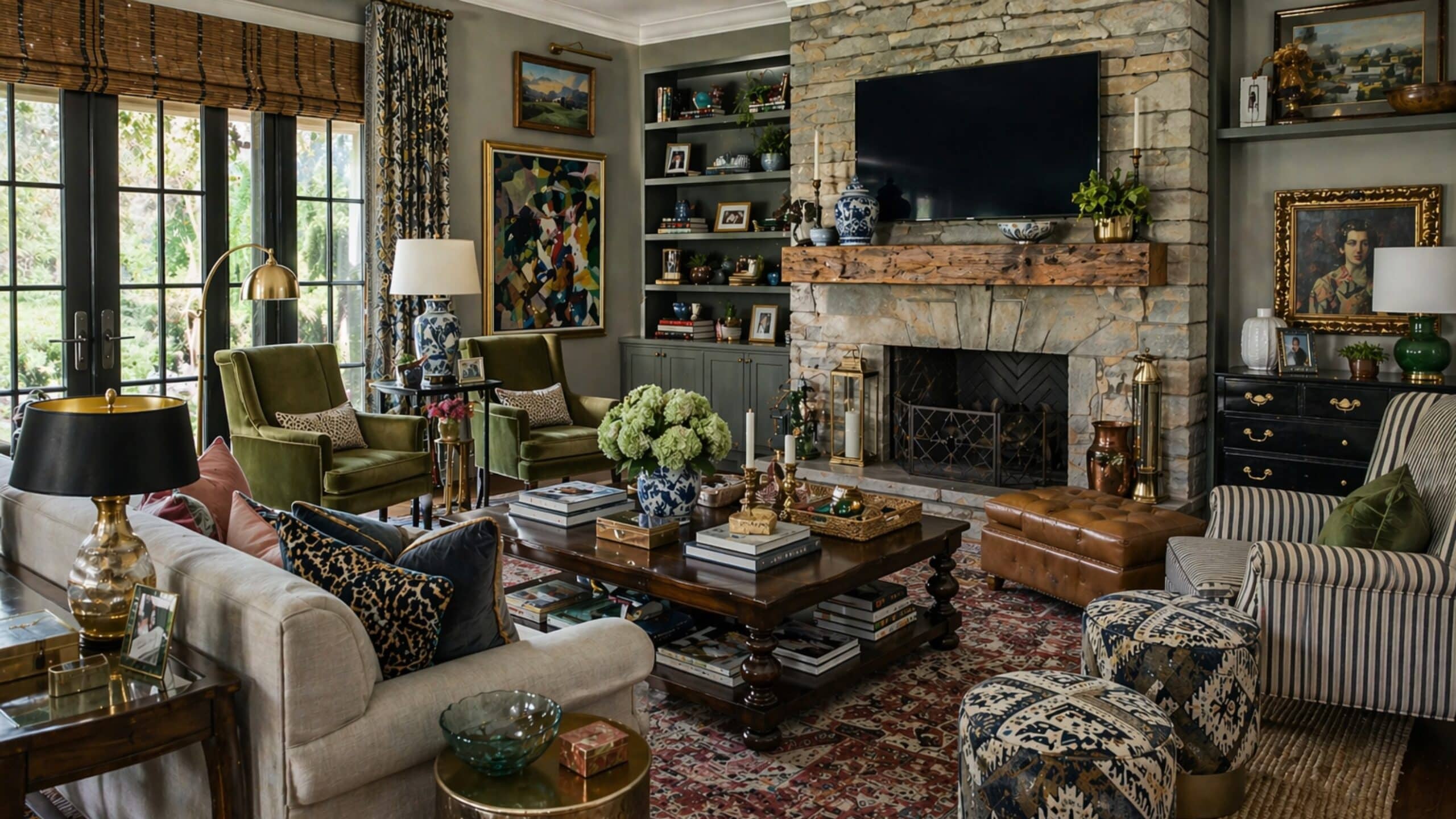
When that focal point in a room is clear, your eyes will land on it, settle, and relax. When that focal point is missing or unclear, your eyes will jump around the room trying to find order. And that’s what creates that chaotic feeling.
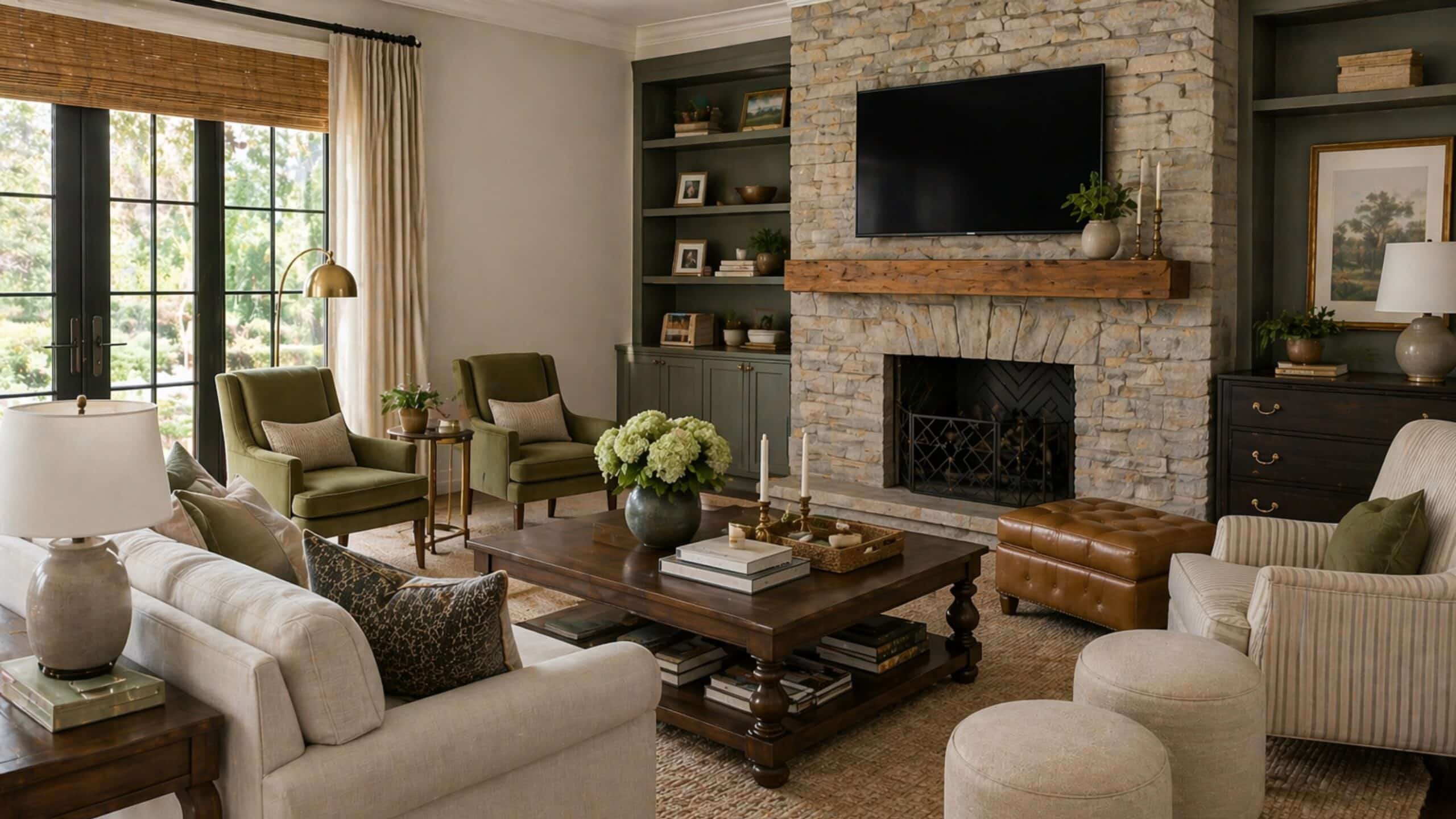
Here is the same living room, but it’s been simplified and visually decluttered. Now the fireplace is the clear focal point, and the room feels much more calm and relaxing.
Why Balance (Filled vs Empty Space) Matters
One of the biggest mistakes I see homeowners make is trying to fill every inch of their home with furniture or decor. Every wall. Every surface. Every corner.
But here’s the truth:
Calm spaces always include empty space
This is called negative space (or empty space or white space)
And it’s not “empty” in a bad way. It’s intentional. It gives your eyes a place to rest…a break from stimulation.
You can think of it like punctuation in a sentence. Without it, everything runs together into one hot jumbled mess of a sentence. The commas and periods make you pause for a moment, take a breath, relax…
How to Reduce Visual Clutter (Simple, Practical Steps)
The good news is that reducing visual clutter doesn’t require a full overhaul. You can start small, make simple changes, and see a big difference quickly. Just follow these steps, and your whole house will look much less cluttered and feel much more calm.
1. Remove and Simplify
Here’s a powerful fix you can do in a single day. Clear a surface completely. Maybe start with your entry table, kitchen countertop, or a single bookshelf. Then only bring back items that are:
- functional
- a fit with the style of the room
- aligned with your color palette
- meaningful to you
Find a good spot for the rest of the items, or donate to a new home. Think of this as your typical decluttering process, but with an interior design flair. Remember, when it comes to home decorating, less is usually more!
>> Check out my post on stylish storage solutions for some designer-approved ways to stash your stuff.
2. Leave Space on Purpose
Some people see empty space in their home, and they immediately think they need to put something there. Unfortunately, this is one of those decorating bad habits that leads to a visually cluttered home. Instead, I want you to resist the urge to fill everything.
👉 Empty space is part of the design.
Leaving some empty space will make your room look bigger, cleaner, and it will feel more relaxing. This is especially true for a small space – you don’t want to fill up limited space with unnecessary stuff!
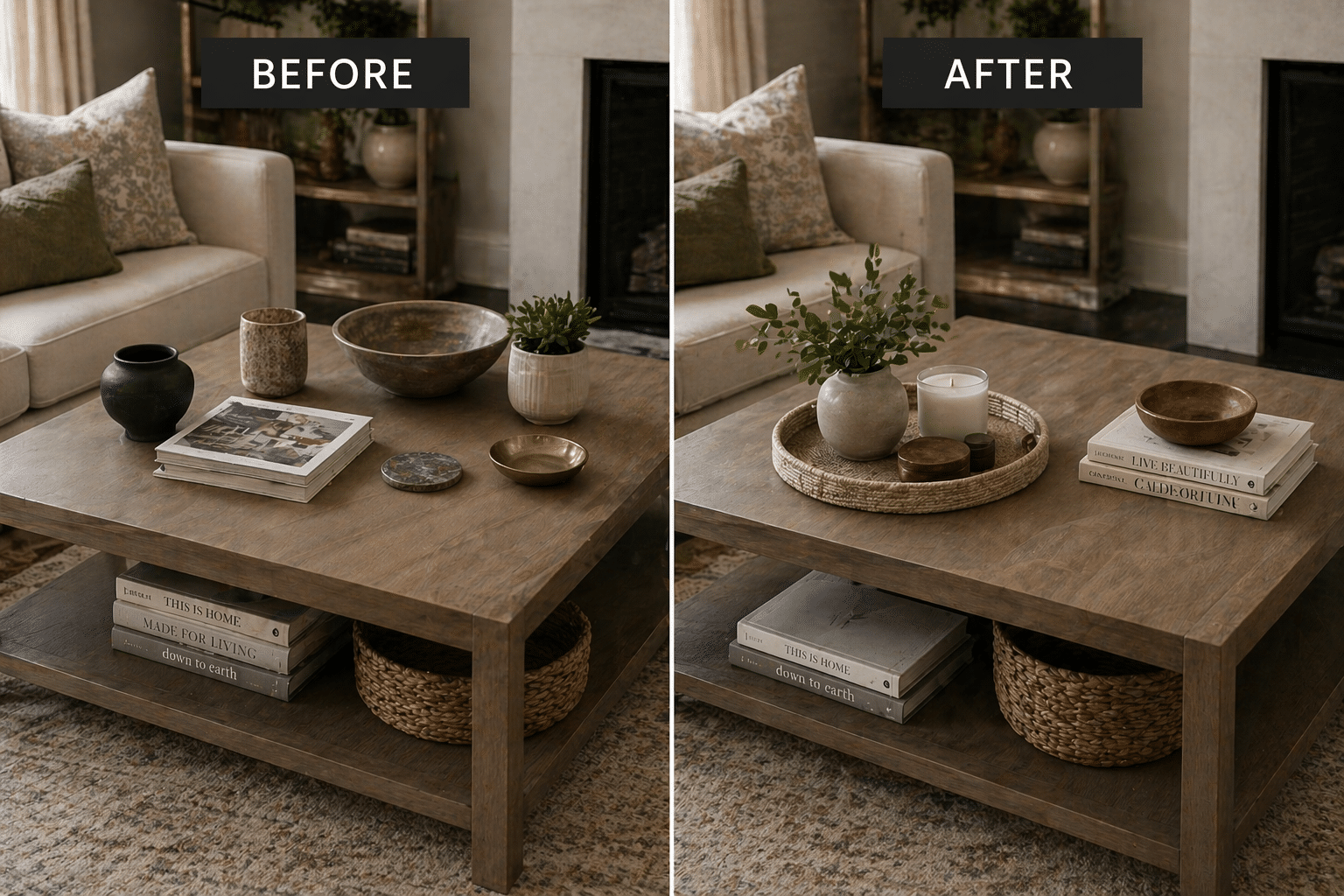
3. Group Items Together
Scattering items out on a table or bookshelf is just too visually chaotic. Instead of scattering items:
- use trays (an essential decorating item) to house the items
- group your decor in 3’s or 5’s (read about the powerful rule of 3 in interior design)
- vary height and scale (size)
This creates structure instead of chaos.
4. Simplify Color and Pattern
If your space feels busy, this is often the reason why:
You have too many different colors and/or patterns competing for attention.
For a well-designed, cohesive room it’s essential that you have a clearly defined color palette. That means limiting the colors in your room to 3-5 colors that you repeat throughout the space. Too many colors = too much visual stimulation!
Same goes for patterns. Too many different competing patterns will make your room look more hectic than polished.
Here’s your game plan for simplifying the colors and patterns in your space:
- reduce competing colors – choose a color palette and stick with it
- repeat key colors – check out the 60-30-10 Rule for guidance
- simplify patterns – choose one or two patterns that you love, and let them shine
Simple Fixes for Everyday Areas
Here are a few tips for reducing the visual clutter in everyday areas of your home:
Countertops & Shelves
- group items on trays
- keep some areas completely clear, especially for kitchen and bathroom countertops
- limit what stays out
Throw Pillows
- choose pillows that align with your color palette
- narrow down to a few key patterns
- add in solid pillows to create visual breaks
Decor & Styling
- swap lots of small pieces → fewer, larger ones
- reduce throw pillow overload → choose a mix of patterns and solids
- simplify layered decor → less is more approach
Why This Feels So Hard (And Why It’s Not Your Fault)
Most homeowners quietly assume, “I must just not be good at decorating.” But that’s not the problem!
The real issue is:
No one teaches visual hierarchy, cohesion, or how your brain processes a space.
So what happens?
- you buy new things you like
- fill up the space with decor you’ve had for years
- try to make it work with existing furniture
And wonder why your home looks cluttered and still doesn’t feel right.
Clutter Isn’t About Stuff — It’s About Clarity
Let’s reframe this completely:
👉 Your home doesn’t necessarily need less stuff (I’ll let you be the judge of that)
👉 It needs less visual noise
When you focus on creating a cohesive home, having a hierarchy in each space, and simplifying your decor, everything will start to click into place. Your home will look less cluttered and feel more peaceful.
If Your Home Still Feels Unfinished…
If this is hitting home, you’re not alone. This is exactly what I see with so many homeowners:
They’ve put in the effort…but something still feels off.
That’s usually because the process is missing. I walk through this in detail in my free training:
👉 Why Your Home Still Feels Unfinished (and How to Fix It)
Inside, I break down:
- the biggest decorating mistakes I see
- why rooms don’t come together
- the step-by-step process designers use
Check it out!
Final Thoughts
A calm, cohesive home isn’t created by removing everything. It’s created by making intentional decisions. Visual clutter is often a reason why homes don’t feel relaxing, but there are simple fixes you can make today to improve the look of your home.
Start small…one surface, one room, one change.
Reduce the visual noise in your home, and watch the free training for next steps…a more beautiful home is closer than you think!