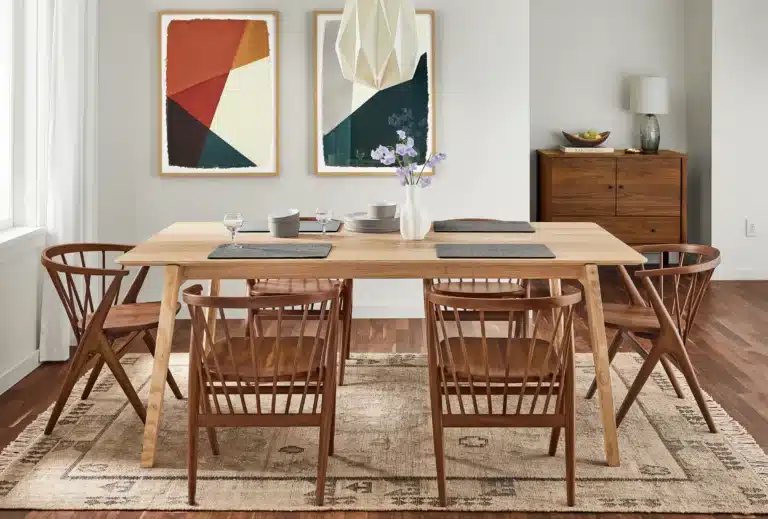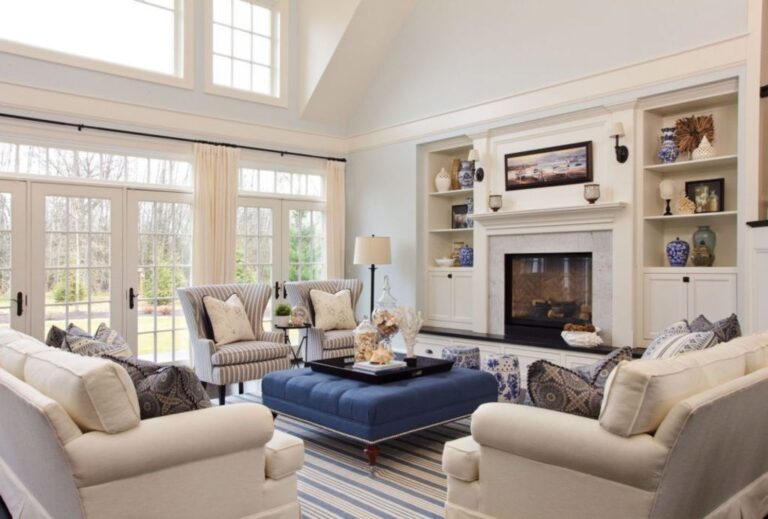
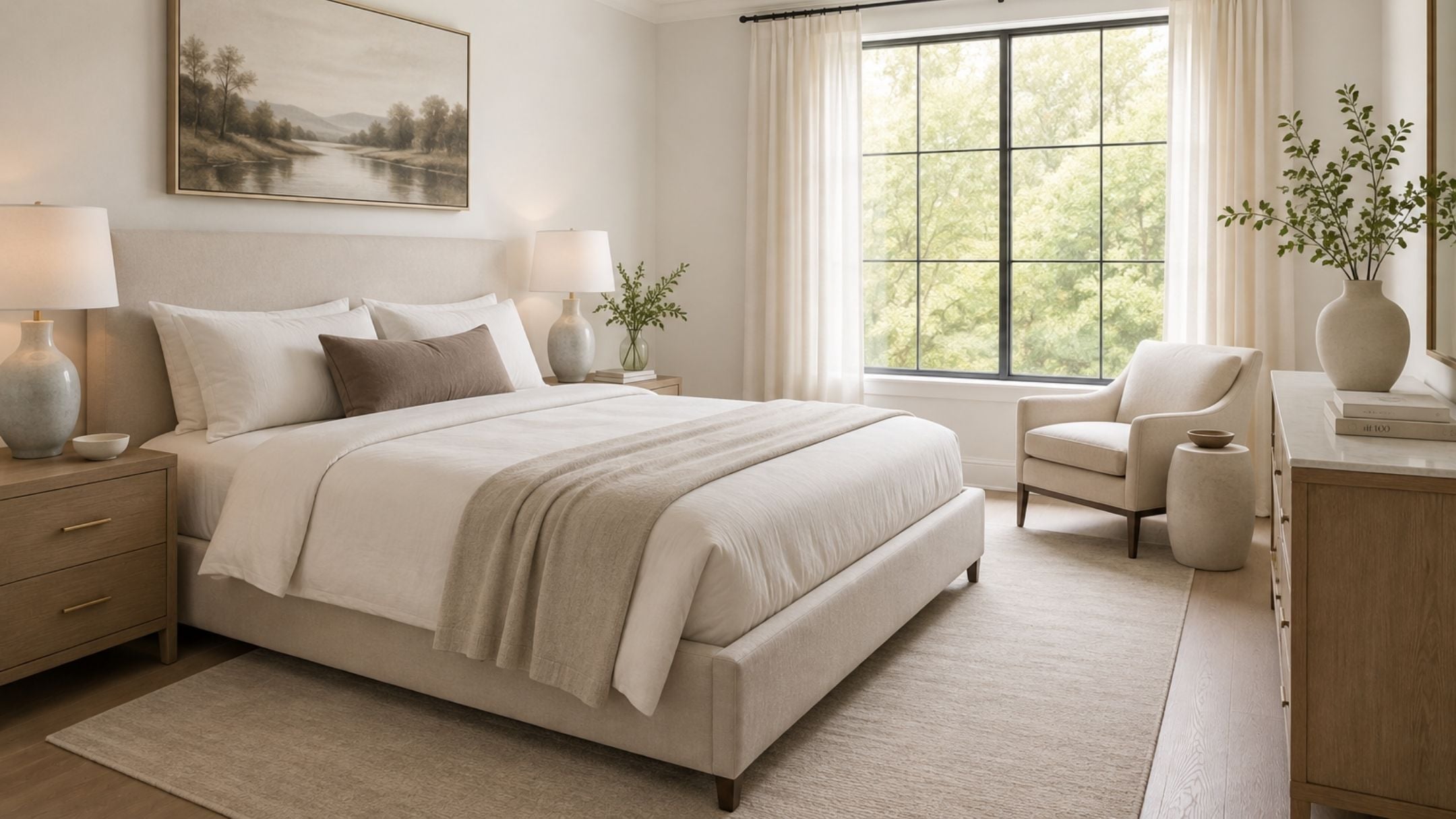
One of the hardest parts of decorating a room is knowing when to stop. There’s always something else you could add, like another pillow or a piece of art for that empty wall. Something for the corner, or a few more accessories for the coffee table. Or maybe you’ve been questioning the things you’ve already chosen. Would a different rug look better? Should you change the curtains? Does it need more color So, how do you know when a room is actually finished?
For years, the answer I heard from other designers was some version of, “You’ll know when it feels right.” And while I understand what designers mean by that, I’ve never found it particularly helpful.
Because what if it doesn’t feel right…but you have no idea why?
I really wanted something more concrete than that. I wanted a way to evaluate a room more objectively and practically, instead of relying on instinct alone. And that eventually changed the way I think about decorating altogether.
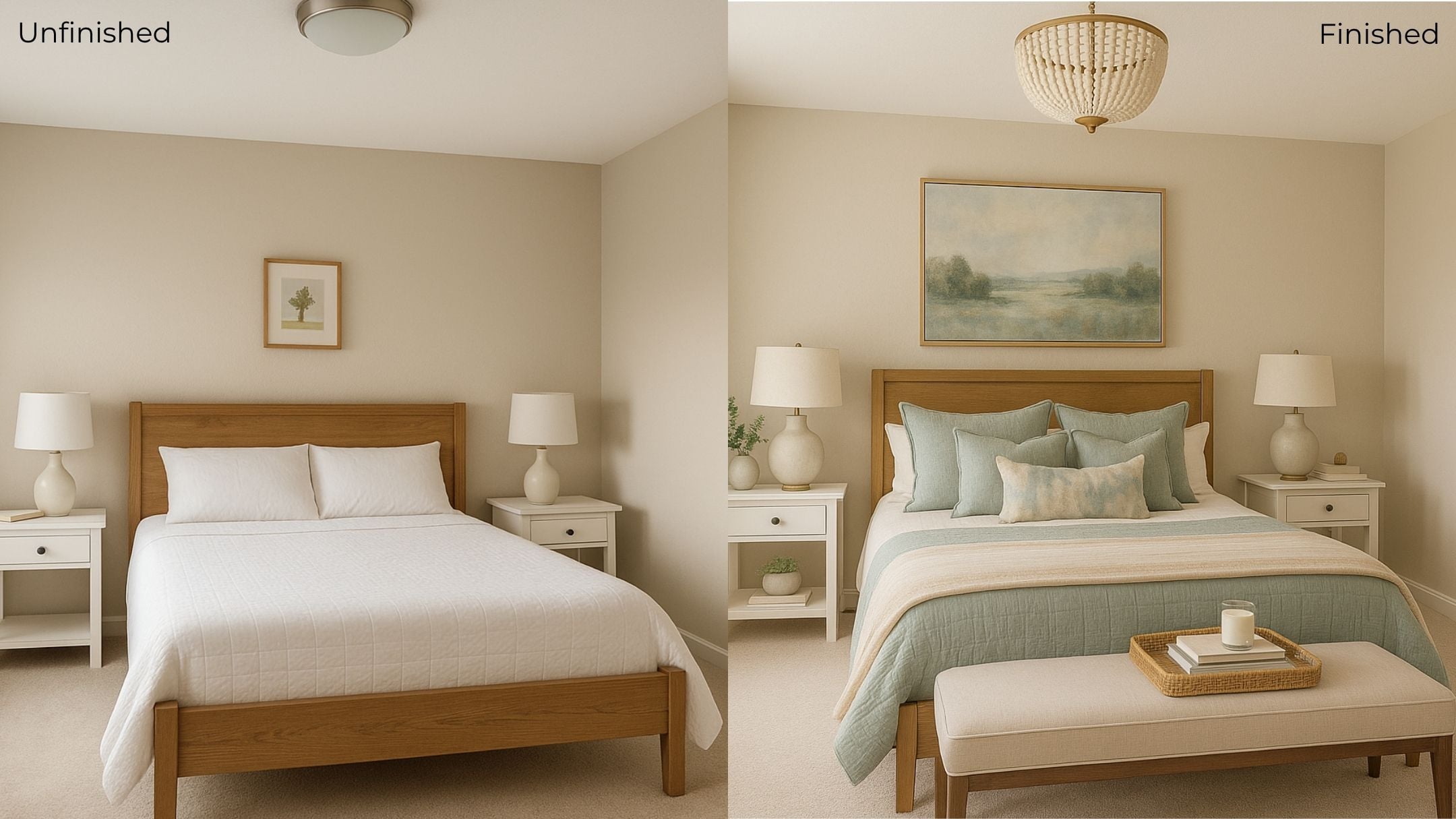
How Do You Know When a Room Is Finished?
So here’s my definition of when a room feels finished:
A room is finished when the essential design elements are working together in the room, and you can no longer identify a specific problem that needs fixing, or an ingredient that’s missing.
That doesn’t mean every wall needs artwork or every corner needs furniture, and it definitely doesn’t mean there’s nothing you’ll ever change again. It just means the room works both functionally and visually, and that the things you’re going to add from this point forward aren’t solving a design problem.
The trick, of course, is knowing how to evaluate all of that.
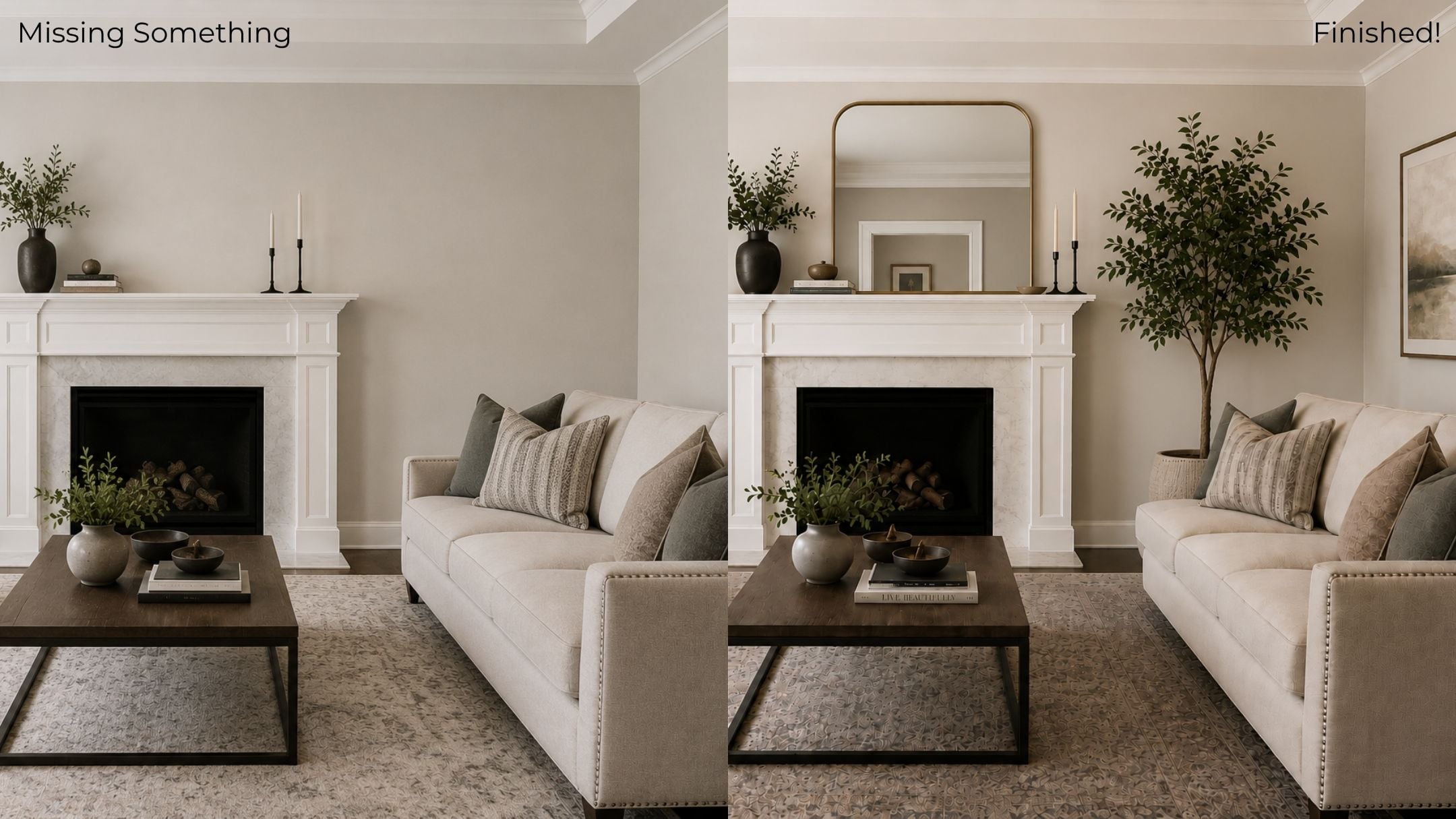
Why “You’ll Know When It Feels Right” Isn’t Enough
Experienced designers often can look at a room and immediately tell that something is off. I can usually walk into a room and, within a few seconds, start noticing things that are working and things that aren’t. I’m identifying design ingredients that are missing, and ingredients that I can see in the room.
But that’s not some magical decorating instinct that designers are born with and others aren’t.
It’s true, some people do have a natural knack for design, and can intuitively sense when something is missing. But, in general, designers have spent years looking at rooms and learning about the principles and elements of good design. Over time, we get really good at recognizing certain things almost automatically.
Things like…
- the furniture isn’t proportional to the size of the room
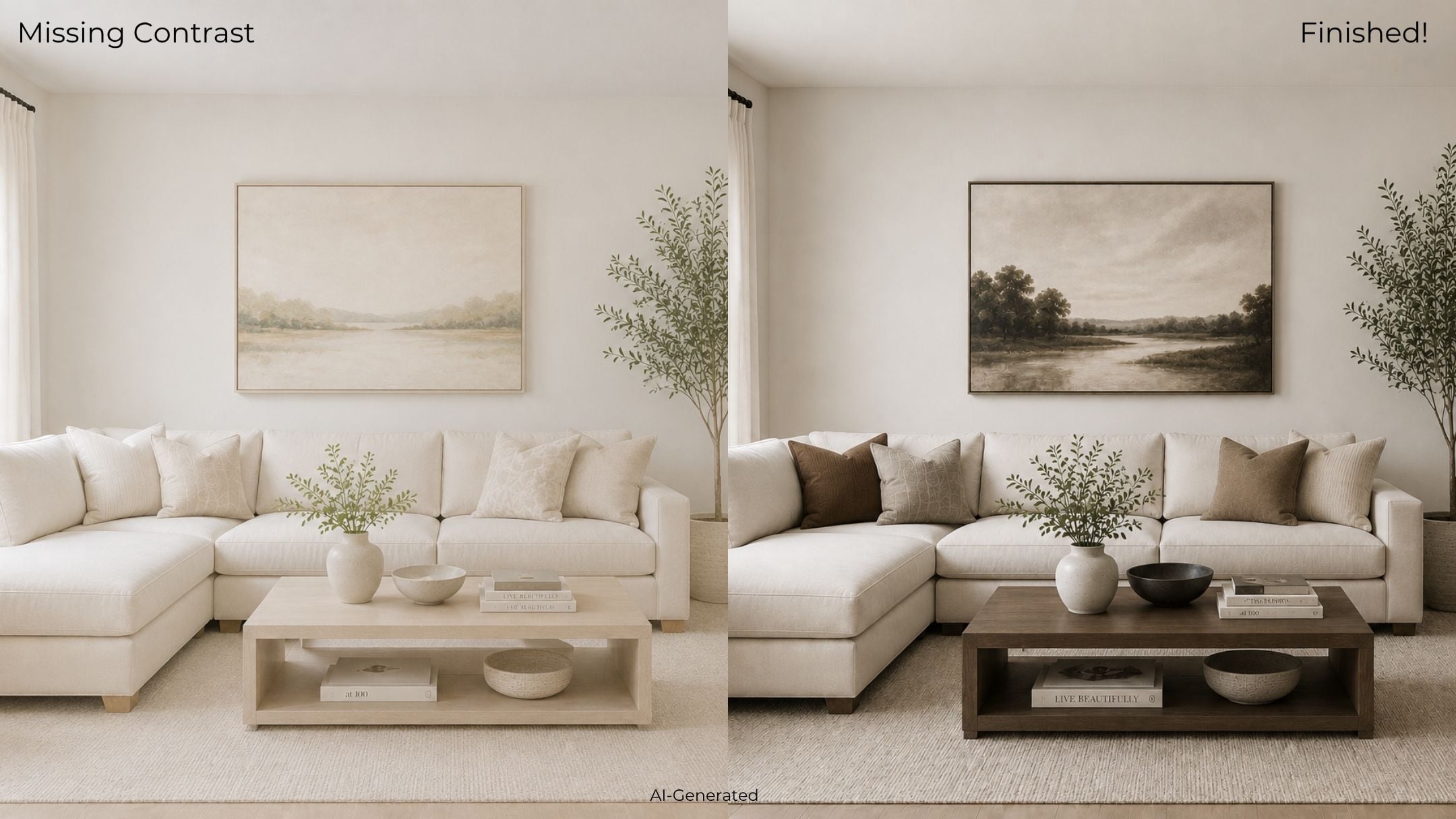
- everything is too similar and the room needs more contrast
- the color palette isn’t defined, or it’s not repeating enough to make everything feel connected
- there’s no clear focal point
- the lighting is too safe
- or all of the furniture is visually “heavy” on one side of the room
A homeowner might initially sum all of that up as, “Something feels off.” But there’s usually a reason it feels off. And if there’s a reason, there’s something you can learn to look for. That realization was a big one for me.
I Started Looking for What Beautiful Rooms Have in Common
My engineering brain has always wanted to understand why something works. So instead of accepting that some rooms simply “feel right,” I dove deep into the principles and elements of design and looked more closely at rooms I thought were beautifully designed.
What were they doing differently? Were there certain things that consistently showed up in well-designed rooms, regardless of decorating style?
The answer was yes.
Again and again, I saw the same underlying design ingredients at work. The rooms might look completely different, but underneath were many of the same things…like good proportion, repetition, texture, contrast, and a bunch of other elements that made the room feel polished and complete.
Eventually, I broke those concepts down into what I call the essential design ingredients. The ingredients are like a checklist of things I look for when I’m evaluating a room. And it completely changed the questions I ask when I’m decorating.
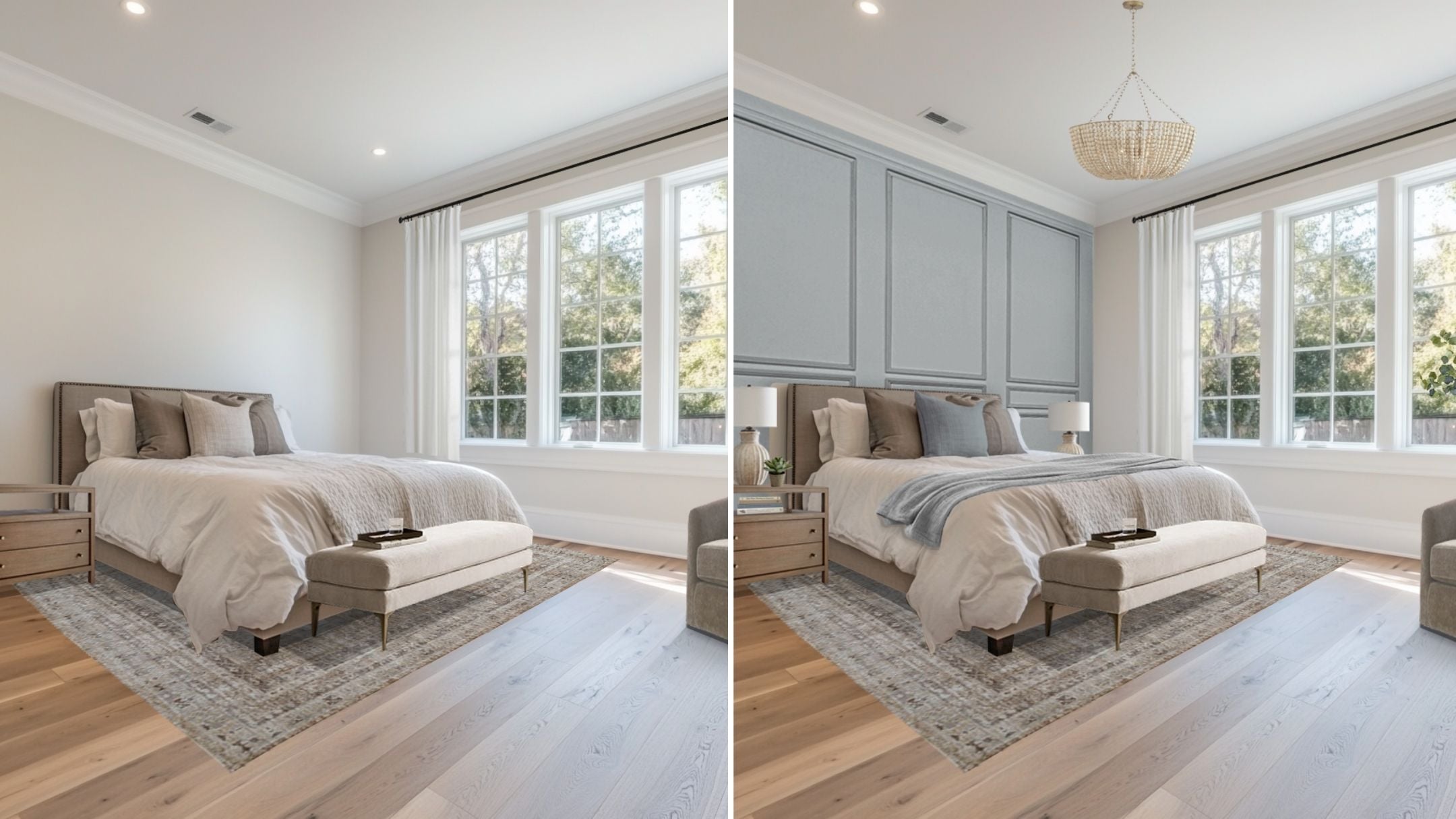
Stop Asking, “Does My Room Feel Finished?”
If you look around your rooms, and it feels like they’re unfinished, don’t just ask, “What do I need to buy?” Instead we want to ask something different:
“Have I addressed all of the design ingredients that make a room feel complete?“
That’s a much easier question to do something with, because if the answer is yes, the room is essentially finished. If the answer is no, you don’t have to randomly start changing things or head to HomeGoods hoping to stumble across whatever the room needs.
If you can determine which design ingredient is missing, you’ll know what to work on next.
And this is where I think homeowners can benefit enormously from learning how to think more like a designer. You don’t need to have better decorating instincts, you just need a better way to evaluate what you’re seeing.
What Makes a Room Feel Finished?
There isn’t one piece of furniture or decor that suddenly makes a room complete. Instead, a finished room usually has several different design ingredients working well together. Here are some of the bigger things I look at.
1. The Foundation of the Room Works
Before worrying about pillows and accessories, look at the big picture things.
- Does the furniture arrangement make sense for how you use the room?
- Is there enough space to move around comfortably?
- Is the furniture the right size for the space?
- Does the room feel balanced, or is one area filled with more furniture or decor than another?
You can’t accessorize your way out of a poor furniture arrangement or a sofa that’s way too big for the room. That’s why I always want to solve the bigger design issues before worrying about the finishing touches.
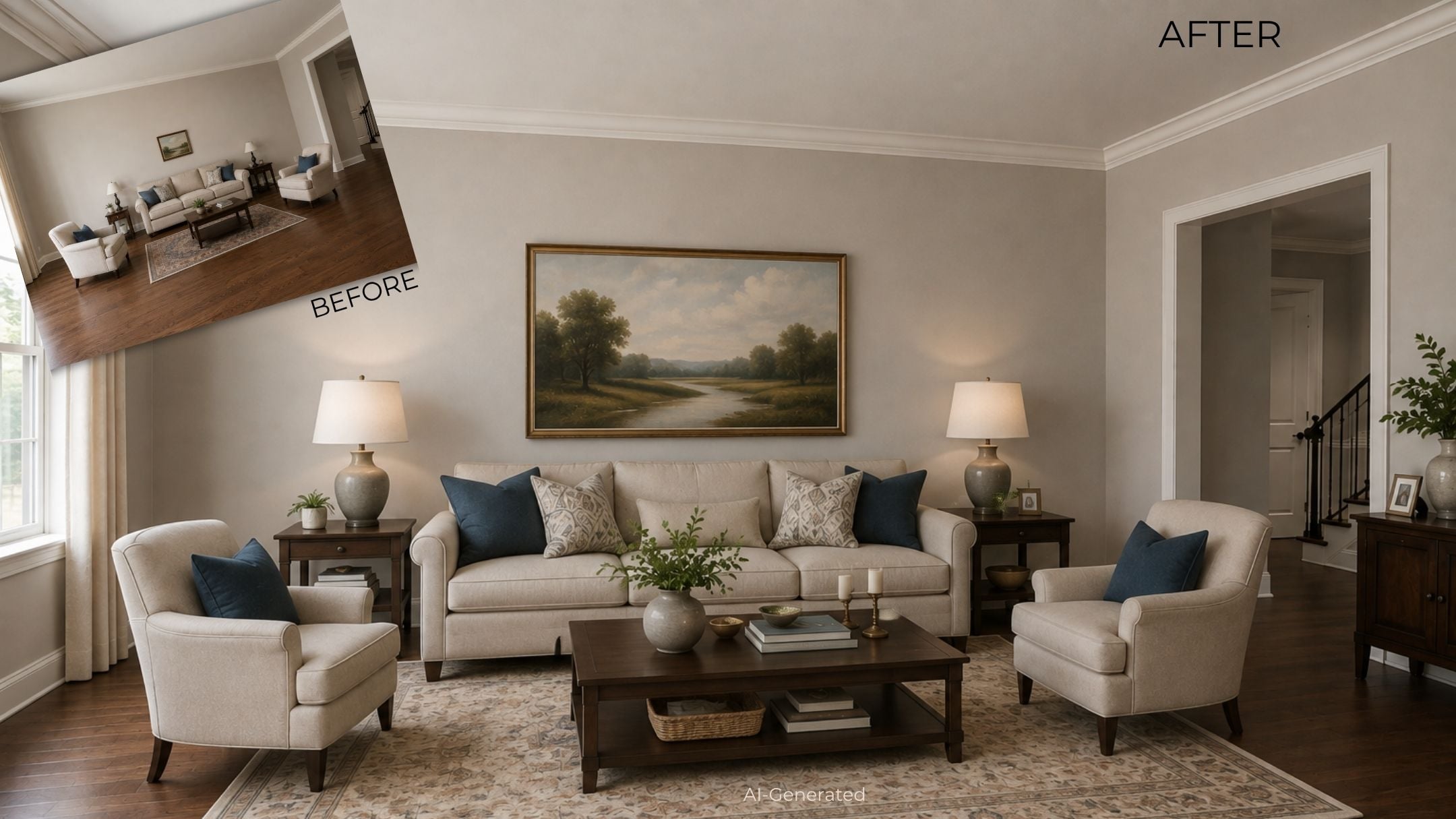
2. The Room Feels Connected
A well-designed room should feel like the pieces belong together, even if you’re blending different decorating styles together. Color is one of the very best ways to create that connection in design.
For example, the blue in a rug could repeat in a pillow, artwork, and an decorative accessory across the room. A wood tone, shape, pattern, or material might show up in several different places. Those little connections give your eyes a path to follow around the room, and make a room feel more cohesive. Without them, you can have a room filled with beautiful individual pieces but it could somehow still feel random.
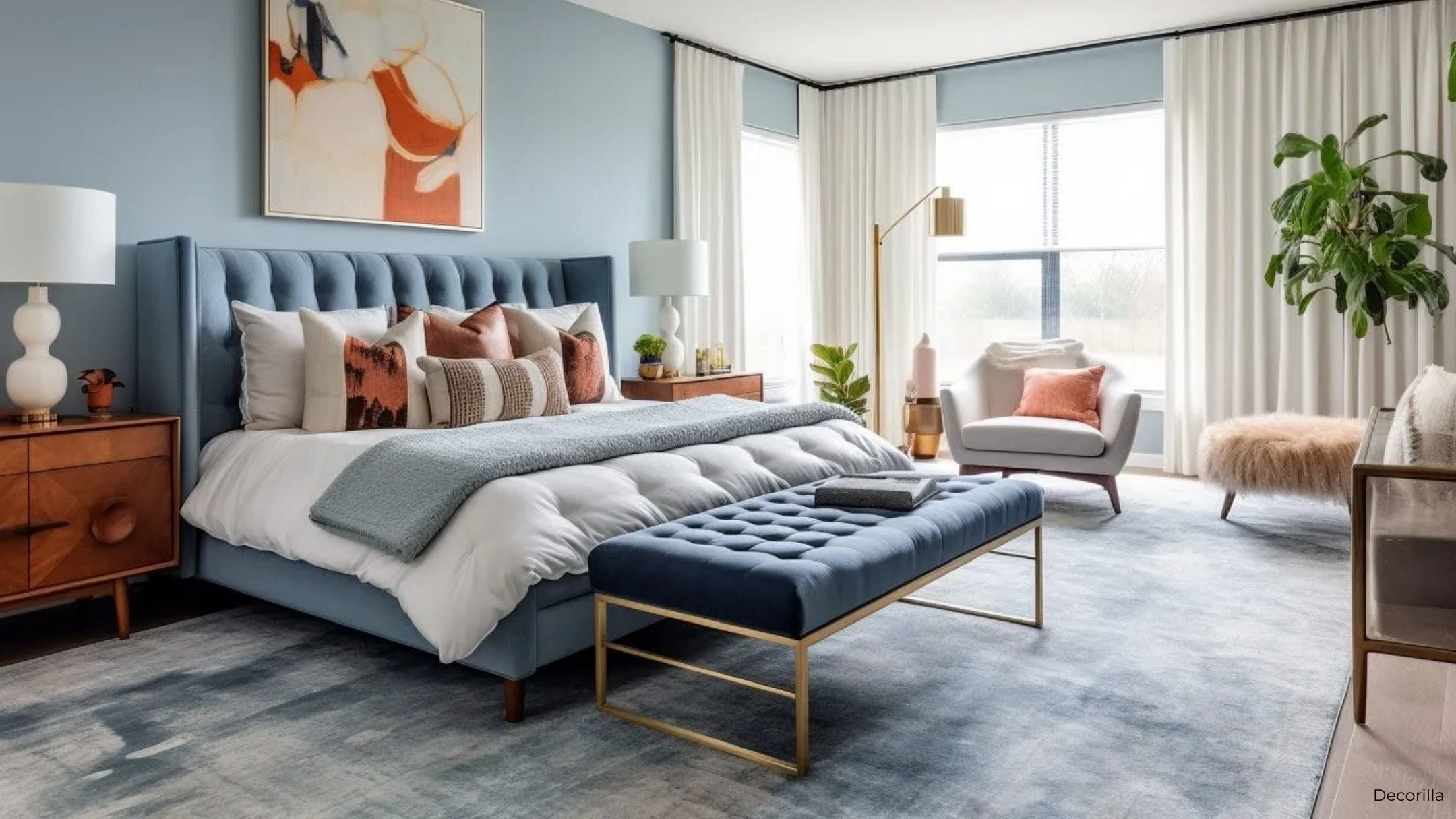
3. There’s Enough Visual Interest
Sometimes a room has all the necessary furniture, but it still feels flat and a bit boring. That’s when I start looking at things like contrast, texture, pattern, and variety. Is there a mix of different textures in the room? Is there some kind of pattern somewhere? Not every room needs dramatic contrast or lots of pattern, but it does need some. The amount might depend on your decorating style. But even a quiet, neutral room needs some variation to keep everything from blending together.
4. Your Eye Knows Where to Go
Great room designs have visual hierarchy. What does that mean? It means that something should capture your attention first, while other things in the room play more of a supporting role. That’s the basic idea behind a focal point.
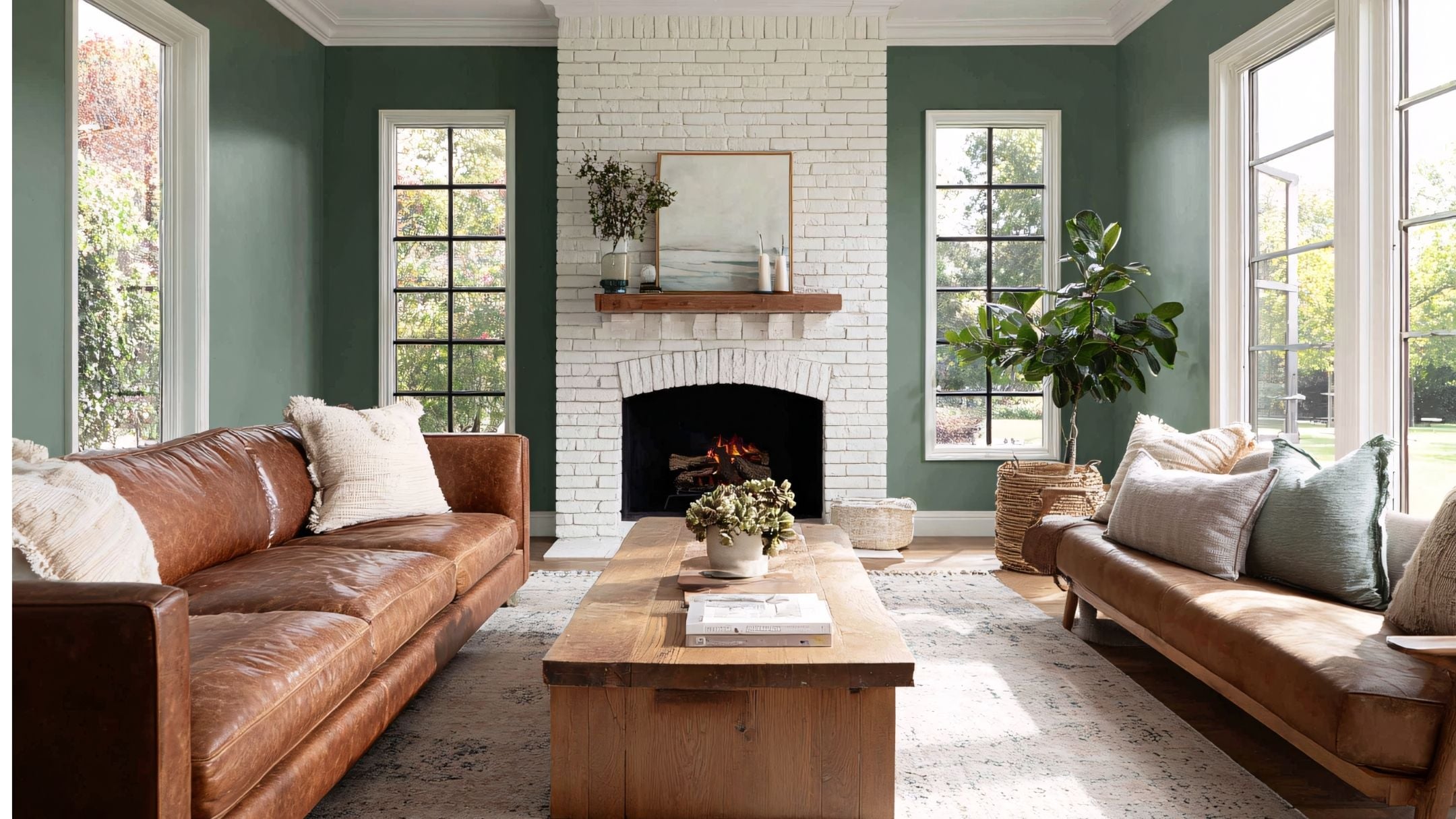
The problem comes when everything is asking screaming for your attention, or nothing is. Things like a fireplace, large piece of artwork, beautiful view, statement light fixture, or even a strong furniture grouping can give the eye somewhere to land.
5. The Finishing Layers Are There
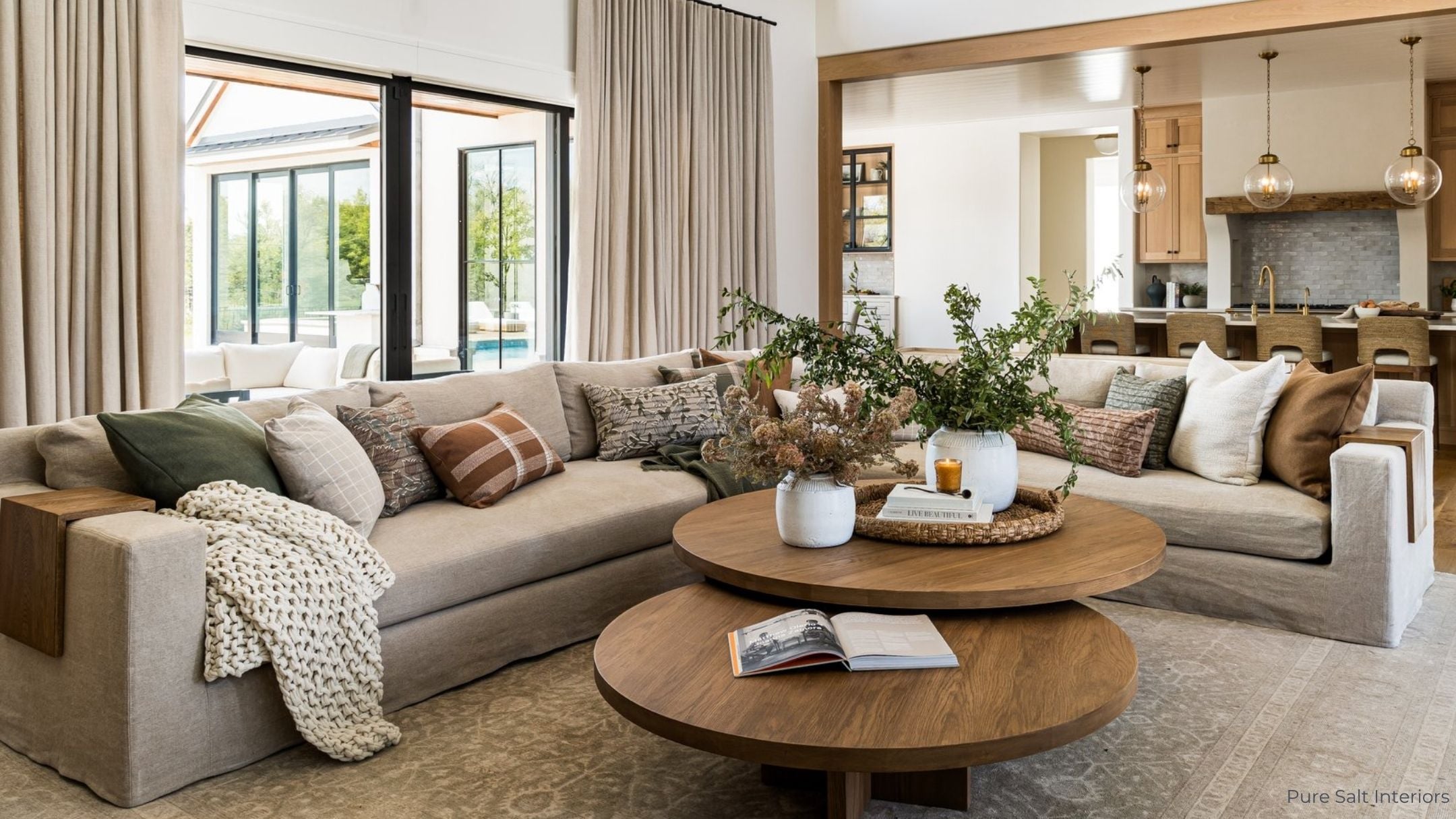
This is often where a room goes from “we just moved in” to “we decorated.” The finishing layers are things like lighting, window treatments, rugs, artwork, pillows, throw blankets, plants, books and accessories…things that can all add softness, personality, color, texture, and dimension.
But here’s the important part: Not every room needs every possible finishing layer.
A room isn’t finished because you checked enough accessories off a list. The goal is to add enough layers that meet the essential design ingredients, and make the room feel finished.
A Finished Room Still Needs Empty Space
This is where homeowners sometimes get into trouble. They see an empty wall space and assume it needs artwork, or an open spot on the console and assume they need to add another little decorative accessory.
But empty space isn’t automatically a decorating problem.
Empty space gives your eyes somewhere to rest, and allows the things you did choose to have more impact. You don’t need to fill a space simply because you can. We’re looking for a good balance.
Are You Still Decorating, or Just Second-Guessing Yourself?
This might be the most important question to ask when you think your room is almost finished. Before you change something or buy something new, ask yourself:
- What specific problem am I trying to solve?
- Why would this change make the room better?
- Is something actually missing?
- Or am I second-guessing a decision that was already working?
There’s a big difference between saying, “This corner feels visually empty and is making the room look unbalanced” versus “I saw a chair I liked on Instagram and now I think I should replace mine.“
The first statement identifies a design problem. The second reopens a decision that you already made, without identifying anything that’s actually wrong…and that can turn decorating into an endless cycle of second-guessing.
At some point, more options don’t create a better room. They just create more doubt.
Don’t keep decorating simply because you can. Keep decorating when you can identify a reason the room needs something, like a missing design ingredient.
Your Room Can Be Finished Without Being Permanent
There’s one more thing I think is important to keep in mind. Calling a room “finished” doesn’t mean you’re never allowed to touch it again. Your taste will probably change over time…your family needs might change…you might decide you’re tired of your pillows.
That’s totally normal. Our homes should evolve with us, and it can be fun and refreshing to make some changes over time.
So, when I say a room is finished, I simply mean that right now, there isn’t a design problem you’re trying to solve.
- The room functions well.
- The major pieces work together.
- The design feels planned out.
- The finishing layers are there.
- There’s enough visual interest without unnecessary clutter.
Now you can stop looking for what’s wrong because the room is finished…at least for now.
You Don’t Need a Designer’s Instinct to Decorate Well
I think homeowners are sometimes given the impression that decorating is something you either have an eye for or you don’t. I don’t believe that.
Yes, experience helps. The more rooms you study and decorate, the faster you’ll recognize what works. But you don’t have to rely on instinct alone. You can learn what to look for.
You can understand why a room feels balanced, why a color palette feels cohesive, why a furniture arrangement works, or why adding one more accessory would actually make the room worse.
And once you understand those things, decorating becomes a lot less about guessing. You can make a decision, evaluate the result, make an adjustment when there’s a reason to, and eventually say:
This room is finished!
Not because someone told you that you’ll “know when it feels right” but because you know what you’re looking for.
How Can I Learn to Evaluate My Room Like a Designer?
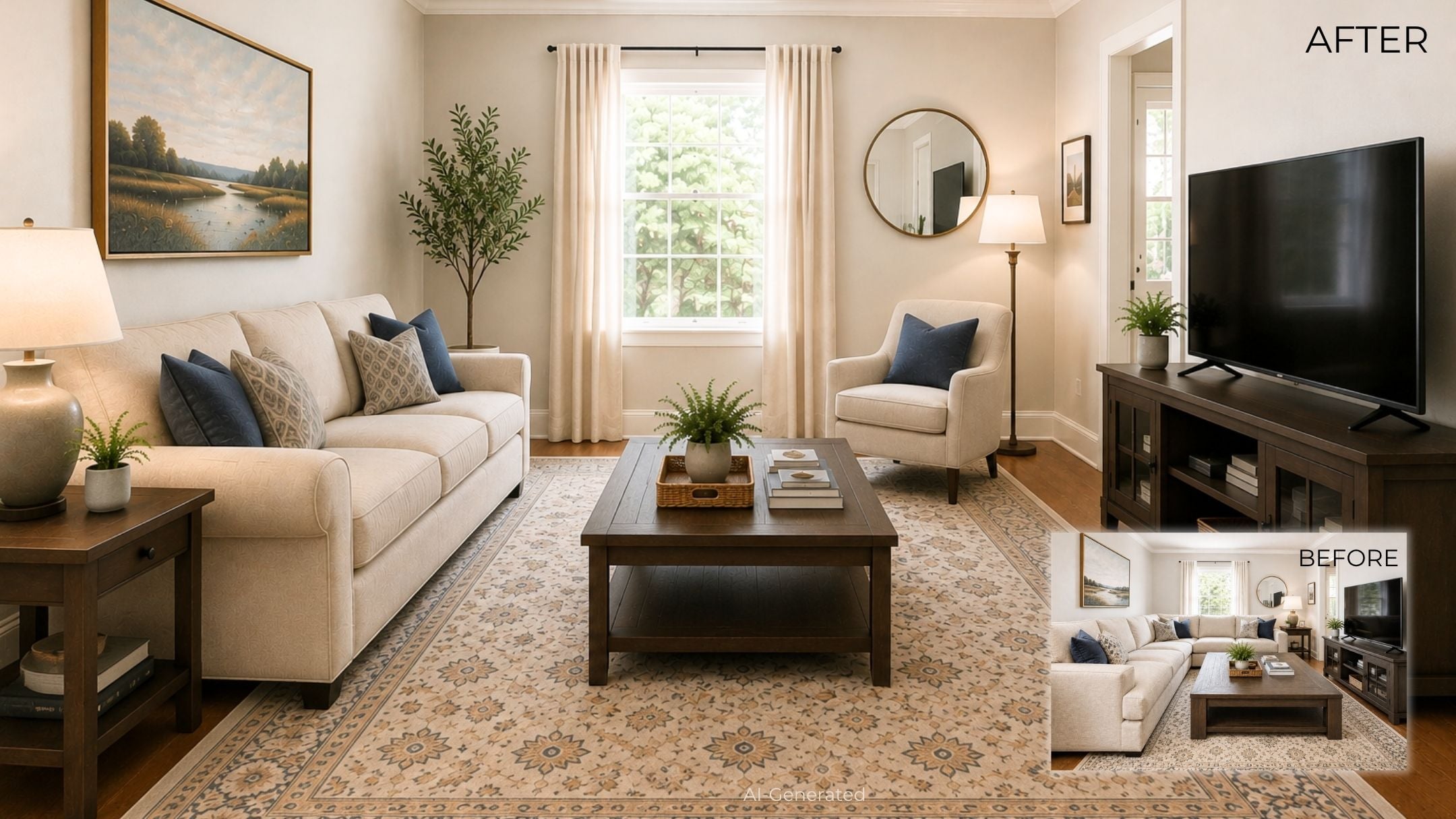
Learning to evaluate a room like a designer starts with knowing what to look for. That’s exactly why I created What’s Missing From My Room?
In this program, I walk you through the specific design ingredients I look for when I’m evaluating a room—things like color, texture, contrast, balance, proportion, lighting, and more. You’ll learn what each ingredient does for a room, how to recognize when it’s missing, and what you can do to improve it.
At the end, you’ll have my Designer’s Diagnostic Checklist to use in your own home. Instead of standing in your room thinking, “something still feels off, but I don’t know what,” you’ll have a step-by-step way to evaluate what’s working, identify what’s missing, and decide what to work on next.
What’s Missing From My Room? is coming soon. Join the waitlist here to be the first to know when it opens and receive the special waitlist offer.