Choosing a white exterior paint color sounds like it should be straightforward. But once you start looking at white samples, you’ll quickly realize how many options there are, and how different one white can look from another. Things can start to feel overwhelming pretty quickly. I’m here to help! In this post, I’m sharing my top picks for the best BEHR white and off-white paint colors for exteriors.
As an interior designer, I generally prefer softer whites and off-whites for exterior body colors rather than the brightest whites in a paint deck. They still tend to look white outdoors, but they’re less likely to feel stark or glaring in direct sunlight.
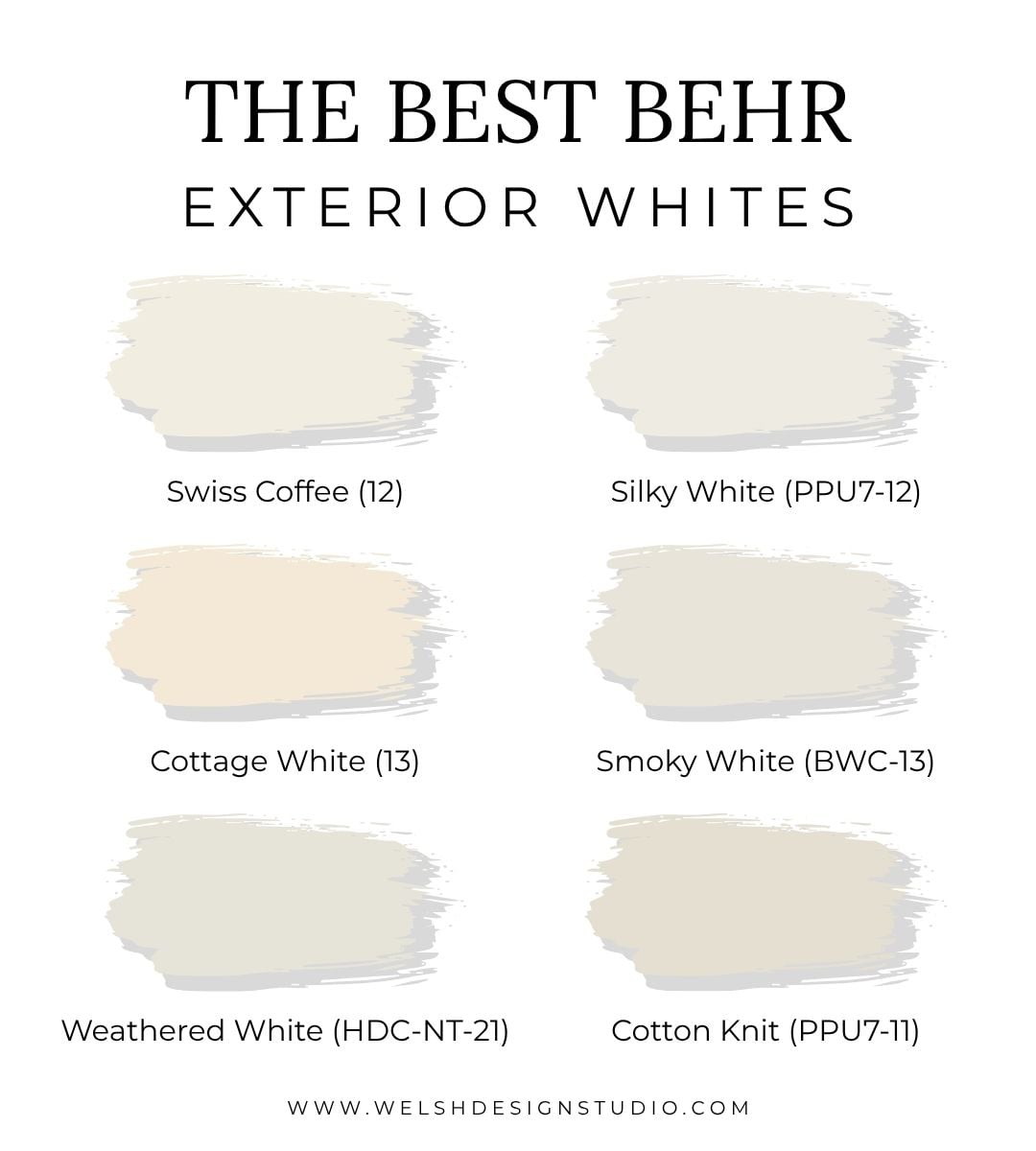
Here are the six BEHR white and off-white paint colors for exteriors that we’ll review in this post:
- BEHR Swiss Coffee (12)
- BEHR Weathered White (HDC-NT-21)
- BEHR Cotton Knit (PPU7-11)
- BEHR Silky White (PPU7-12)
- BEHR Cottage White (13)
- BEHR Smoky White (BWC-13)
I’ll explain the LRV and undertones of each color, where I think it works best, and what you should consider before choosing the best white for your exterior.
Why Does Choosing an Exterior White Paint Color Seem So Challenging?
The reason choosing an exterior white paint color can be so challenging is because there are some different things to consider with exteriors.
First, there are just so many variations of white to choose from. Some whites are crisp and bright, while others have creamy yellow or beige undertones. Some whites lean more gray, or can even flash hints of blue or green. It’s important to choose a white that will work well with your home’s exterior lighting conditions and fixed materials (roof, stone, brick, etc.).
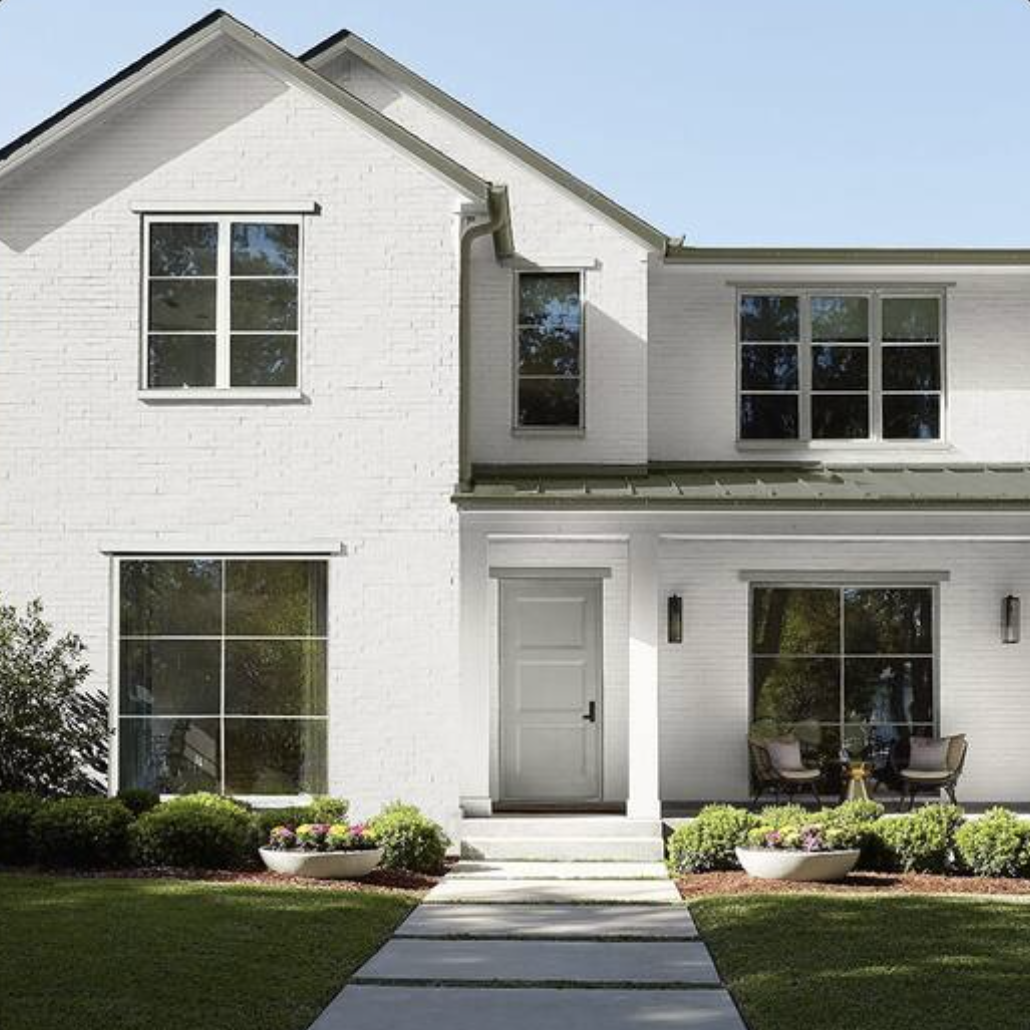
Second, a white that looks perfect on a paint chip, or even on your interior walls, can look way too bright once you take it outside. That’s because exterior paint is exposed to much stronger natural light, which can make colors appear lighter and brighter. A white color that looks like a soft white indoors could look blindingly bright outside, while an off-white color that looks beige or gray on a paint chip could look like a beautiful soft white on an exterior.
This is one reason I don’t usually recommend the brightest whites when choosing a main exterior color. For example, BEHR Polar Bear has an LRV of 90. It’s a beautiful white, and I would certainly consider it for exterior trim. But for the main body of a house, it can look really bright, and I generally prefer something softer.
That brings us to an important number you’ll see throughout this post…LRV.
What Is LRV and Why Does It Matter for Exterior Paint?
LRV stands for Light Reflectance Value. It’s a measurement from 0 to 100 that tells you how much light a paint color reflects. The higher the LRV, the more light the color reflects, and the brighter it tends to look.
This matters a lot with exterior white paint colors because they’re already being exposed to a tremendous amount of natural light. A very high-LRV white (generally above 90) can become a bit too bright in direct sun. Moving down into softer whites and off-whites that have a slightly lower LRV gives the color a little more depth, which can help the exterior feel softer.
Here is how I like to think about LRV with exterior whites:
- LRV 70–75: Soft off-white territory. These can look surprisingly white outdoors because of the intensity of natural light. Great when you want a softer, more grounded exterior.
- LRV 75–85: Probably the sweet spot for most white exterior paints. Light enough to read as white outside but with enough depth to avoid looking glaring.
- LRV 85–90: Brighter white. Can work, especially on shaded homes or when a crisp, modern look is desired, but you want to be cautious with strong sunlight..
- LRV 90+: Very bright. I prefer using these whites for trim rather than the main body of a house.
But LRV is only one part of the equation…you also need to understand the color’s undertones.
Pay Attention to the Undertones in Exterior Whites
There’s really no such thing as “just white.” White and off-white paint colors can have yellow, beige, gray, green, blue, or other subtle undertones.
Those undertones become really important when you place the paint color next to the other materials on your exterior. For example, a creamy white might look beautiful next to warm stone and natural wood but it might look too yellow next to a cooler gray stone. A muted or grayed white could look fantastic with your charcoal roof, but a little flat or dull next to red brick.
That’s why I never choose an exterior paint color by looking at the paint color alone. We’ll talk more about how to choose the right white for your home after reviewing the colors. With that in mind, here are six BEHR whites and off-white paint colors I’d consider first when choosing an exterior white paint color.
6 Best BEHR White and Off-White Paint Colors for Exteriors
1. BEHR Swiss Coffee 12
BEHR Swiss Coffee is a timeless classic! It’s a warm, creamy white with beige and soft yellow undertones and has an LRV of 84. Outside, in bright sunlight, Swiss Coffee will look brighter, and its warm undertones will help keep it from looking stark.
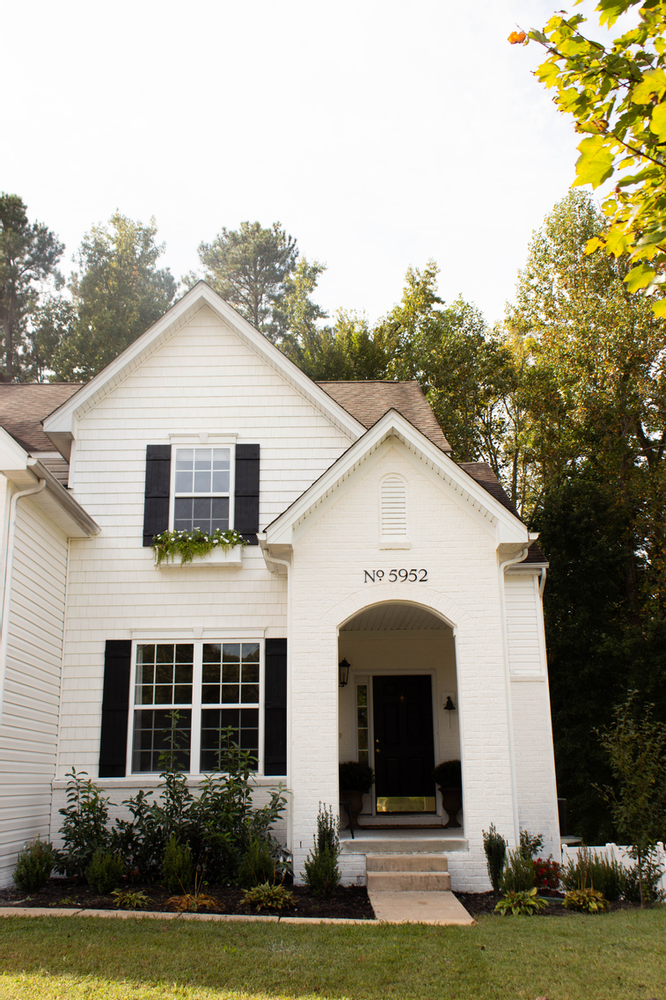
I’d especially consider Swiss Coffee for a home that has warm stone, brick, natural wood, or a brown roof.. Its warmer undertones really help connect with these materials. Swiss Coffee is also a good option when you want your home to clearly read as white but don’t want a crisp, ultra-bright look.
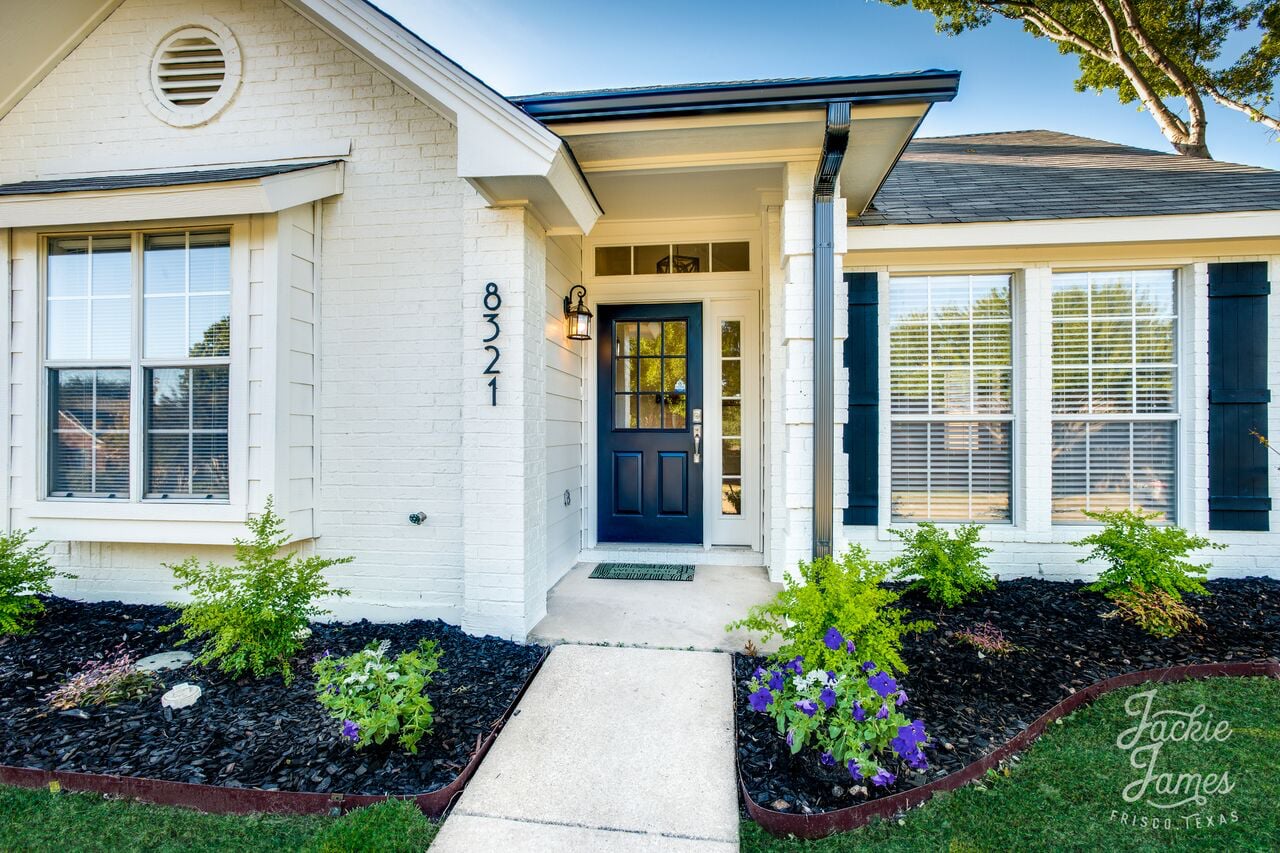
Best for: Warm, traditional exterior palettes and homes with natural materials (like stone, wood, or brick).
Watch out for: Avoid using Swiss Coffee if you have cooler gray or blue-gray stone or roofing. Always compare Swiss Coffee directly with them to make sure its creamy undertones don’t become more obvious than you’d like.
Designer’s Note: Swiss Coffee has been a designer favorite for decades! It’s a good example of why I don’t automatically look for the whitest white when choosing an exterior color. Having a little more warmth and softness can actually help a white exterior feel more inviting and sophisticated.
2. BEHR Silky White PPU7-12
BEHR Silky White is another soft white, but its undertones are more muted than Swiss Coffee. It has a creamy base that is softened by gray, which helps keep it from looking overly yellow. That makes Silky White a great option if you’re looking for a soft, warm white but are nervous about choosing something too creamy.
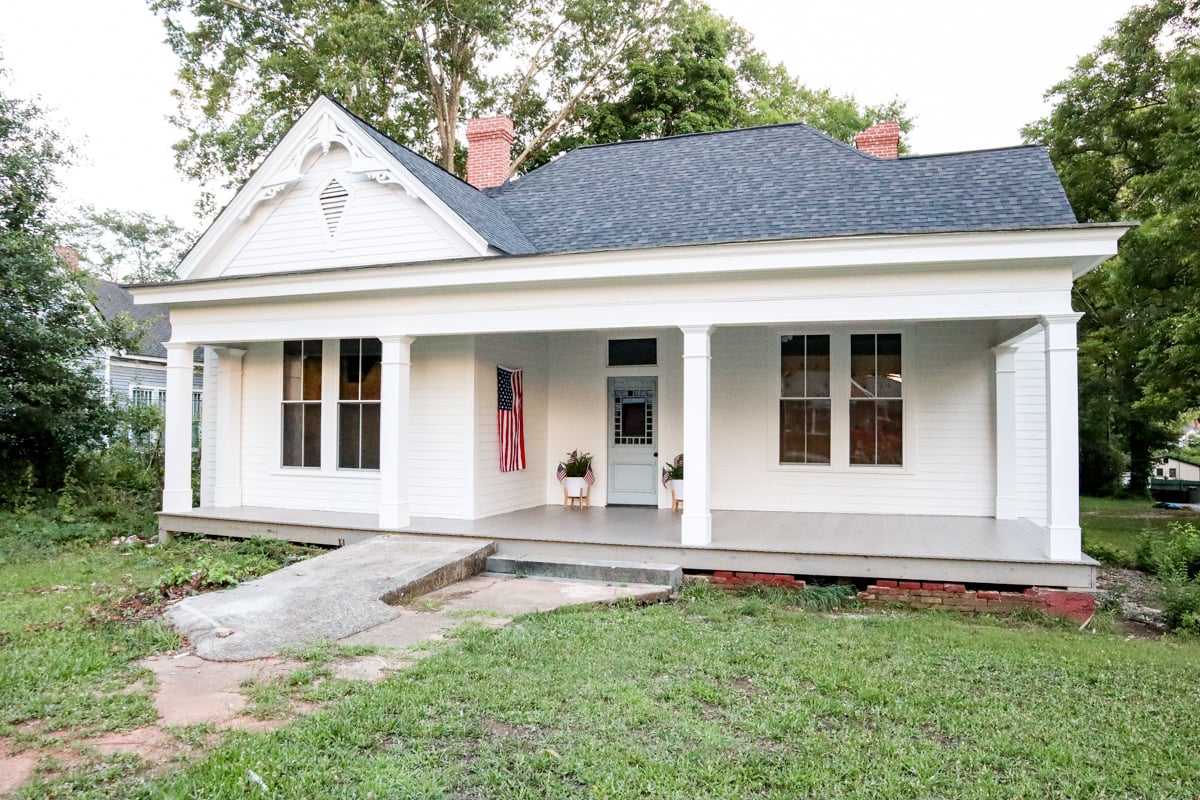
With an LRV of 83, it has enough depth to soften in comparison to brighter whites, but it will stil read as a white outside, rather than as a beige. I like using a white like this when the exterior has a mixture of warm and neutral elements and you need something that doesn’t lean too far in either direction.
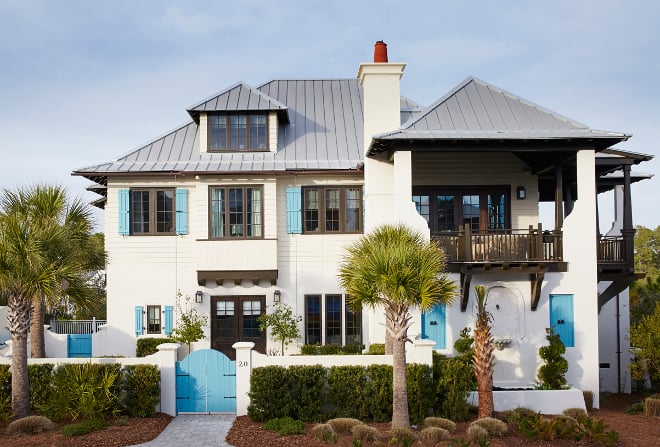
Best for: A soft, balanced exterior white that doesn’t feel too crisp or too creamy.
Watch out for: I wouldn’t use a brighter white trim with Silky White because it can create a mismatch of undertones. Instead, use Silky White as both the body and trim color.
Designer’s Note: BEHR Silky White is one I’d consider when a homeowner tells me, “I want a warm white, but I don’t want my house to look yellow.” Its gray undertones help balance out some of its warmth.
3. BEHR Cottage White 13
BEHR Cottage White moves farther into the warm-white category. It has creamy, honey-gold undertones, so this isn’t the white I’d choose when I’m looking for something crisp or cool. But there are plenty of exteriors where that warmth and subtle glow is exactly what you need.
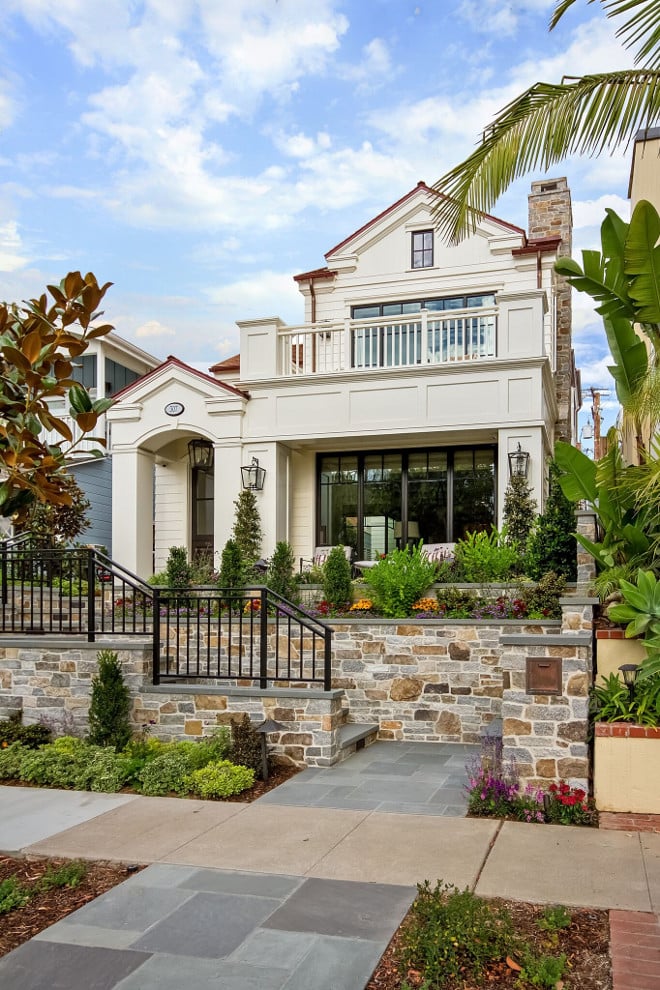
I’d consider using Cottage White for homes that have terracotta or warm reddish-brown roofing, warm stone, natural wood accents, or creamy brick. It can also be a beautiful choice for Mediterranean, Spanish, cottage, and traditional architectures where a stark white doesn’t quite work with the character of the house.
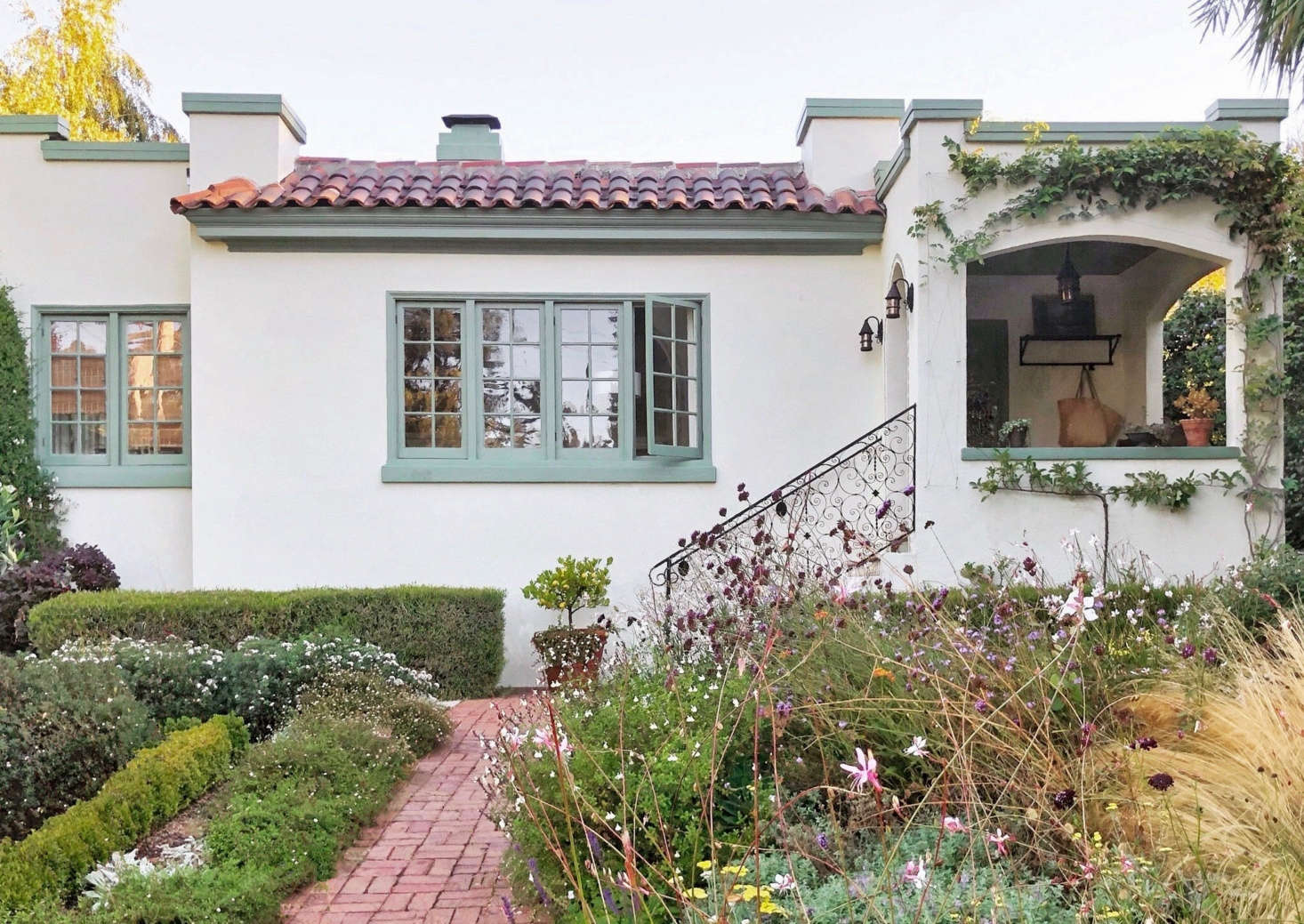
Best for: Warm, earthy exterior palettes and architecture that benefits from a creamy white.
Watch out for: Probably too yellow for west-facing homes…you don’t want all of that warmth stacking up and pushing the color more golden than you intended.
Designer’s Note: Sometimes homeowners get worried about a white looking too dark or yellow on the paint chip, so they automatically eliminate it as an option. But if your roof, stone, or brick has warm undertones, BEHR Cottage White (LRV 82) could be exactly what makes the entire exterior feel cohesive.
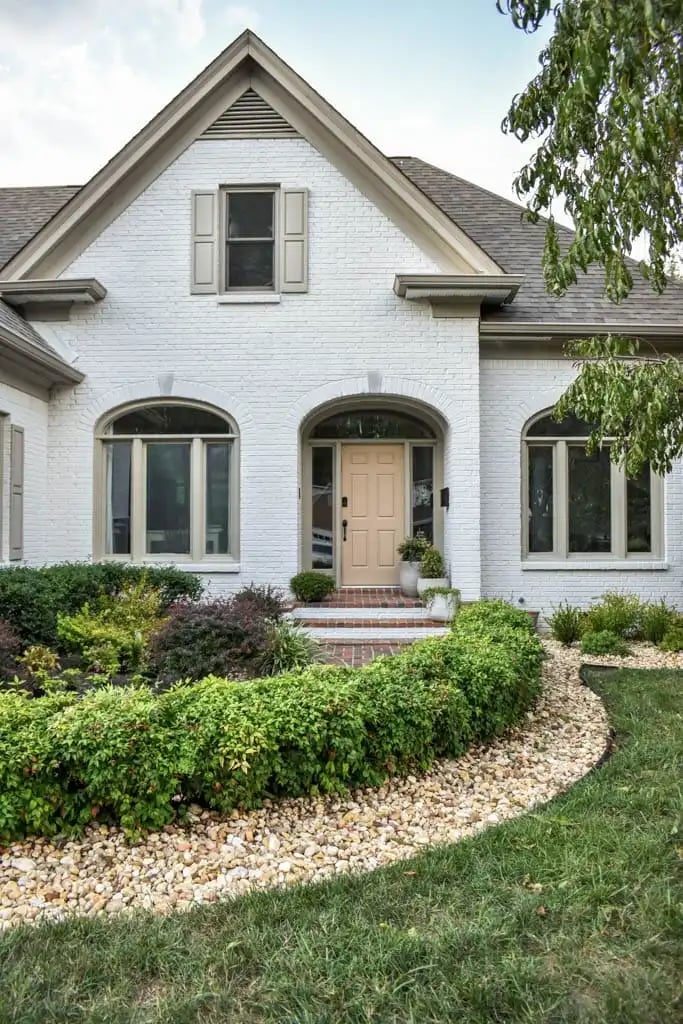
4. BEHR Smoky White BWC-13
Smoky White is a warm off-white with an LRV of 78, but it also has enough gray in it to soften the creaminess. That combination makes it especially intriguing for exteriors. You get some of the warmth that can help a white relate to natural materials without necessarily creating an overly creamy look.
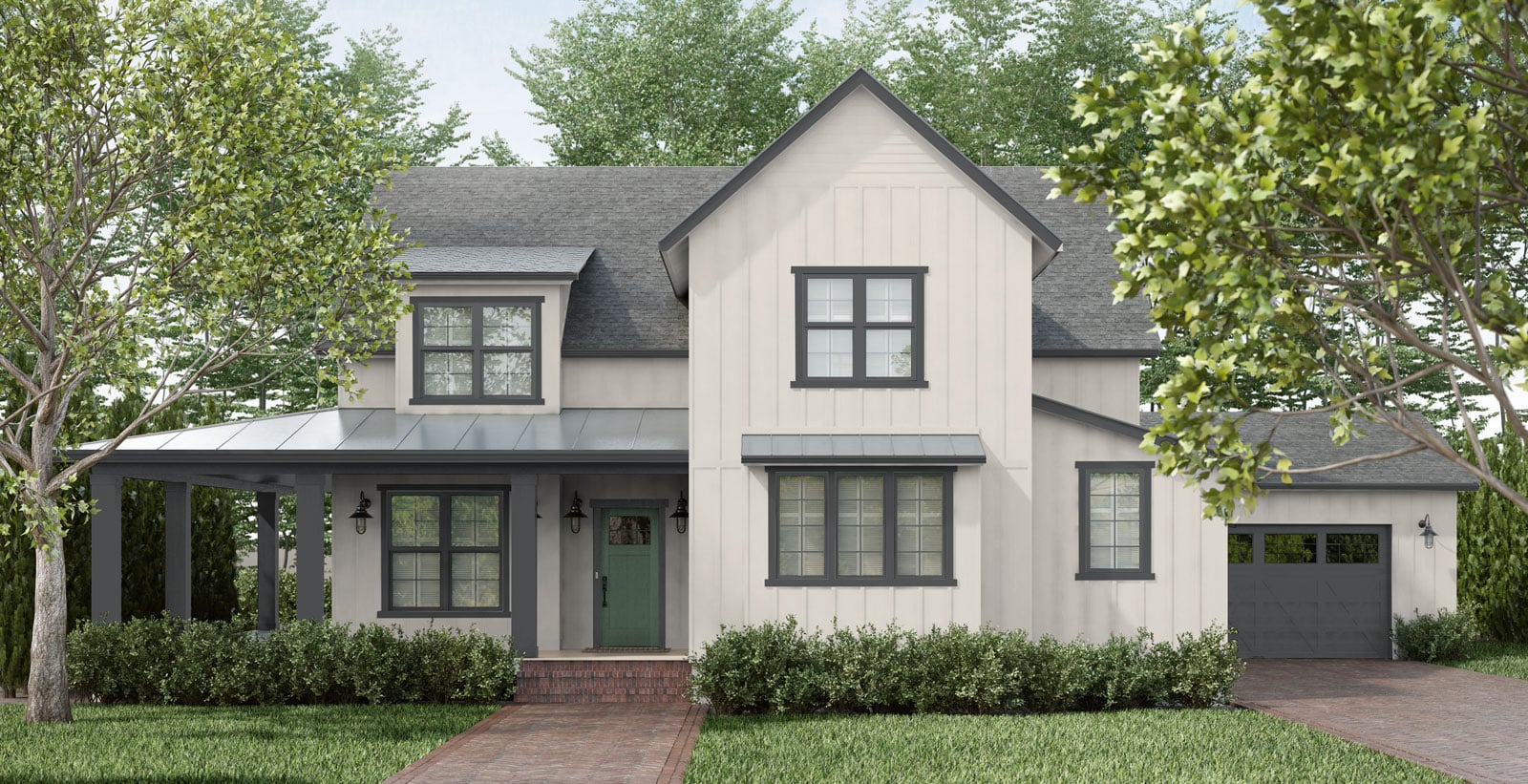
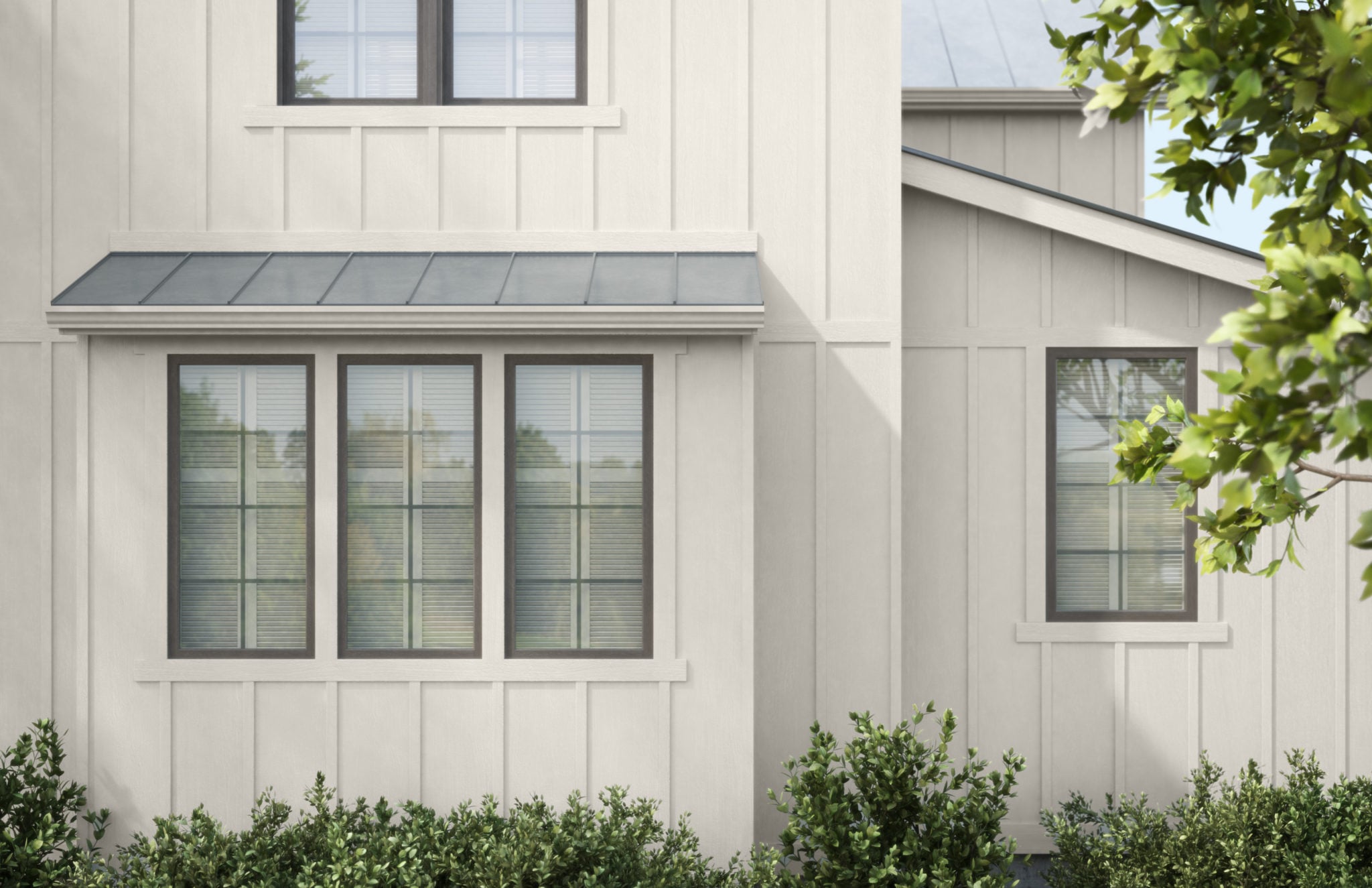
I’d look at BEHR Smoky White for a home with greige stone, warm neutral accents, wood, or other slightly muted natural finishes. It can also be a nice option if the brighter whites you’ve sampled feel too bright or sharp against your home’s existing materials.
Best for: Soft, muted exterior palettes that need some warmth without an overly creamy look.
Watch out for: If you’re going to pair it with a brighter white trim, try to match the greige undertones, rather than pairing it with a yellow-white that could make Smoky White look more gray.
Designer’s Note: This is the kind of color I like to use when I want the exterior to feel warm and approachable but still fairly neutral. It’s a very flexible white for exteriors.
5. BEHR Weathered White HDC-NT-21
BEHR Weathered White is noticeably more muted than the first few colors on this list. BEHR categorizes it within its gray family, and that’s a good indication of what makes this color different. It has a soft gray undertone that gives it a quieter, more subdued appearance.
With an LRV of 77, Weathered White might not immediately look like the white exterior paint color you imagined when you see the sample indoors. But that’s exactly why I wouldn’t rule it out. Outside, strong natural light can make a color like Weathered White look significantly lighter.
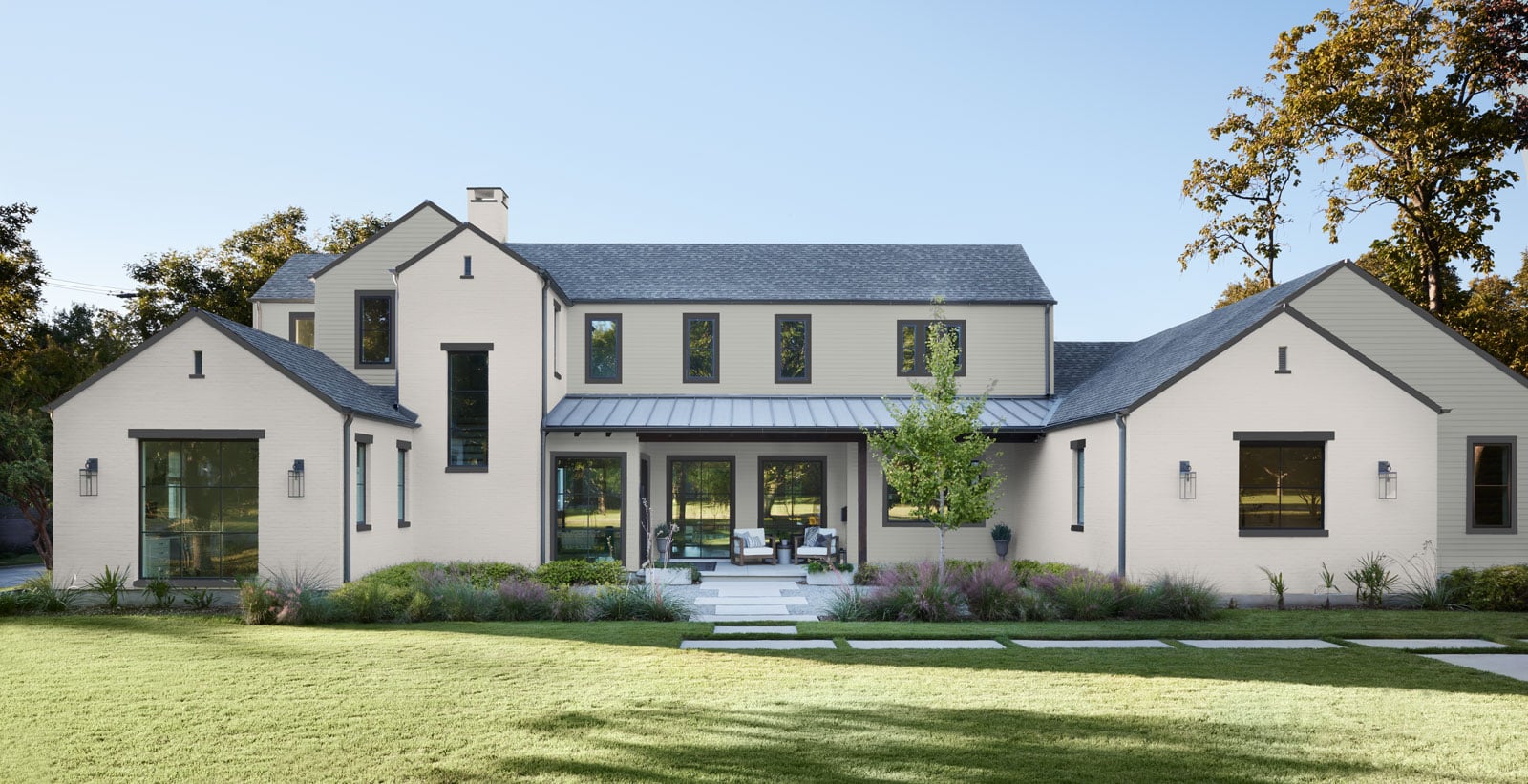
I’d recommend Weathered White for someone who wants a soft, sophisticated white exterior rather than a bright, crisp one. It’s a great option when a house already has gray, greige, or charcoal materials.
Best for: Muted exterior palettes and homes with gray, greige, or charcoal fixed materials.
Watch out for: Not a great fit with very warm brick, stone, or roofing. Make sure the gray in Weathered White relates to those materials rather than making them appear even warmer by comparison.
Designer’s Note: This is a good example of why exterior paint samples can often surprise homeowners. Don’t automatically eliminate a color because it looks “too dark” or “too gray” when you’re looking at the paint chip inside your house. Take it outside before you decide.
6. BEHR Cotton Knit PPU7-11
BEHR Cotton Knit is the darkest off-white on my list, with an LRV of 74. It has subtle beige undertones, giving it more depth of color than a traditional bright white. Again, that might make you wonder why I’m including it in a post about white exteriors. It’s because exterior light changes everything. A soft off-white with this amount of depth can become a beautiful, natural-looking white when it’s exposed to strong sunlight.
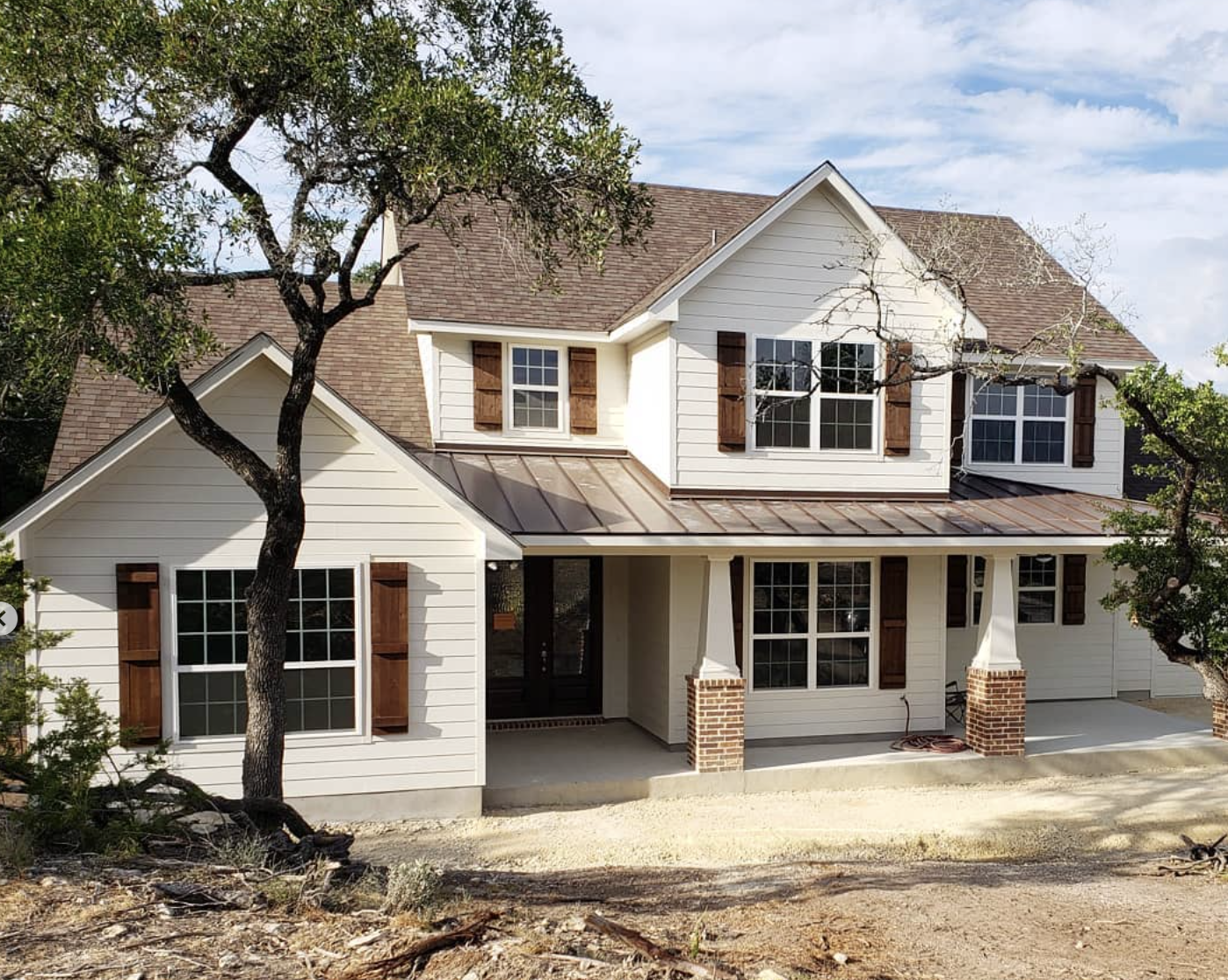
I’d consider using Cotton Knit if you want the painted areas of your home to blend in a little more with natural stone or wood accents, rather than creating a strong contrast. Cotton Knit looks beautiful with wood, taupe, beige, or other earthy-toned accents. It can also be a good choice for someone who likes the look of a soft white house but doesn’t want it to appear too bright or crisp.
Best for: Soft, natural exterior palettes with beige, taupe, stone, or wood accents
Watch out for: Choosing it without comparing it directly to your fixed finishes. Because Cotton Knit has more visible color than a brighter white, those undertone relationships become more important.
Designer’s Note: Don’t judge Cotton Knit against a sheet of white printer paper. Judge it against your roof, stone, brick, and wood, and look at it outside. Those are the comparisons that actually matter.
Which BEHR Exterior White Is Right for Your Home?
Rather than trying to pick the “best” color from this list, I’d start by narrowing down your choices according to what your exterior needs.
1. Start With the Fixed Elements of Your Home
Before you even start comparing white paint samples, take a look at the parts of your exterior that aren’t changing. These might include things like your roof shingles, stone, brick, wood columns, or window frames. Look for the dominant colors and undertones in those materials (warm vs cool vs neutral).
If your house has warm beige stone and a brown roof, a warmer white or off-white will work best to create a cohesive palette. If you have a gray roof or cooler gray stone, you may want something more neutral or slightly muted or gray.
Your home’s architectural style matters, too. A creamy white can feel completely at home on a traditional, cottage, Mediterranean, or Spanish-style exterior, while a cleaner or more muted white may make more sense on a Modern Farmhouse or contemporary style home. There’s no rule saying a certain architectural style must use a particular type of white, but you can think of architecture as just another way to filter your choices.
The goal is to find the white that makes all of the existing pieces of your exterior feel like they belong together. Here are a few more thoughts regarding the whites in this post:
- If you want a soft white that still feels fairly light, start with BEHR Swiss Coffee or Silky White.
- If your exterior needs more warmth, take a look at BEHR’s Swiss Coffee and Cottage White.
- If you want something softer and more muted, try BEHR’s Weathered White or Smoky White.
- If your house has natural, earthy materials and you want a very soft off-white, check out BEHR’s Cotton Knit.
2. Get Samples and Test Them
The next step is to head to Home Depot or Samplize and get samples of a few different whites, and compare those colors directly with your home’s permanent materials. You’ll be able to quickly see which ones are strong contenders, and which ones don’t quite work. That’s far more useful than choosing your favorite white from a paint chip.
You should now have a few whites that could be a good fit for your home, and it’s time to move on to testing them, which I’ll cover in more detail in the next section.
How to Test White Paint Colors on Your Exterior
Testing is essential with exterior paint because sunlight, shade, reflected light, landscaping, and the direction your home faces can all change the way a paint color looks.
Even after you’ve narrowed your choices down to two or three whites, I wouldn’t make the final decision from a paint chip. Instead, you want to use larger samples and look at them from a distance on the actual house.
I highly recommend Samplize peel-and-stick sample sheets for testing your BEHR exterior white paint colors. They’re large, no-mess, and created with real paint so you can get an accurate representation.
I recommend checking your samples:
- On more than one side of the house
- In both direct sunlight and shade
- In the morning and afternoon
- Next to your roof (if you can reach it, and if it’s a color that might influence your choice)
- Beside any stone, brick, or wood
- Next to any trim and accent colors you’re considering
Also, give yourself some time with the samples. A white could look beautiful in soft morning light but too bright or yellow in the afternoon sun. Another might look perfect on the sunny front of the house but surprisingly gray or dull on the shaded side. You’ll want time to observe those changes before committing to several gallons of BEHR paint.
One More Important Testing Tip
Don’t compare too many whites at once. Once you’ve narrowed down the general direction (warm, muted, creamy, etc.), choose a few strong contenders and compare those. That’s where this list can give you a great starting point!
When you put too many nearly identical whites next to one another, you can easily start obsessing over tiny differences that might not matter once the entire house is painted. The goal isn’t to find an absolutely flawless white under every possible lighting condition. The goal is to find the one that generally works best with your house as a whole.
What Trim Color Goes With a White Exterior?
There are a couple of different directions you can take with trim on a white house.
1. Use the Same White for Trim
One of my favorites is to use the same white for the body and trim. Instead of introducing a second white, or a brighter white, you can stick with one white and create a very clean, cohesive look.
2. Create Subtle Contrast With a Brighter White
For some of the deeper off-whites, you can also choose a brighter white trim for a subtle hint of contrast. For example, BEHR Polar Bear could be a great option if you want crisp white trim against one of the softer white body colors in this post.
3. Add Definition With a Medium Greige or Beige
Another favorite option with white exteriors is to create a little more definition with a darker shade. A medium greige or beige can give you a classic, timeless look, and works great with natural materials like stone and brick.
4. Use Black or Charcoal for High Contrast
Black or dark charcoal trim with a white body color has been a very popular choice for modern exteriors. BEHR Cracked Pepper, BEHR Black, or BEHR Espresso Beans are all fantastic options for creating that Modern Farmhouse look.
Accent Colors for a White Exterior
One advantage of a white exterior is that you have a lot of flexibility when it comes to accent colors.
Black and charcoal are classic options that create a strong contrast, which works especially well on window frames, shutters, doors, and other architectural details. Natural wood is another beautiful choice because it introduces warmth and texture. I especially like wood accents when the exterior white has some warmth of its own.
Depending on the undertones in your white and the fixed materials on the house, you could also consider:
- Muted greens (dark or light)
- Blue or blue-gray
- Warm browns
- Bronze or deep olive greens
- Dark gray
- Greiges or beiges
But I wouldn’t choose your front door or shutter color just because it looks good with white. You want to be sure and look at your entire exterior colors palette. Your roof, stone, brick, siding, trim, doors, shutters, garage doors, and other finishes should all feel connected.
Final Thoughts on Choosing a BEHR Exterior White Paint
The best exterior white isn’t necessarily the brightest or most neutral white in the paint deck. In fact, one of the reasons I’ve chosen BEHR’s Swiss Coffee, Silky White, Cottage White, Weathered White, Cotton Knit, and Smoky White for this list is that they all have some degree of softness. That softness can be a huge advantage outdoors.
The real decision comes down to the undertones your house needs.
- Start with your permanent elements (roof, stone, brick, wood, windows, and other materials). Decide whether those elements are pointing you toward a warmer white, or maybe a more muted or neutral white.
- Then, think about how bright you want the house to look and use LRV to help narrow your choices. Brighter whites are great for modern exteriors, but a softer, creamier white often works best with more traditional homes.
- Finally, test your finalists outside, and evaluate them right alongside the other fixed materials they’ll actually be living with.
That’s how I approach exterior paint colors as a designer. I’m not looking for the prettiest white in isolation. I’m looking for the white that makes everything around it look better, too.
Need Help Creating Your Exterior Color Palette?
Choosing your white body color is only one piece of the puzzle. Your trim, front door, garage door, shutters, roof, stone, brick, and other finishes all need to work together to create a cohesive exterior.
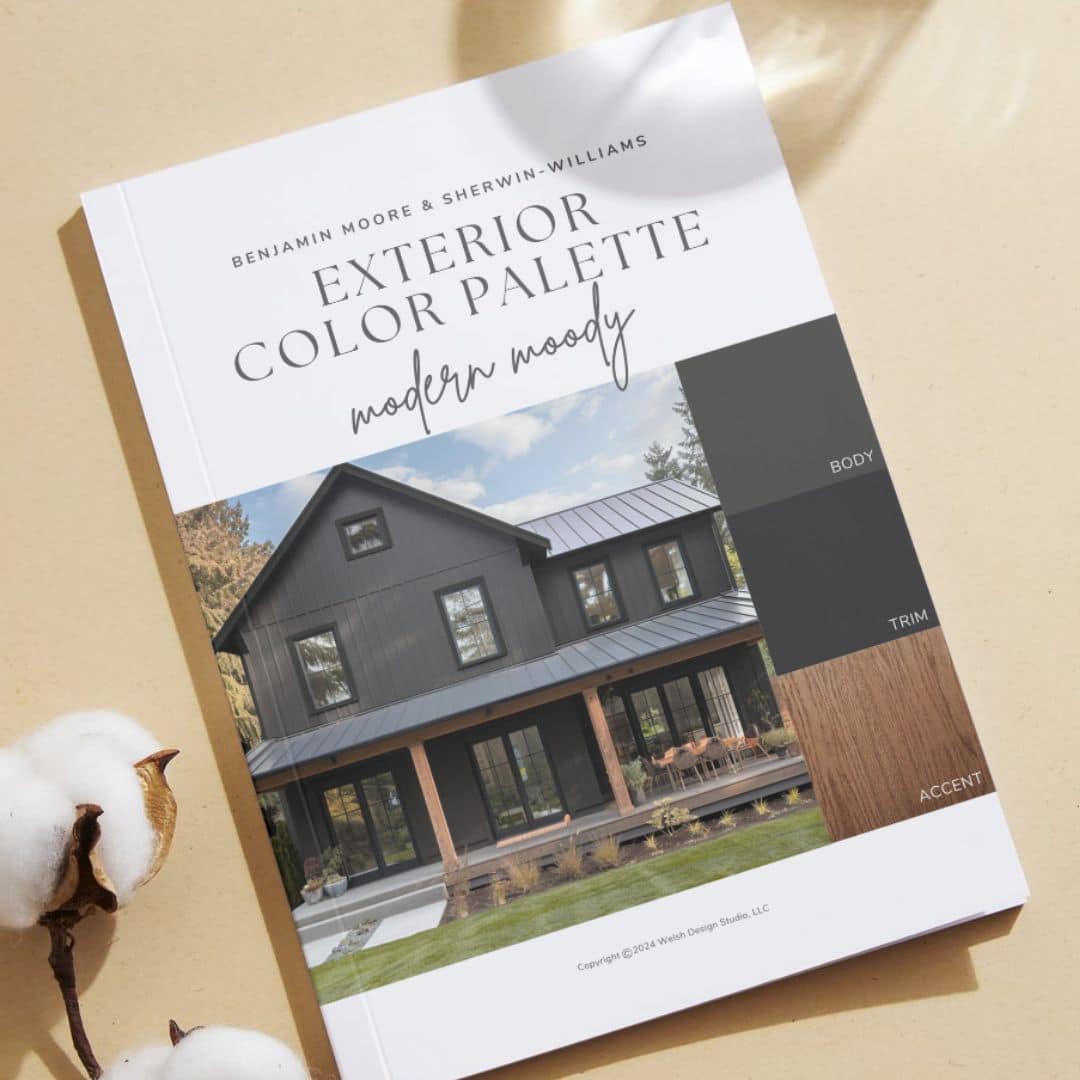
If you’d like a shortcut, my Exterior Paint Color Palettes give you coordinating body, trim, and accent colors that take some of the guesswork out of putting those pieces together.
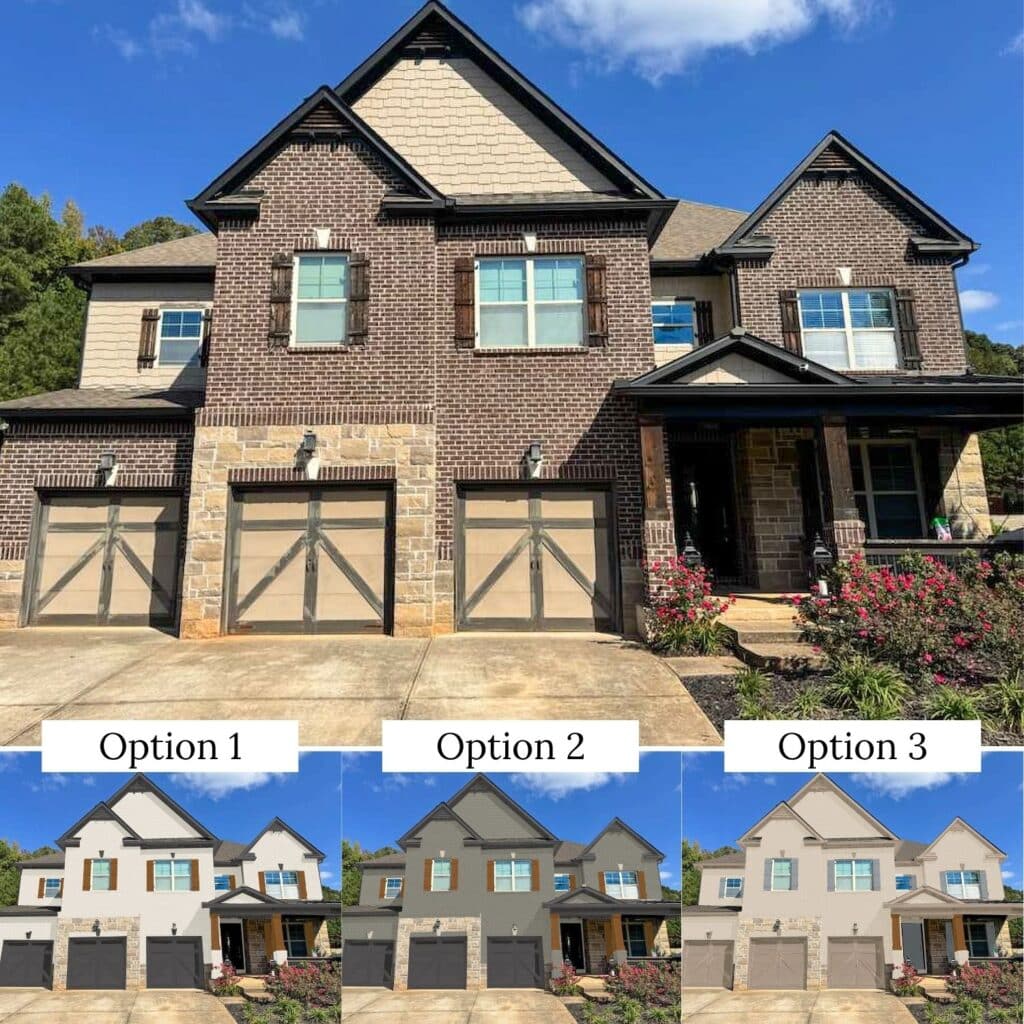
And if your home has tricky stone, brick, roofing, or other fixed elements and you want personalized guidance, my Exterior Paint Consultation can help you choose colors specifically for your home.
The goal isn’t simply to paint your house white. It’s to create an exterior color palette where every color and material feels like it belongs, and a house that you love coming home to.