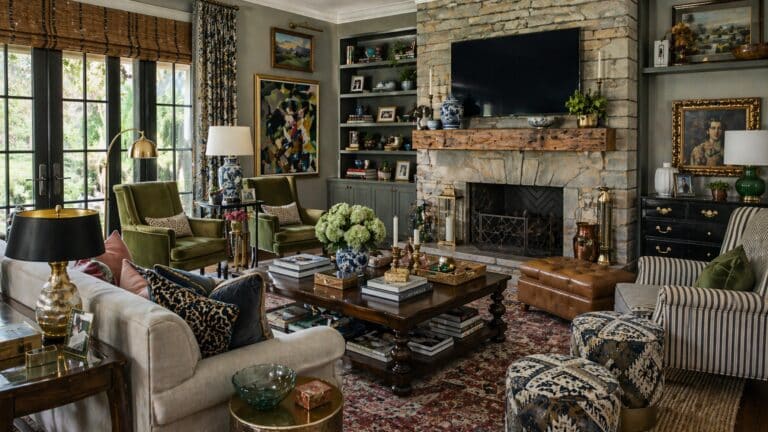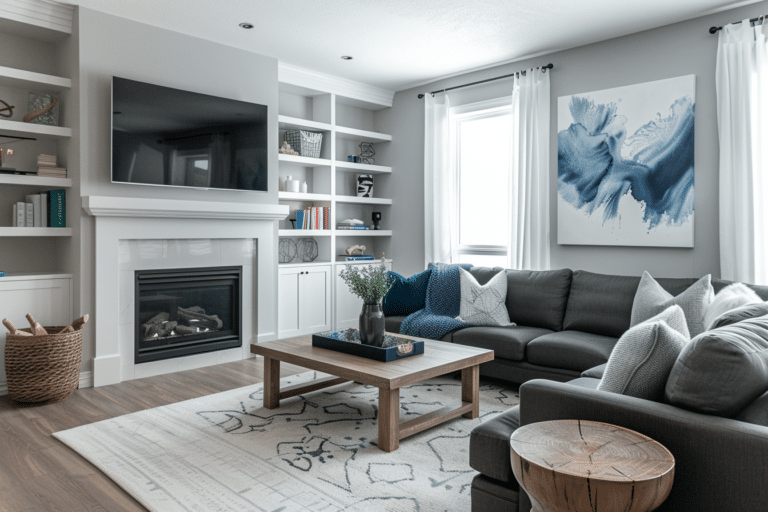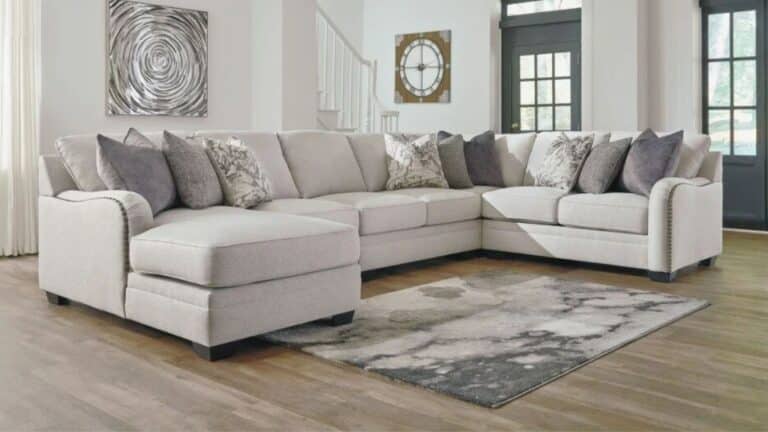
If you have a living room full of furniture and decor you actually like, but somehow the whole room still feels a little…off, there’s usually a good reason for it. And buying more pillows or decor usually isn’t the answer.
As an interior designer, there are certain things I look for right away when a room isn’t quite working. I’m not immediately thinking about what I would buy or add. I’m looking at the room as a whole and trying to figure out what’s causing that feeling that “something isn’t right.“
The good news? Things may be easier to fix in your living room than you think. Keep reading for some tried-and-true living room decorating tips, and five things I’d check before you start changing anything.
Why does my living room look off? (TLDR)
Start by checking your color palette, rug size, the balance of the room, your wall space and artwork, and your focal point. Any one of these can make an otherwise nicely decorated living room feel disconnected or unfinished.
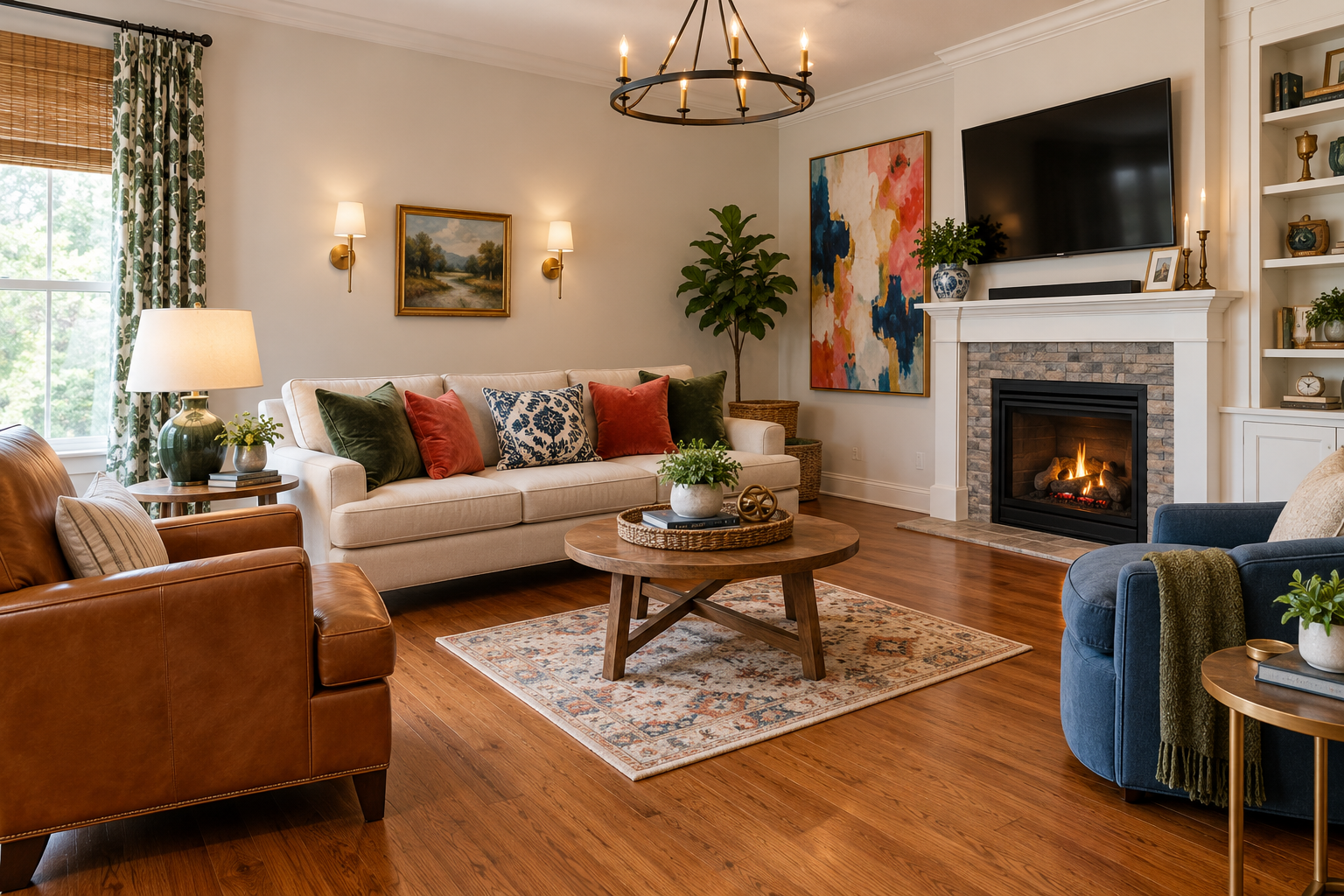
1. Check Your Living Room Color Palette
One of the first things I look at when a living room doesn’t feel cohesive is the color palette. And I don’t just mean the paint color on your walls. Your wall color is only one part of your living room color scheme. Your furniture, area rug, artwork, pillows, window treatments, and accessories all contribute to the overall palette.
One mistake I see homeowners consistently make is choosing their furniture and decor individually. Maybe you found a blue rug you loved. Then you bought some green pillows to go on your beige sofa. Later, you found a piece of artwork you liked with red and yellow in it. There’s nothing wrong with any of those colors individually. But if the blue only appears in the rug, the green only appears on the sofa, and the red only appears in the artwork, the room can start to feel a little random.
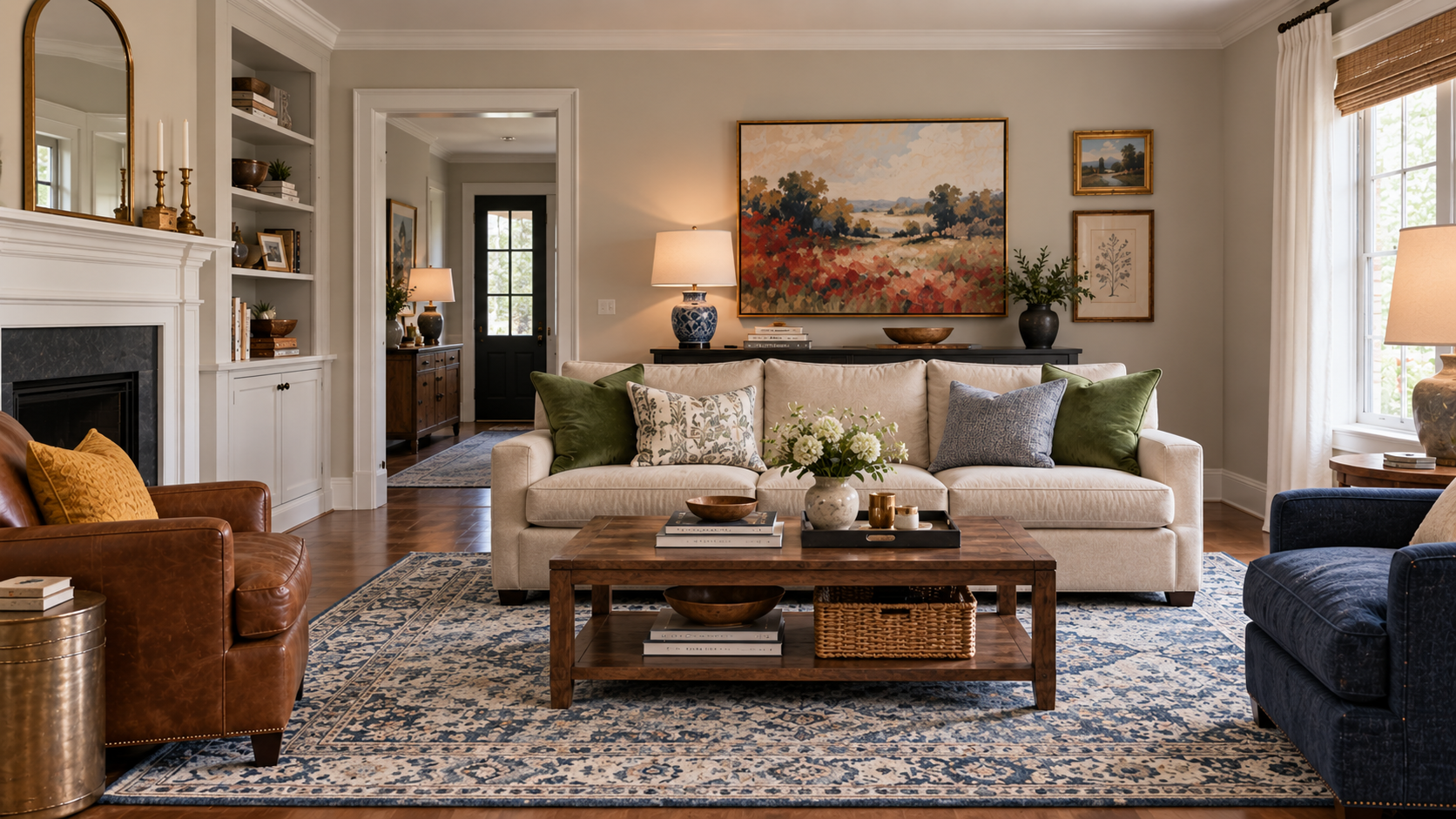
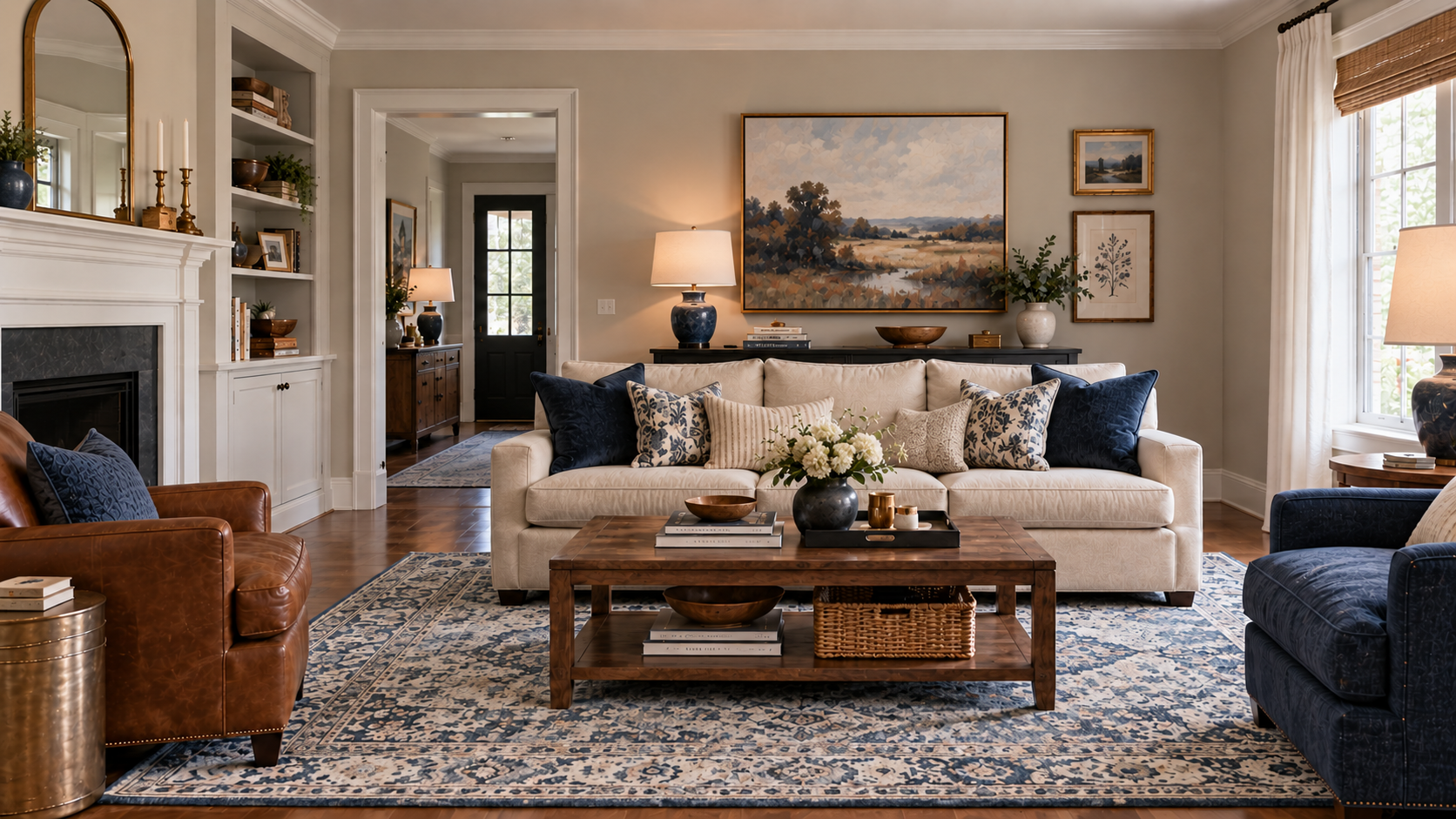
How to tell if your color palette is the problem
Take a picture of your living room and look at the room as a whole. Photos are surprisingly helpful because they make it easier to stop looking at the things you own and start looking at the room as a whole.
Can you identify three or four main colors that show up throughout the living room? More importantly, do you see those colors repeated around the room? That’s the part homeowners often miss.
A good color scheme creates connections. If there’s blue in your rug, for example, you might repeat a version of that blue in the artwork and again in a pillow or accessory. Now your eye starts connecting those things.
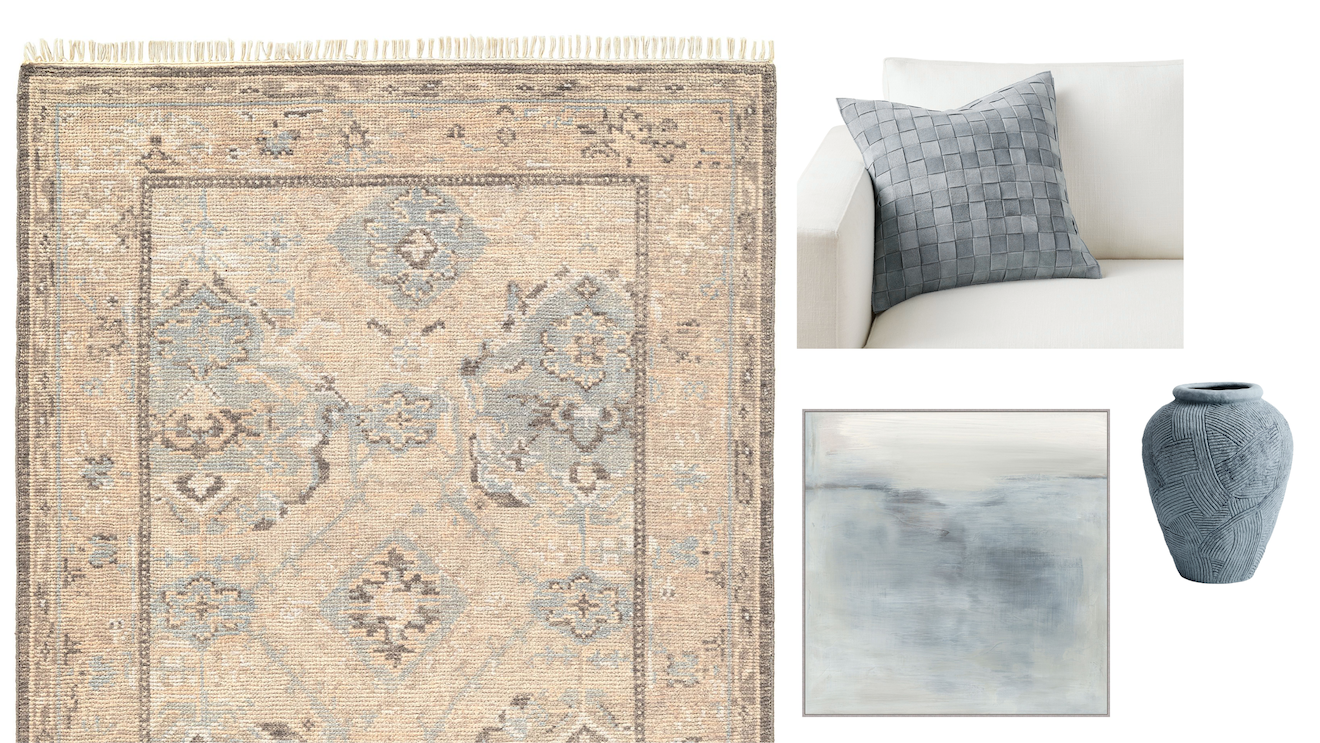
This doesn’t mean everything needs to match perfectly. Using the exact same shade of blue on your rug, curtains, pillows, and accessories can make a room feel flat and overly coordinated. You want repetition, not duplication. So, feel free to use lighter and darker versions of a color in your living room. The goal is simply for your colors to look like you chose them on purpose.
Try this: Identify the three or four main colors in your living room and notice where each one appears. If you have several “one-off” colors that don’t connect to anything else, your color palette may be part of what’s making the room feel off.
2. Check Your Rug Size
I’m just going to say it…your rug is probably too small. This is one of the most common living room decorating mistakes I see.
You can spend thousands of dollars on beautiful furniture and then put a dinky 5×7 rug floating in the middle of everything. Suddenly, that little area rug looks like an afterthought and the room doesn’t feel pulled together.
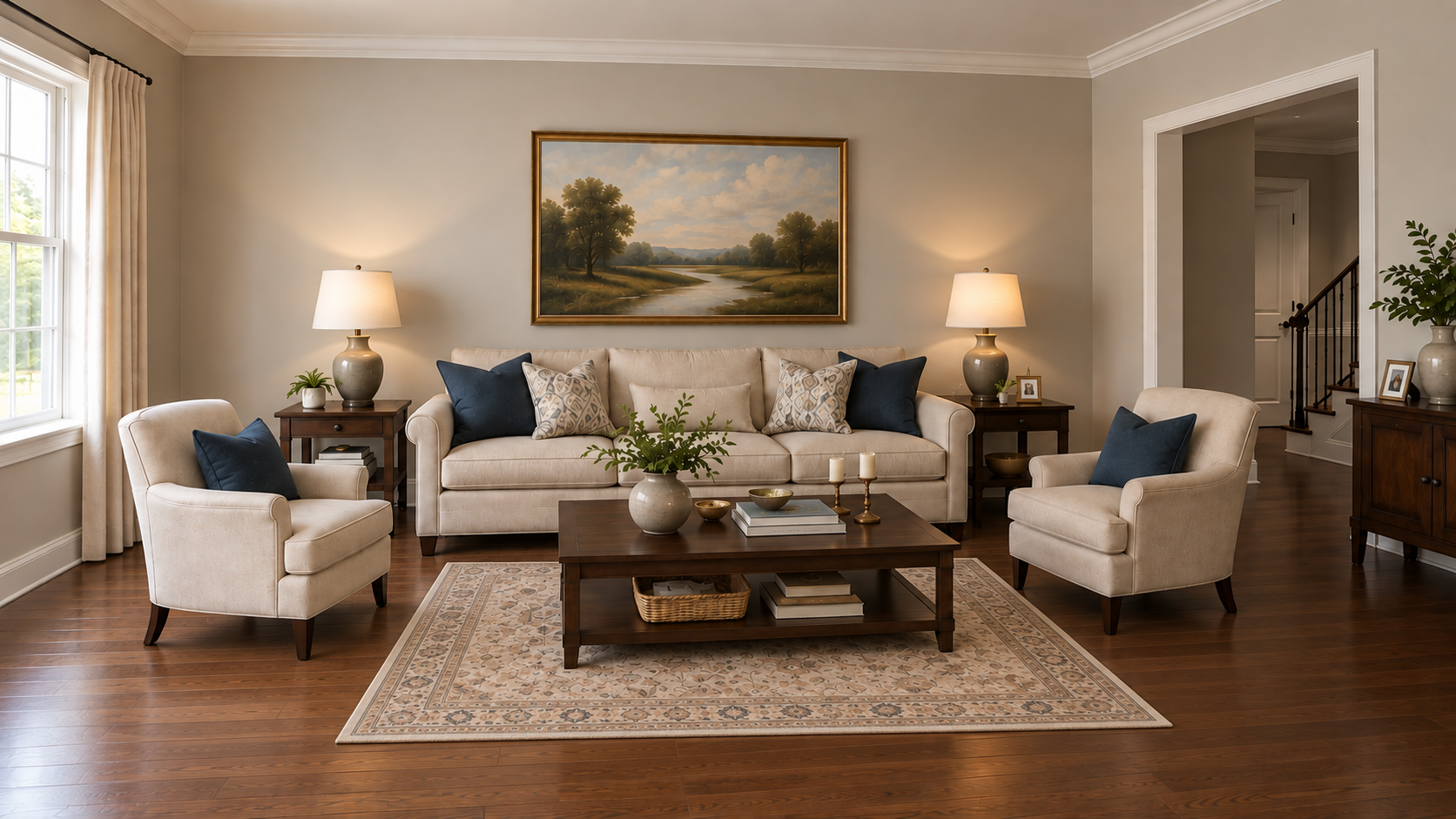
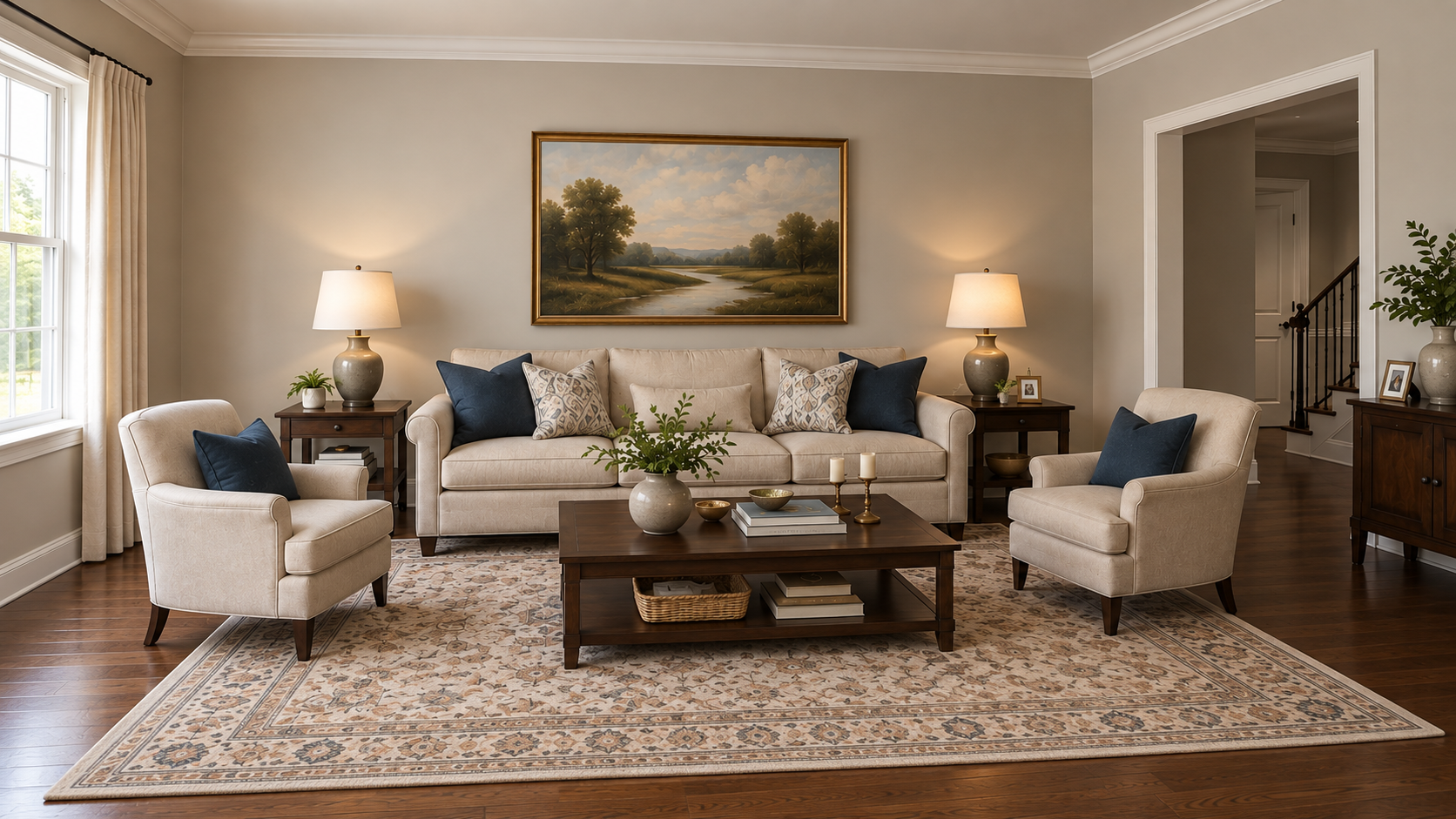
Your rug has a job to do. It helps define the seating area and visually connects the sofa, chairs, coffee table, and other furniture pieces. When the rug is too small, it can’t do that job, Instead of looking like one seating arrangement, your sofa and chairs can start to look like separate pieces floating around the room.
How big should a living room rug be?
As a general rule of thumb, your area rug should be large enough for at least the front legs of your main seating pieces to rest on it. For most living rooms, that means an 8×10 or even a 9×12 size rug. But don’t run out and buy an 8×10 just because I said that. The right rug depends on the size of your room and the arrangement of your furniture.
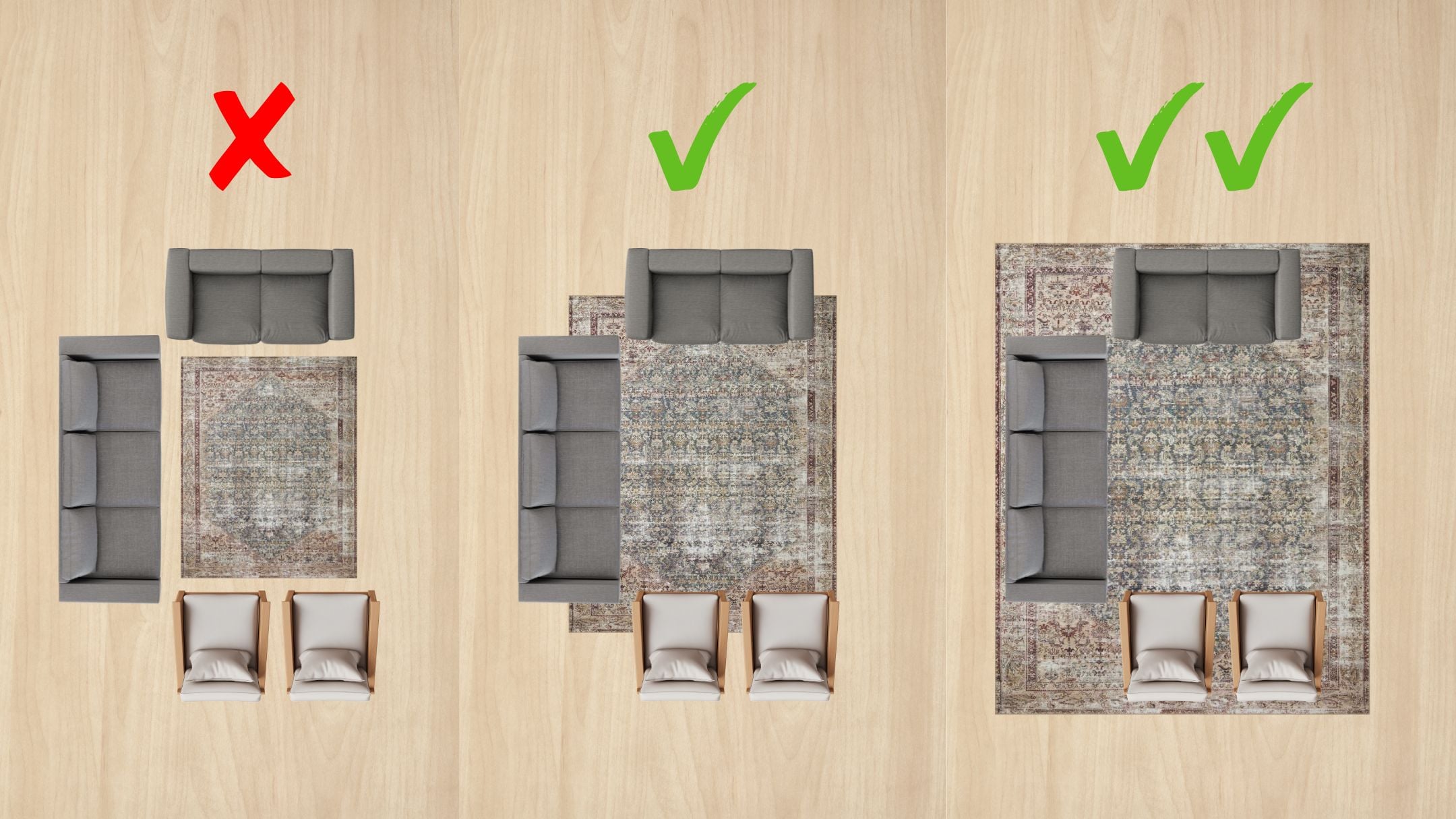
Start by taking a good look at your rug. If your rug is barely larger than your coffee table and doesn’t reach any of your seating, that’s a good clue that it’s too small. If the front legs of the sofa and chairs can comfortably sit on the rug, the rug will do a much better job of visually connecting the entire seating arrangement.
Try this: Before buying a new rug, use painter’s tape to mark the dimensions of the rug on your floor. This lets you see how the rug will relate to your furniture before you order it. And yes, larger rugs cost more. But I’d rather see you wait and buy the right size than spend money on a smaller rug that never quite works.
3. Check to See if Your Room is Lopsided
This one can be harder to spot because most homeowners naturally look at individual pieces rather than the room as a whole.
Imagine a living room with the sofa, chairs, coffee table, rug, lamps, and artwork all concentrated toward one side of the room. On the other side? Maybe just a lonely little plant, or nothing at all!
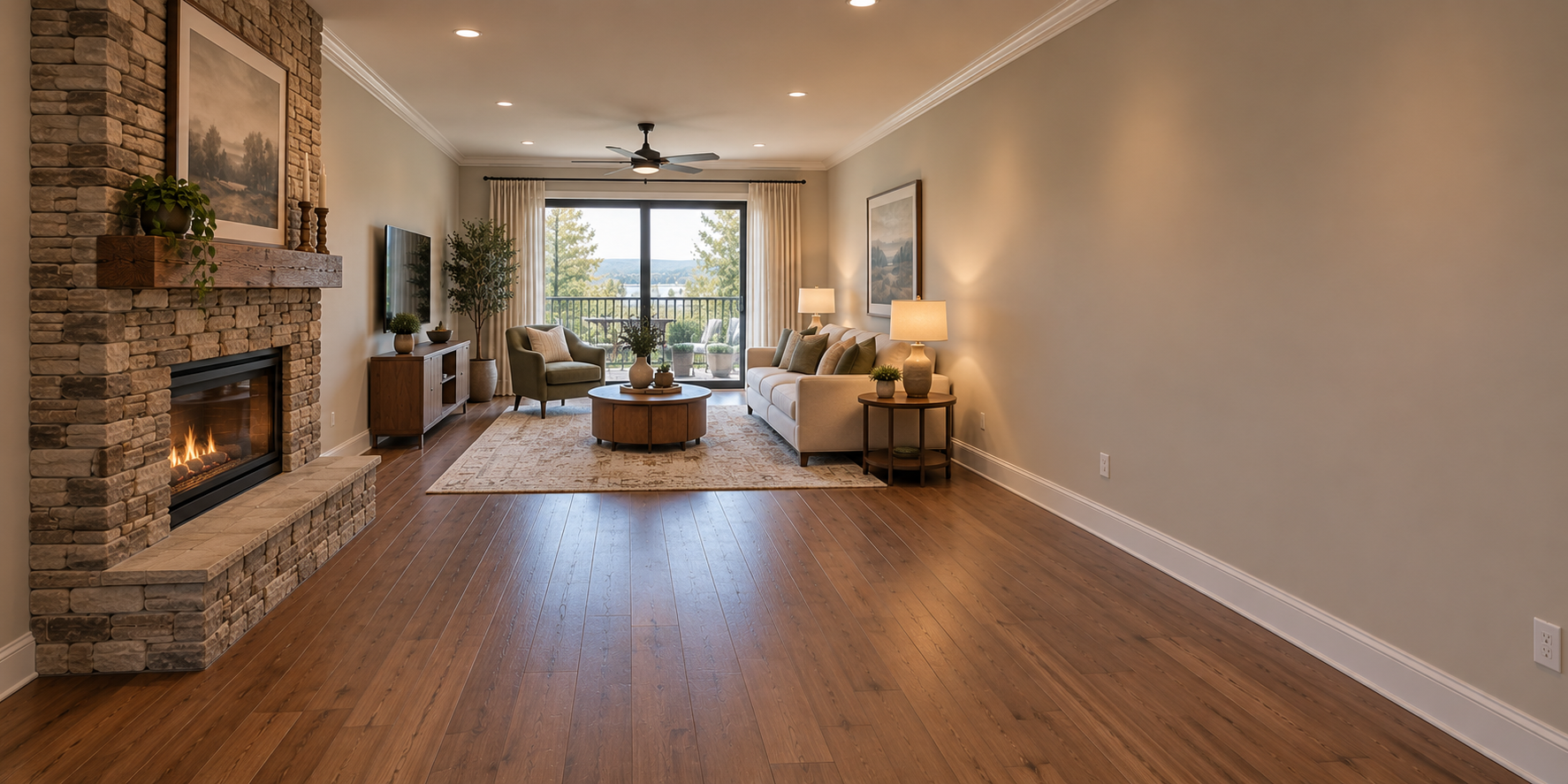
Even if everything in that seating area looks beautiful, the entire room may still feel off because all of the visual weight is concentrated in one place. In other words, your room has a balance problem.
What is visual weight?
Visual weight is essentially how much visual importance or attention something commands. Larger, solid furniture pieces will carry more visual weight than smaller, more delicate ones. A tall bookcase has more visual weight than a glass console table. A bold piece of artwork has more weight than a tiny framed print. A good living room design distributes all of the visual weight in a way that makes the room feel balanced.
Now, that does not mean your room has to be symmetrical. You don’t need matching chairs on either side of the fireplace, identical table lamps, or the same thing on every wall. You just don’t want one side of the room to feel like it’s carrying everything while the other side looks forgotten.
How to tell if your living room is unbalanced
This is another time when taking a picture can be surprisingly helpful. Stand back and look at the room as a whole. Ask yourself:
- Does one side of the room look much heavier than the other?
- Is all of my furniture concentrated in one area?
- Are all of my tallest or darkest pieces on the same side of the room?
- Is one part of the room crowded while another feels unusually empty?
- Is all of my furniture pushed against the walls, leaving a large empty space in the middle?
That last one is worth another look. Homeowners often assume furniture belongs against a wall. Sometimes it does, but sometimes pulling the seating away from the walls toward the center of the room can make the room feel much better balanced.
Let’s look at an example. Here’s a nicely decorated living room with the majority of furnishings on the left side of the room. That leaves empty space on the right side of the room, making the entire space feel unbalanced.
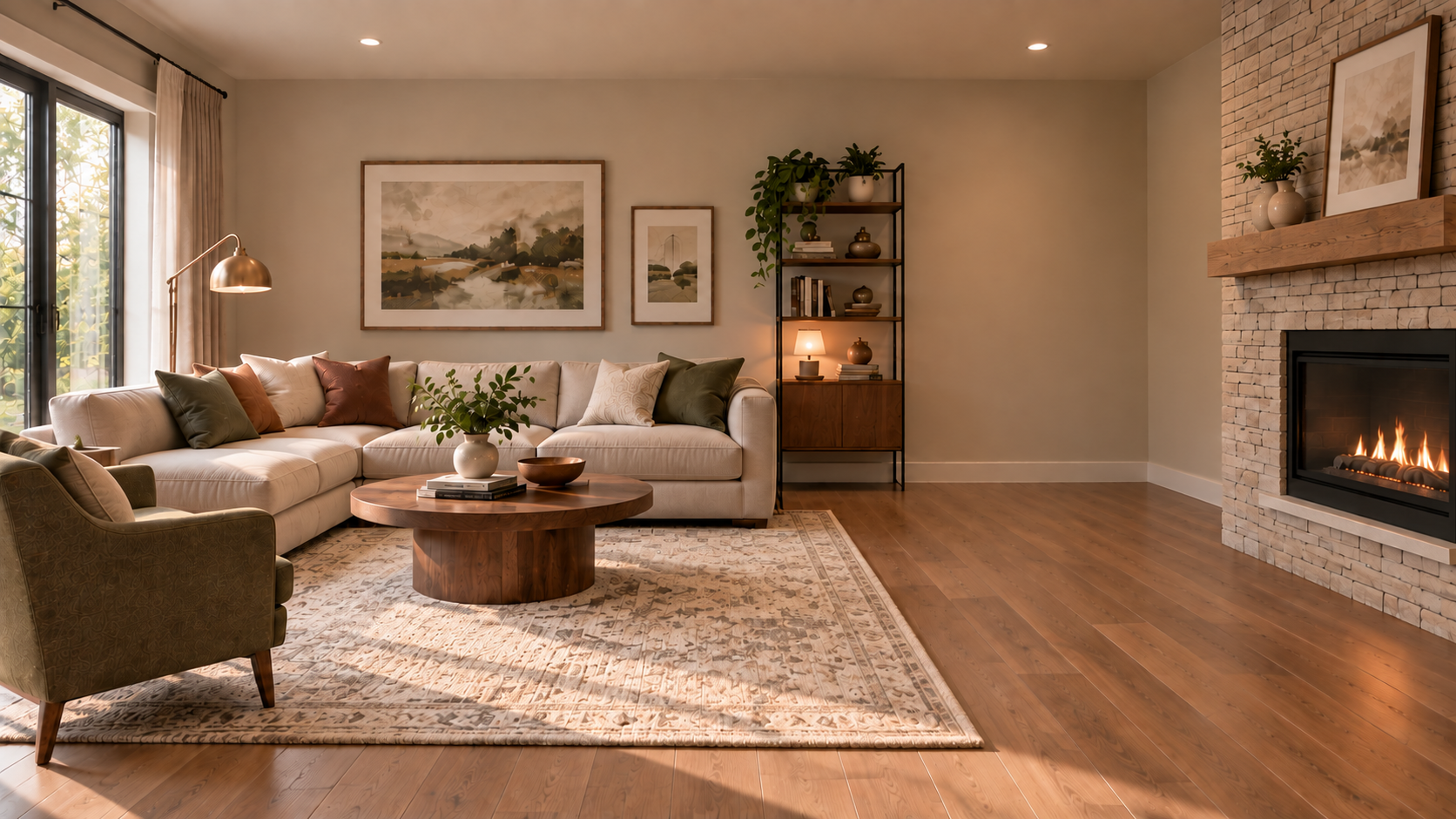
By shifting the rug and seating arrangement to the middle of the room, and adding more visual weight to the right corner (plant), the living room now looks much better balanced overall.
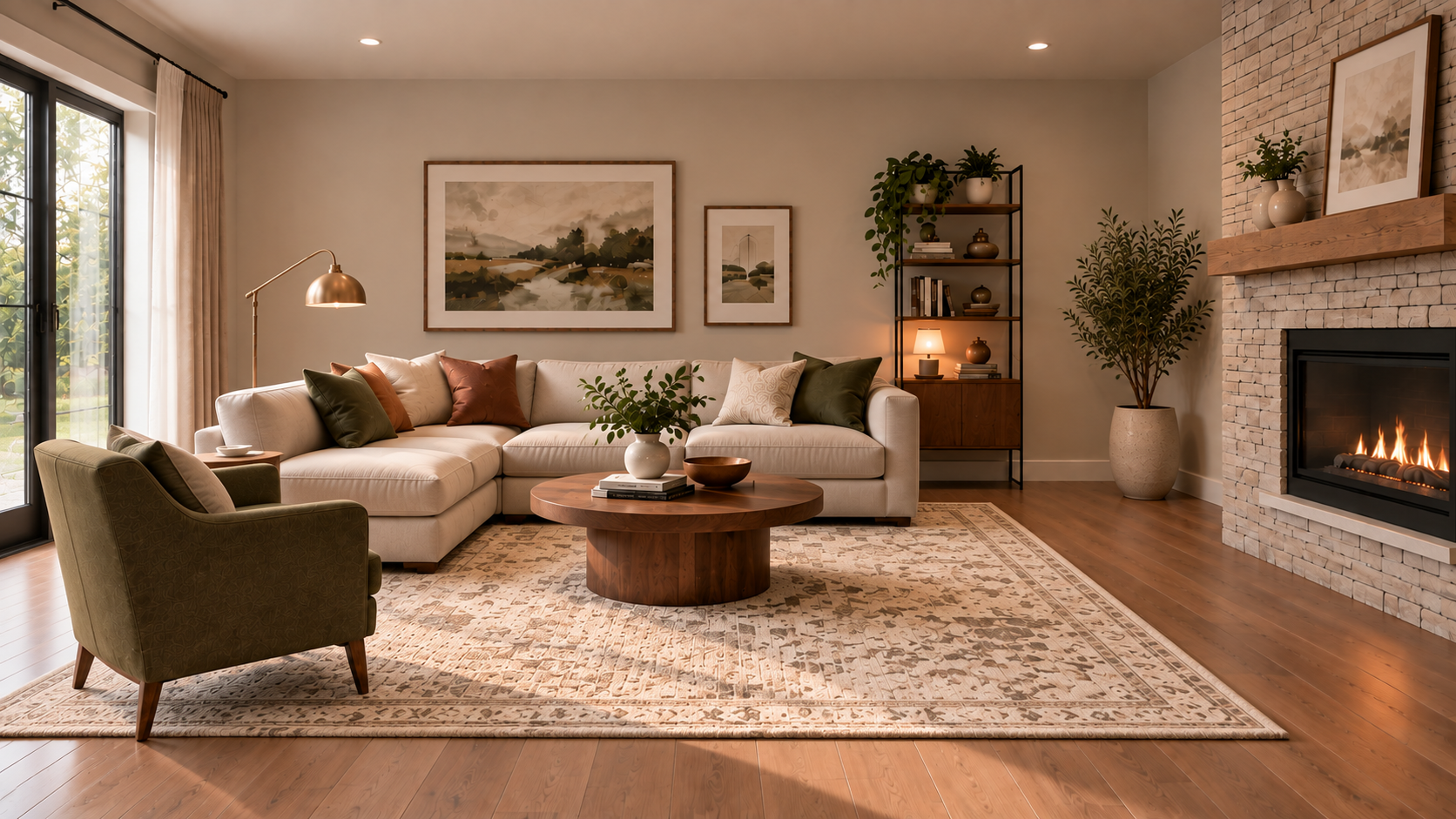
If one side of your room feels particularly heavy, that doesn’t necessarily mean you need to buy another large piece of furniture. If you do need more visual weight in an empty area, a floor lamp, side table, larger piece of artwork, substantial plant, or chair might be enough.
The goal isn’t to fill every empty spot. It’s to make the room feel visually balanced.
4. Check Your Wall Space and Artwork Size
This one is a little sneaky. Sometimes the furniture isn’t the problem at all…it’s the walls. You might have one wall that is covered with a gallery of artwork, shelves, and decorative objects while other walls in the room are completely empty. Or maybe you have a huge sofa with one tiny piece of artwork floating above it. Technically, there’s art on the wall, but it still looks empty and unfinished.
Both problems come down to the relationship between filled space and empty space, along with size and proportion.
First, check the size of your artwork
One of the most common artwork mistakes I see is choosing something that’s too small for the furniture underneath it. For example, a small piece of artwork hanging above a large sofa just doesn’t have enough visual weight to hold its own. In fact, the small art can make you notice just how much empty wall surrounds it, and things start to look off balanced pretty quickly.
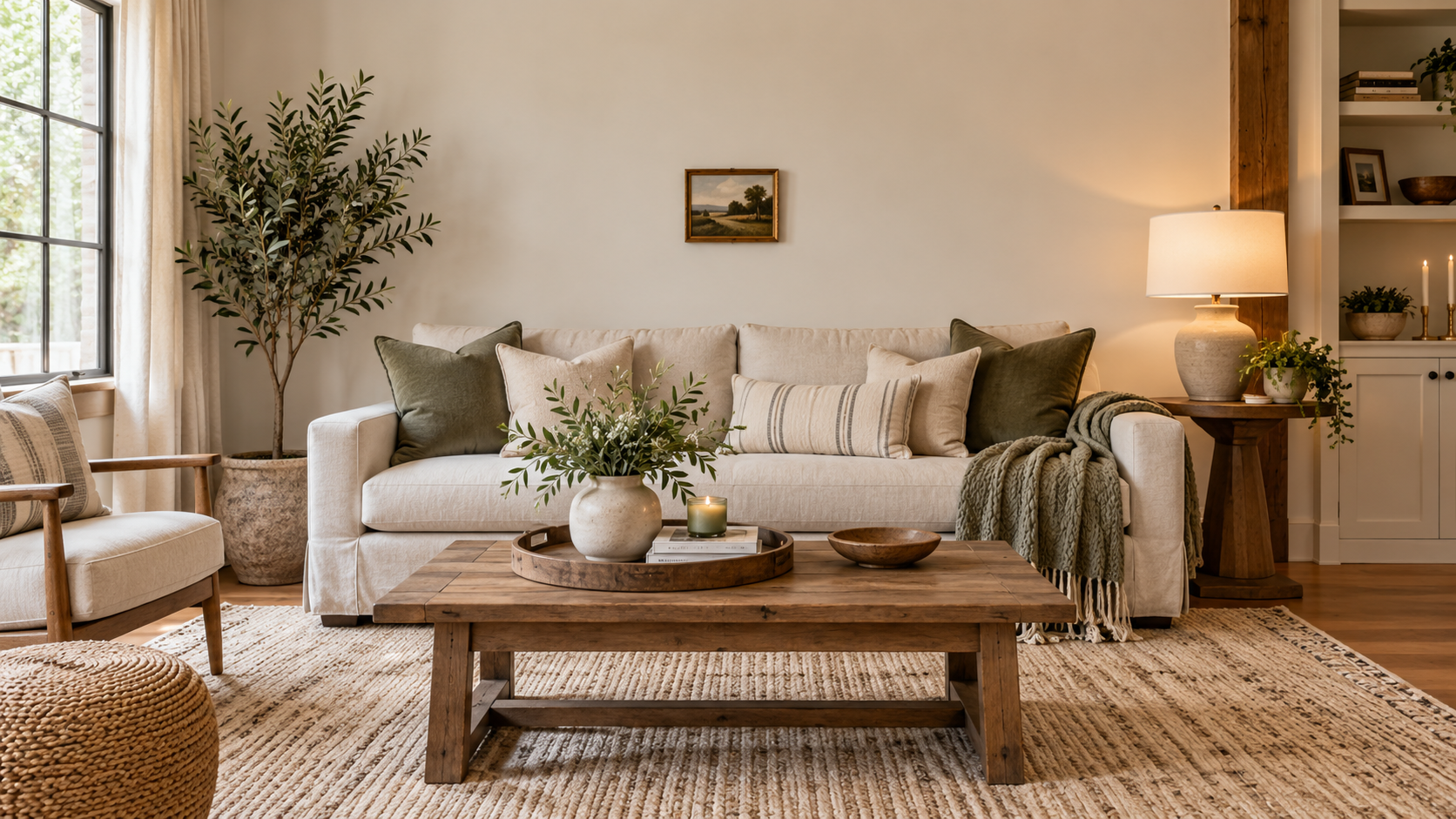
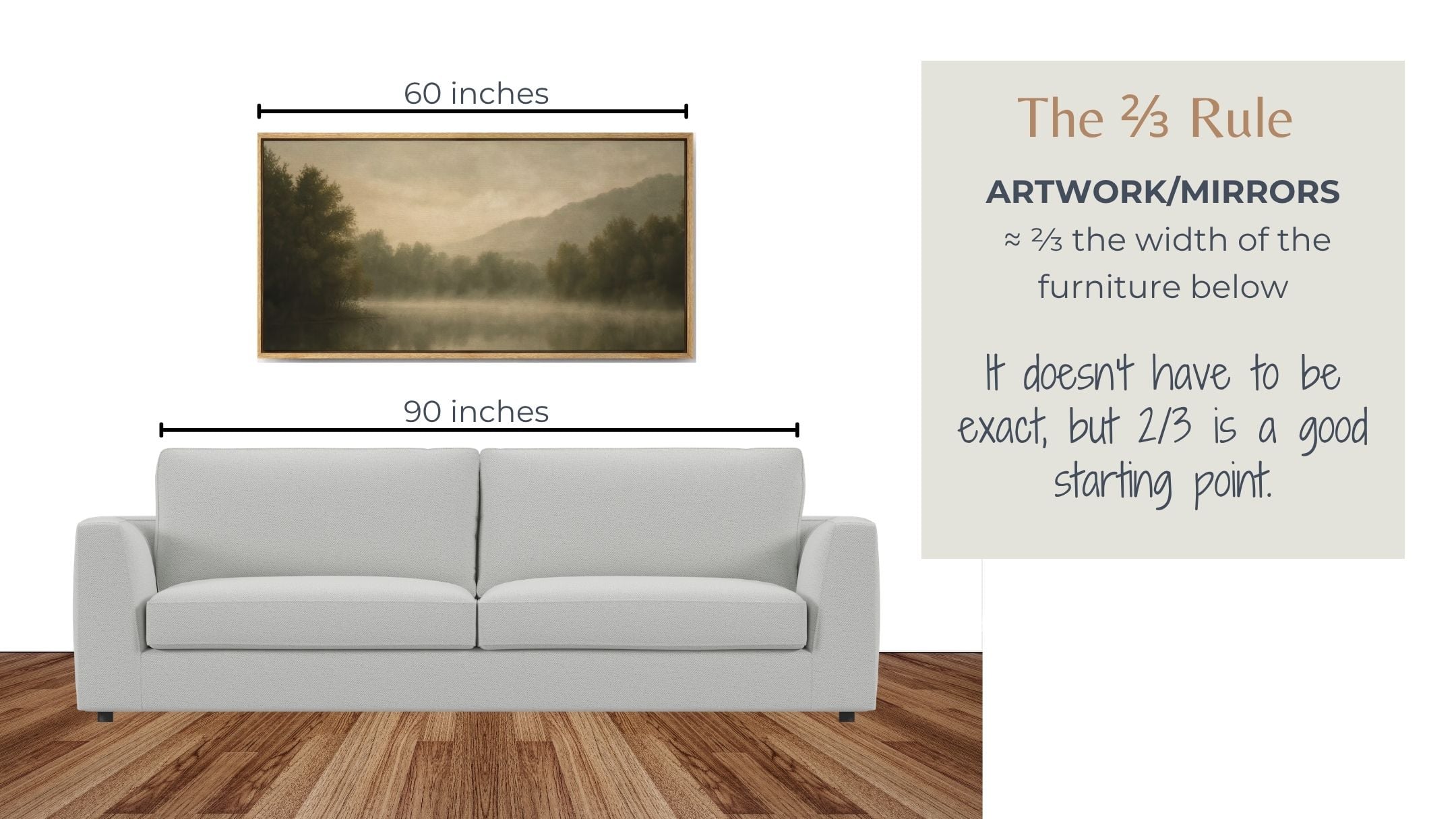
One rule of thumb I use is to make artwork (or an overall artwork grouping) around two-thirds the width of the furniture beneath it. The is often referred to as The 2/3 Rule in interior design. So, if you have a 90-inch sofa, you might look for artwork that’s approximately 60 inches wide.
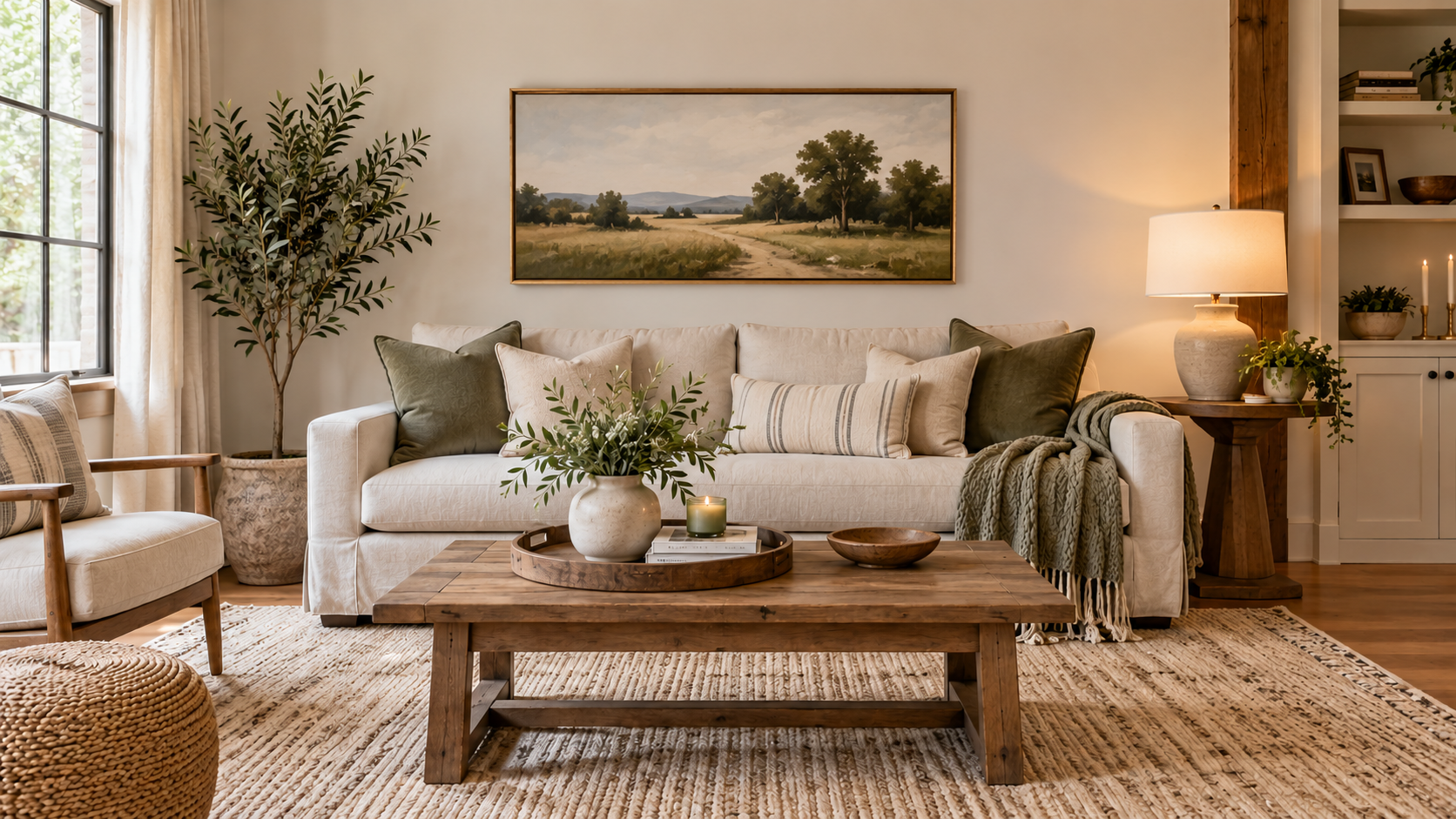
Now, that’s not an absolute rule. Your art could be slightly smaller or larger than 60 inches and look just fine. Think of it as a helpful starting point when you’re trying to determine the best art size for your walls.
Empty wall space isn’t necessarily a problem
This is equally important…you don’t need to decorate every inch of every wall. Empty wall space is actually an important part of a well-designed room because it gives your eyes somewhere to rest.
If you have a large gallery wall on one side of the room, for example, the wall next to it may need to stay relatively simple. On the other hand, a room with several large blank walls and only a few tiny pieces of artwork may feel unfinished.
The goal isn’t to fill a certain percentage of your walls. It’s to create a pleasing balance of the filled and empty space on your walls.
Try this: Instead of evaluating each wall separately, stand where you can see two or three walls at once. Does one wall seem visually overloaded while everything around it feels bare? Or does every wall demand fairly equal attention?
That brings us to the final thing I’d check.
5. Make Sure You Have a Clear Focal Point
Sometimes a living room doesn’t have too little going on…it has too much. There’s a big stone fireplace, a massive TV, a bold accent wall, oversized artwork, and a dramatic chandelier. And they’re all saying, “Look at me!“
I love a statement piece as much as anyone, but when everything in a room is trying to be the star, nothing really stands out, and your eye doesn’t know where to go. That’s why designers think about focal points.
Why your living room needs a focal point
A focal point gives your eye a natural place to land when you enter the room. It’s the thing you want people to notice first when they walk into the room. It could be the fireplace, or a beautiful view, or an architectural feature in the room, like ceiling beams.
Once you know what the focal point is, the other pieces in the room should generally support it rather than compete with it. Designers sometimes call this visual hierarchy, but don’t let the term make it seem complicated. It just means that not everything in the room should be equally important.
If the fireplace is the star, for example, you probably don’t also need an extremely bold accent wall, oversized artwork, and statement lighting all fighting for attention nearby.
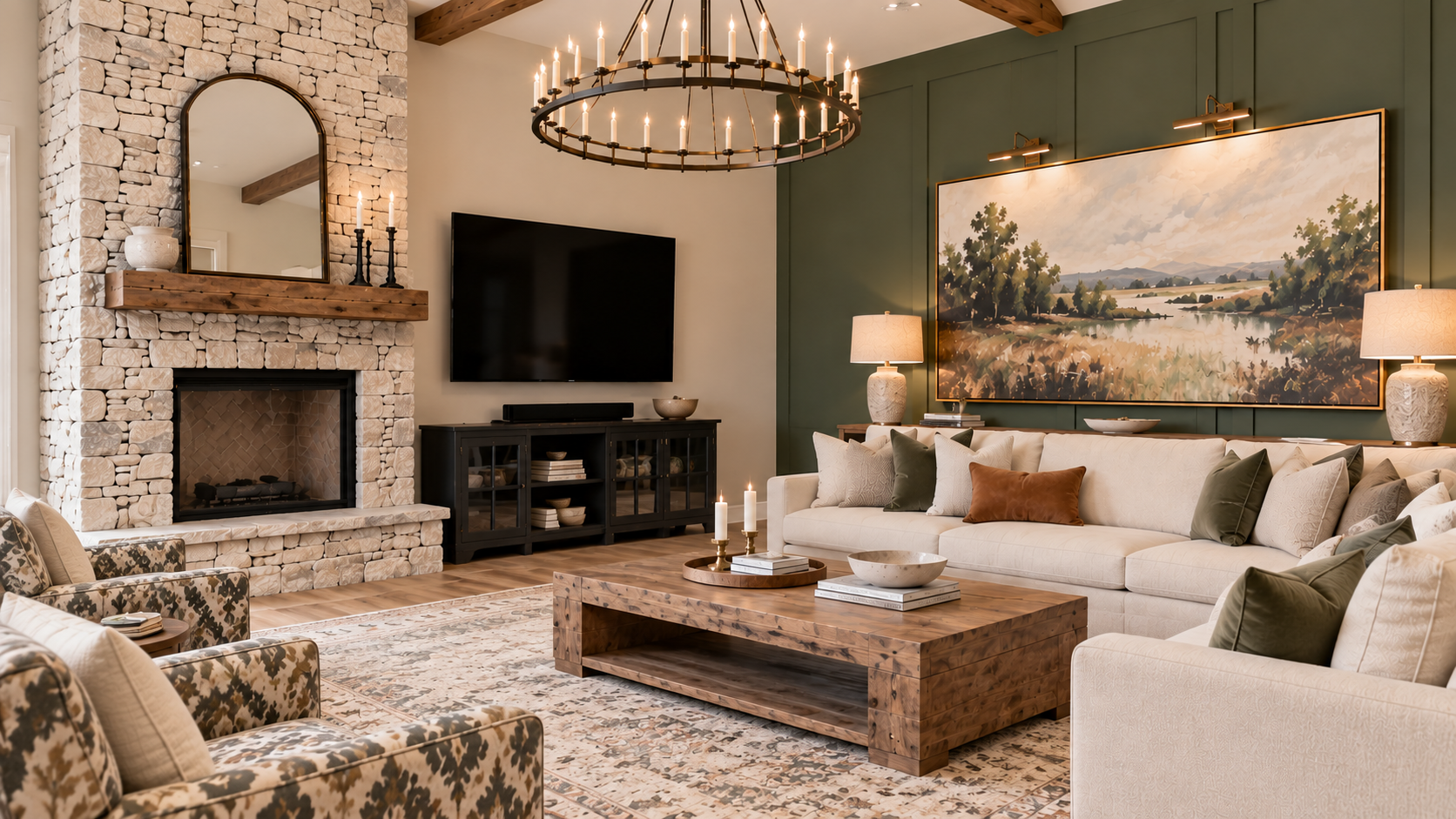
But, what about the TV?
Ah, yes, the TV. The problem with large TV’s is they often create a strong focal point in the room without even trying. The goal isn’t to pretend the television doesn’t exist. It’s to decide what you want to be visually dominant in the room, and then make thoughtful choices around it.
If you have both a fireplace and a television, you just need to think about which one you want to be more visually dominant. In some homes, that’s the fireplace, and in others, the TV genuinely is the center of how the family uses the room. There’s no universal right answer.
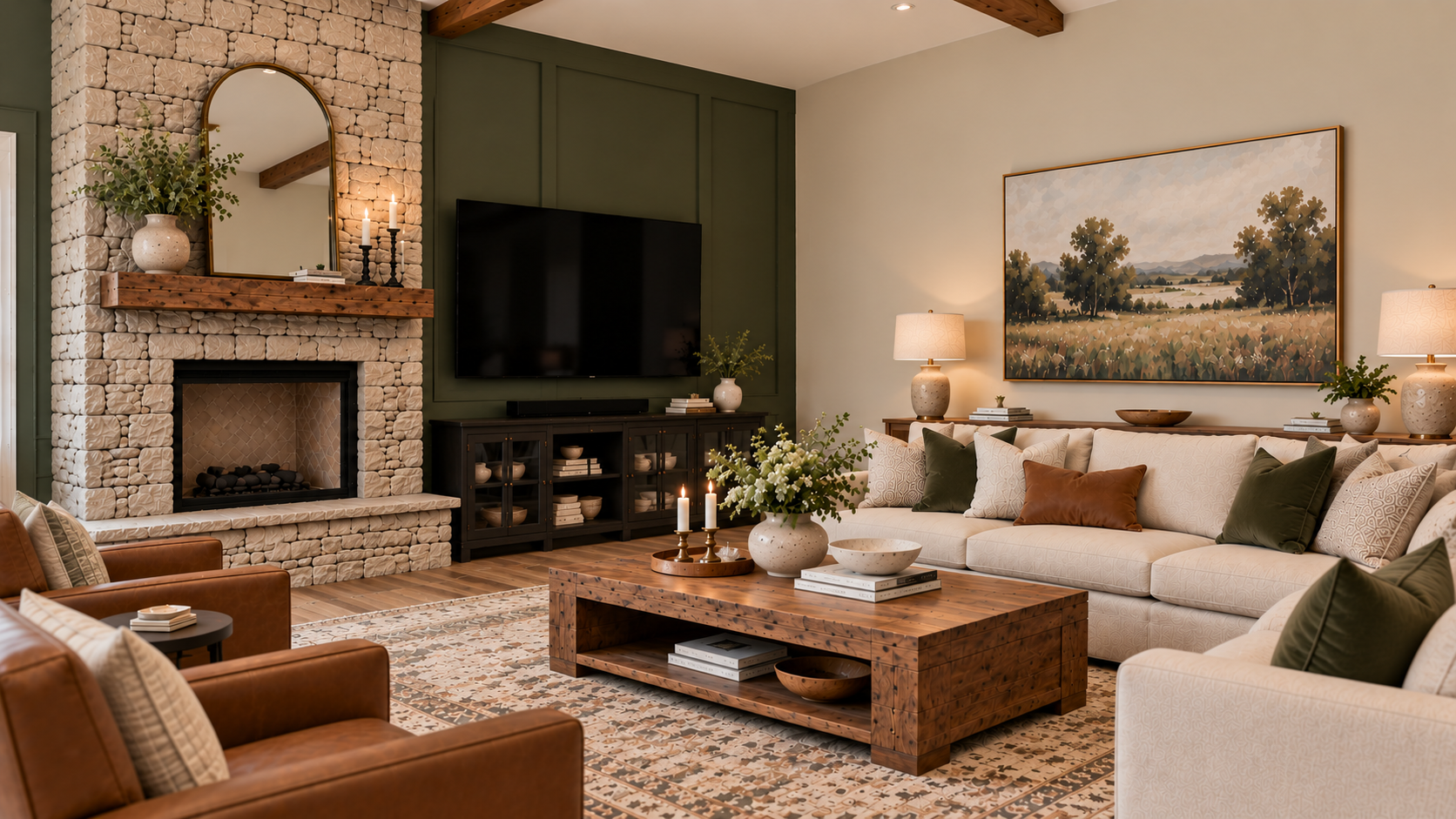
If you want your fireplace to be the star, think about ways you can emphasize it, rather than adding more features or decor that compete with it. That might actually mean reducing some of the competing focal points in the room. The goal isn’t to make your living room boring. It’s to give your eyes a little direction.
A Quick Living Room Decorating Checklist
If you’re still not sure what’s making your living room feel off, use the symptom you’re noticing as a clue:
| If your living room feels… | Check… |
|---|---|
| Random or disconnected | Your color palette |
| Like the furniture is floating | Your rug size |
| Heavy or crowded on one side | The room’s visual balance |
| Bare, cluttered, or out of proportion | Your wall space and artwork size |
| Busy or directionless | Your focal point |
The important thing is to resist the urge to start changing everything at once, or guessing at the solution. If your room feels off, it’s easy to start questioning all of your decisions. Do I need a new rug? Is the paint color wrong? Maybe I need a new sofa. And suddenly you’re redecorating the entire room.
Instead, figure out what’s actually causing the problem first. Diagnose first…then make the changes that actually address the problem.
What If You Still Can’t Figure Out What’s Missing From Your Living Room?
These five things are a great place to start, but they’re not the only things I look at when I’m evaluating a room.
Over the years, I’ve identified 12 design ingredients that help me figure out why a room works, why it doesn’t, and what might be missing. They include things like color, texture, contrast, pattern, focal point, and more.
And that’s exactly what I teach in my program, What’s Missing From My Room?
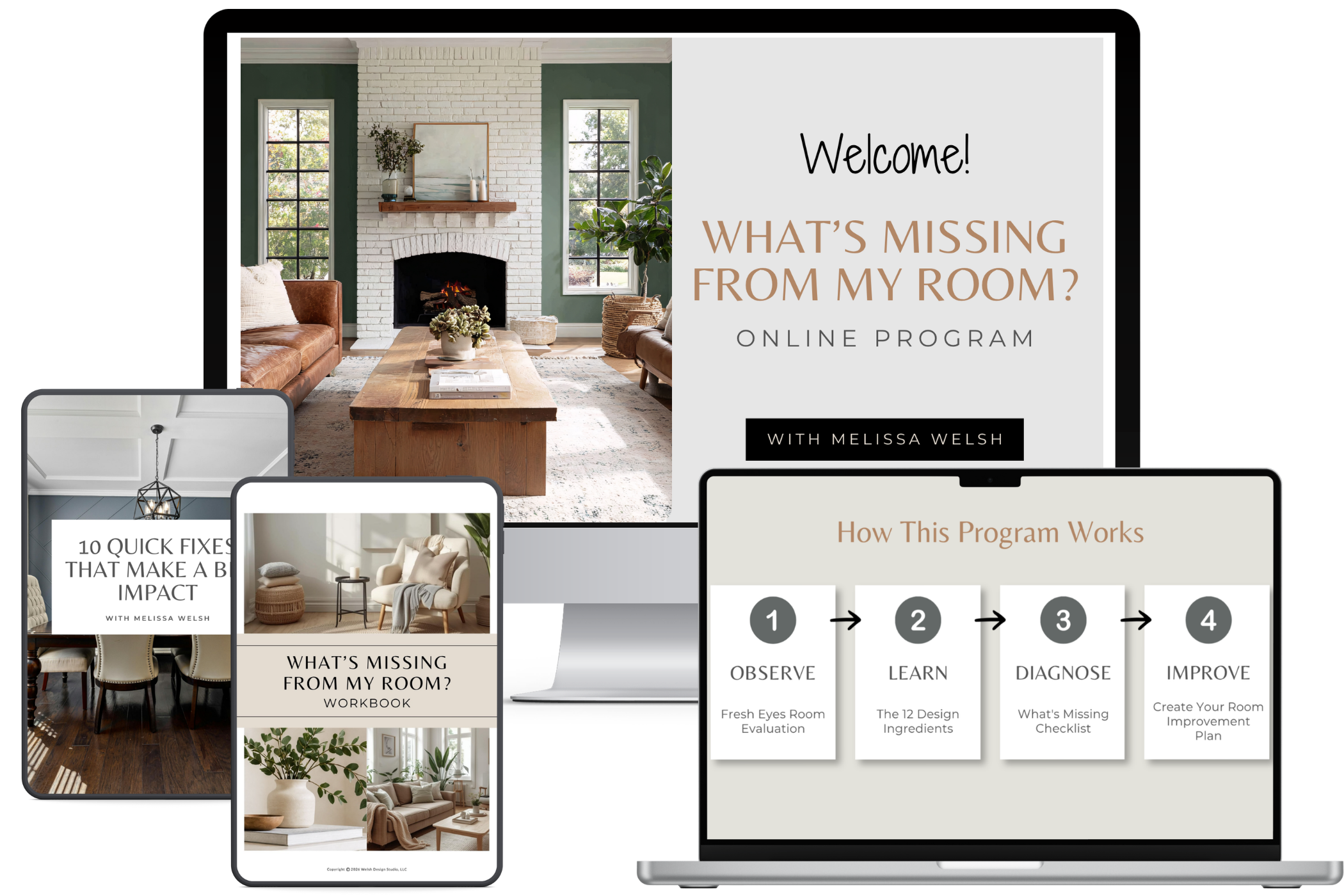
I created it for the homeowner who has already decorated her room and actually likes most of what she owns, but still has that nagging feeling that something isn’t quite right. Instead of buying more stuff and hoping something finally clicks, you’ll learn how to evaluate your room, figure out what’s already working, identify what’s missing, and make changes that are actually needed.
Your Living Room May Need Less Than You Think
If your living room looks off, it doesn’t mean you need to start over. In fact, you may already have most of what you need.
Sometimes a room isn’t missing more stuff. It just needs a better color connection, a larger rug, a furniture layout shift, bigger artwork, or a clearer focal point. Once you understand why the room isn’t working, deciding what to do next gets a whole lot easier.
So before you buy another pillow, take a good look at these five things. Your wallet might thank you.