
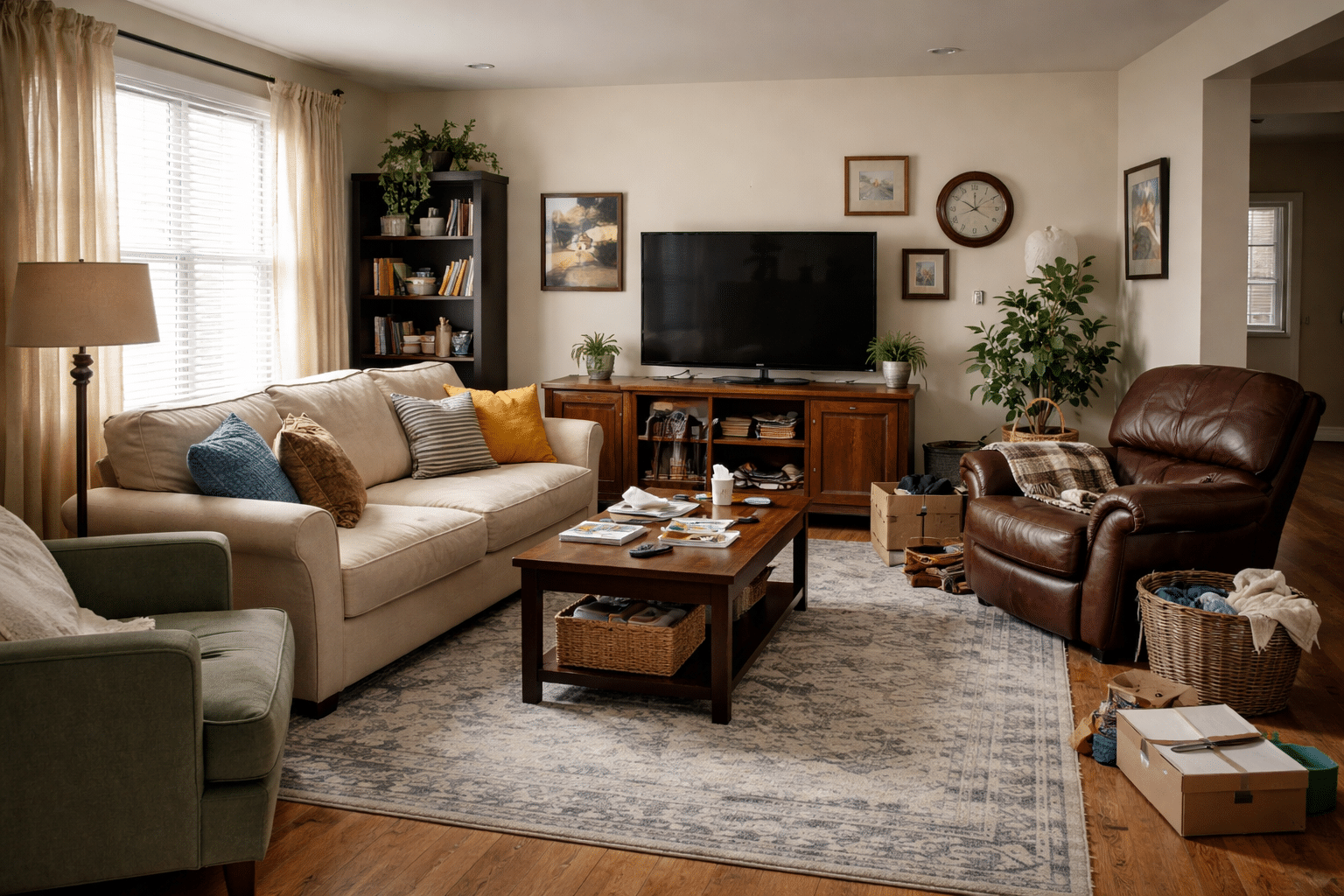
If your home feels dated, chances are it’s not because it’s old, ugly, or poorly cared for. In fact, most of the homes I hear this complaint about are clean, well-maintained, and sometimes even recently updated. And yet…something still feels off. Not bad, per se. Just not right…not fresh, or current.
This is where a lot of homeowners get stuck, because “dated” is surprisingly hard to pinpoint.
Most people assume a dated home means outdated finishes, old cabinets, or worn-out floors. But that assumption usually sends them down the wrong path (and toward expensive fixes that don’t always solve the problem).
The truth? Most homes feel dated because of repeated design cues, not one single outdated choice.
In this post, I’m going to help you diagnose what’s really causing that dated feeling, and why so many people misidentify it in the first place.
And if your home feels dated but you don’t want to jump straight into remodeling, my post on how to update a dated home without remodeling may be a helpful place to start.
“Dated” Isn’t About Age — It’s About Visual Signals
One of the biggest mindset shifts I help clients make is this:
A 5-year-old home can look dated, and a 40-year-old home can feel timeless.
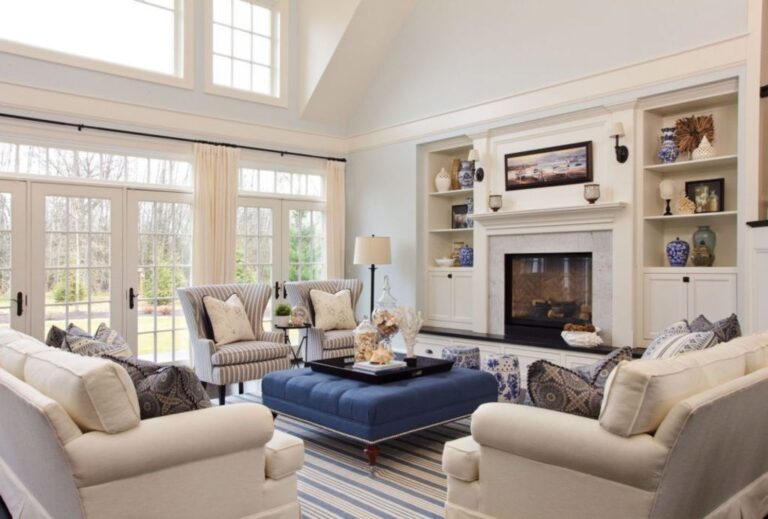
The difference isn’t age alone. It’s the visual signals the home is sending. Can you spot the dated features in this room?
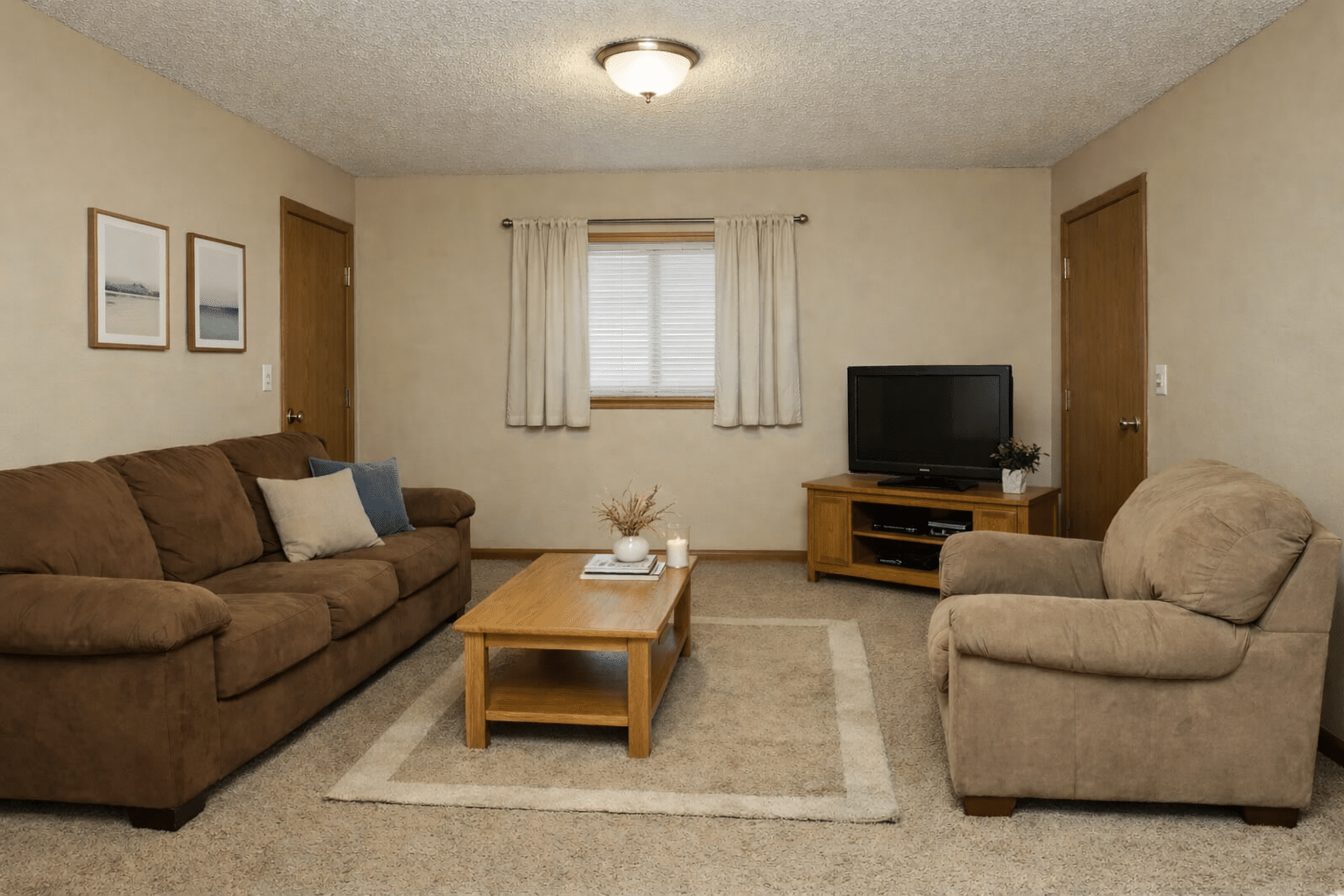
Homes communicate visually through repeated design cues, like lighting, finishes, proportions, color relationships, and custom details. These cues quietly signal when something feels current, cohesive, and intentional…or not.
This is where designers think differently than most homeowners. Most people focus on individual items:
- “I hate my countertops.”
- “These cabinets are ugly.”
- “My floors are the problem.”
Designers look for visual cues that are quietly shaping how a space looks and feels. And once you start seeing those patterns, the “dated” feeling becomes much easier to diagnose…and fix.
The Most Common Misdiagnosis (And Why It Happens)
People Blame the Wrong Thing
When a home feels dated, the blame almost always lands on the biggest, most expensive elements:
- Countertops
- Cabinets
- Flooring
That makes sense. These elements are highly visible, and platforms like Pinterest and Instagram reinforce the idea that swapping them out is the only solution.
It’s true that changing those things can make a huge difference in the way your home looks. But in reality, those are often scapegoats, not the real problem.
Why Updating One Thing Rarely Fixes the Problem
Here’s what I see over and over again:
- New countertops + old lighting
- Fresh paint + poor furniture layout
- Trendy decor + builder-grade details everywhere
The result? The home still feels dated…just newer dated.
Here’s an example of a dated kitchen, where they only replaced the countertops with a modern quartz, but didn’t address the other outdated features. The space still feels dated!
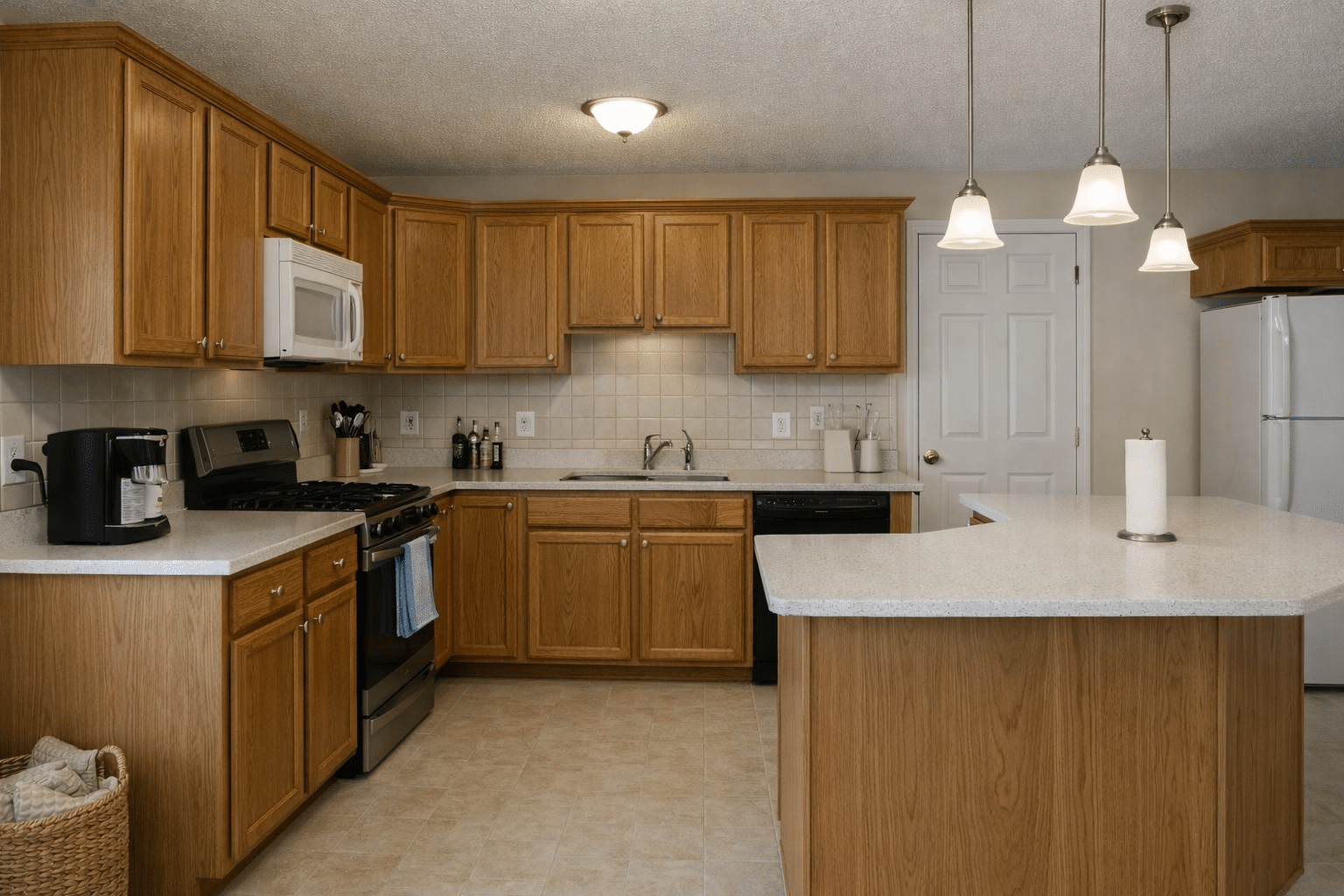
That’s because homes feel current when the updates you make are cohesive, not isolated. Random improvements don’t usually work together, and that’s what your eye is reacting to.
This is also why updating a home without remodeling is often more about the order and type of updates you prioritize than it is about single big-ticket replacements.
What Actually Makes a Home Look Dated (The Real Culprits)
Designers don’t diagnose “dated” by style alone. We look for those visual signals that show up over and over again in the home, and that are making it look “tired.” Here are the biggest ones.
1. Outdated Lighting (Even When Everything Else Is New)
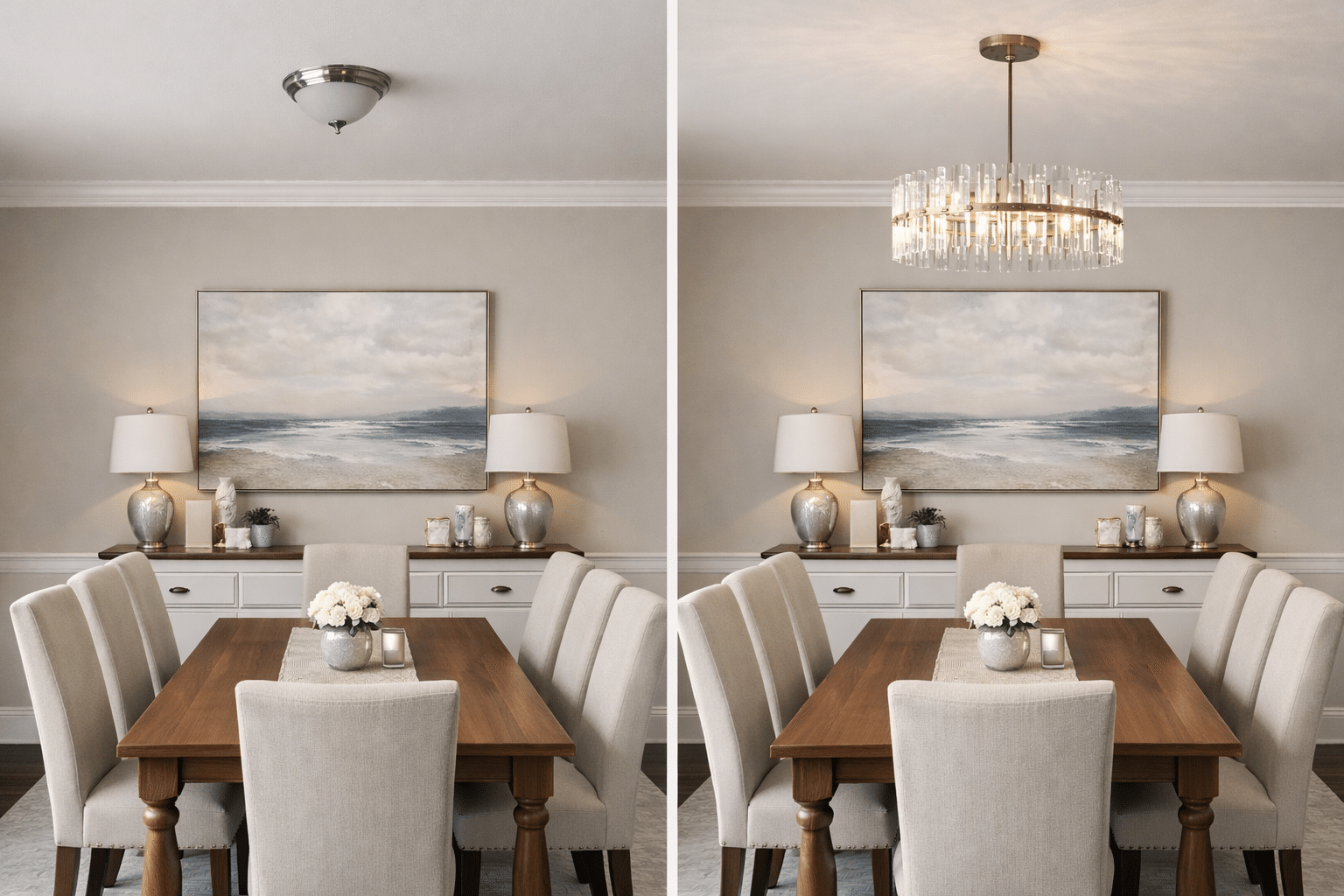
Lighting sends a strong visual message in a home. Builder-grade fixtures, overly shiny finishes, or fixtures that are the wrong size instantly communicate “unfinished” or “builder basic” — even if everything else has been updated.
Lighting affects the mood and perceived quality of a space, which is also why it’s one of the fastest ways to modernize a space. That’s why replacing light fixtures can help make your home look less dated…more than most people expect.
2. Inconsistent or Poorly Chosen Paint Colors
Paint colors alone don’t date a home, but the relationships between your paint colors definitely can! Common issues I see:
- Too many unrelated colors
- Outdated trim colors that look dingy
- Undertones fighting each other
- Paint chosen without considering fixed materials
Paint is foundational, not just decorative. When it’s treated like an afterthought, everything else is the room will struggle to look good.
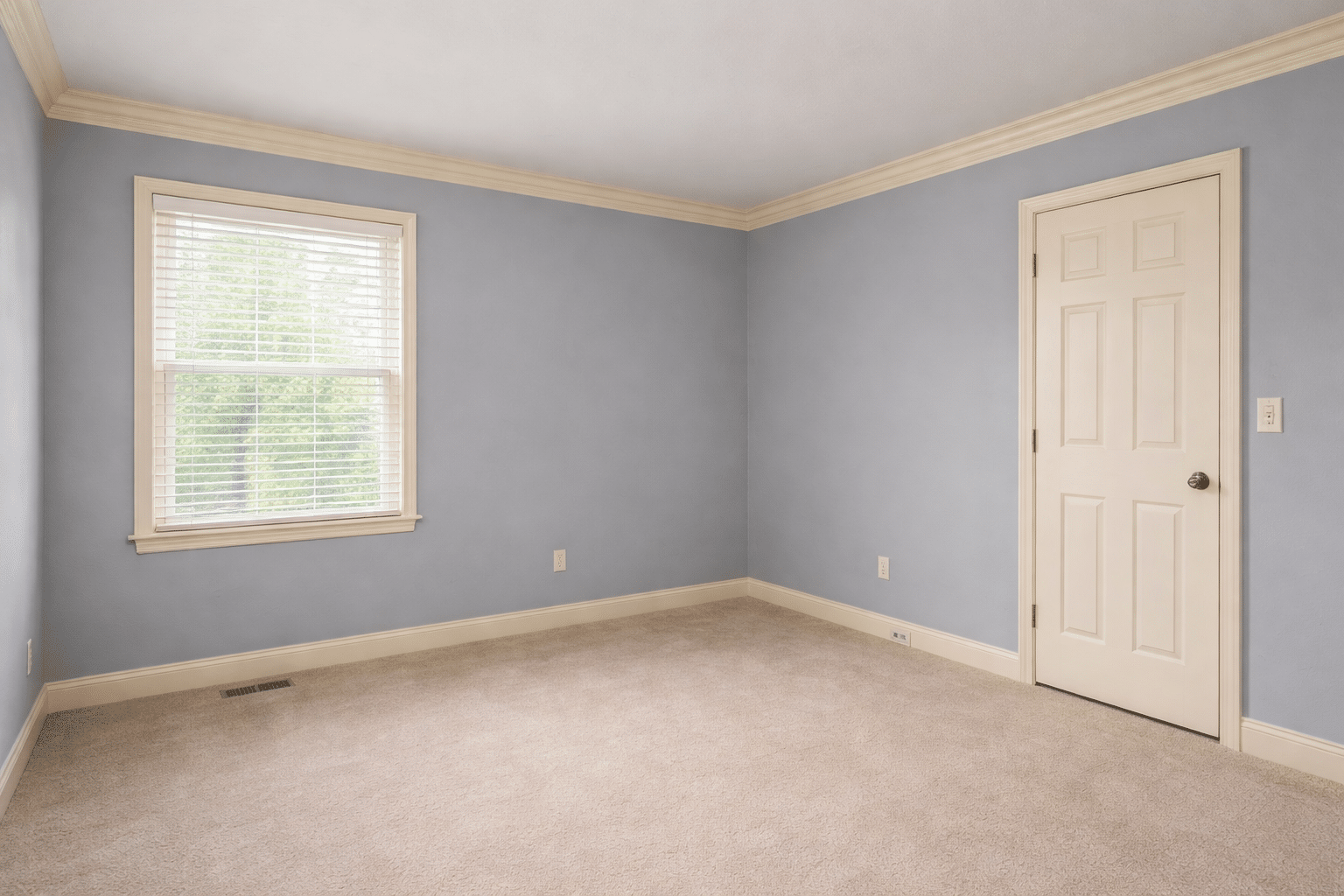
Here’s how paint can be used strategically to update a dated home without remodeling, and without repainting everything.
Option 1 – Repaint Your Trim & Baseboards
If your trim paint is looking a bit dingy, freshen it up with a white that complements your overall color palette or existing wall color. A brighter, crisper, more neutral white trim color can do wonders to modernize the look of your home.
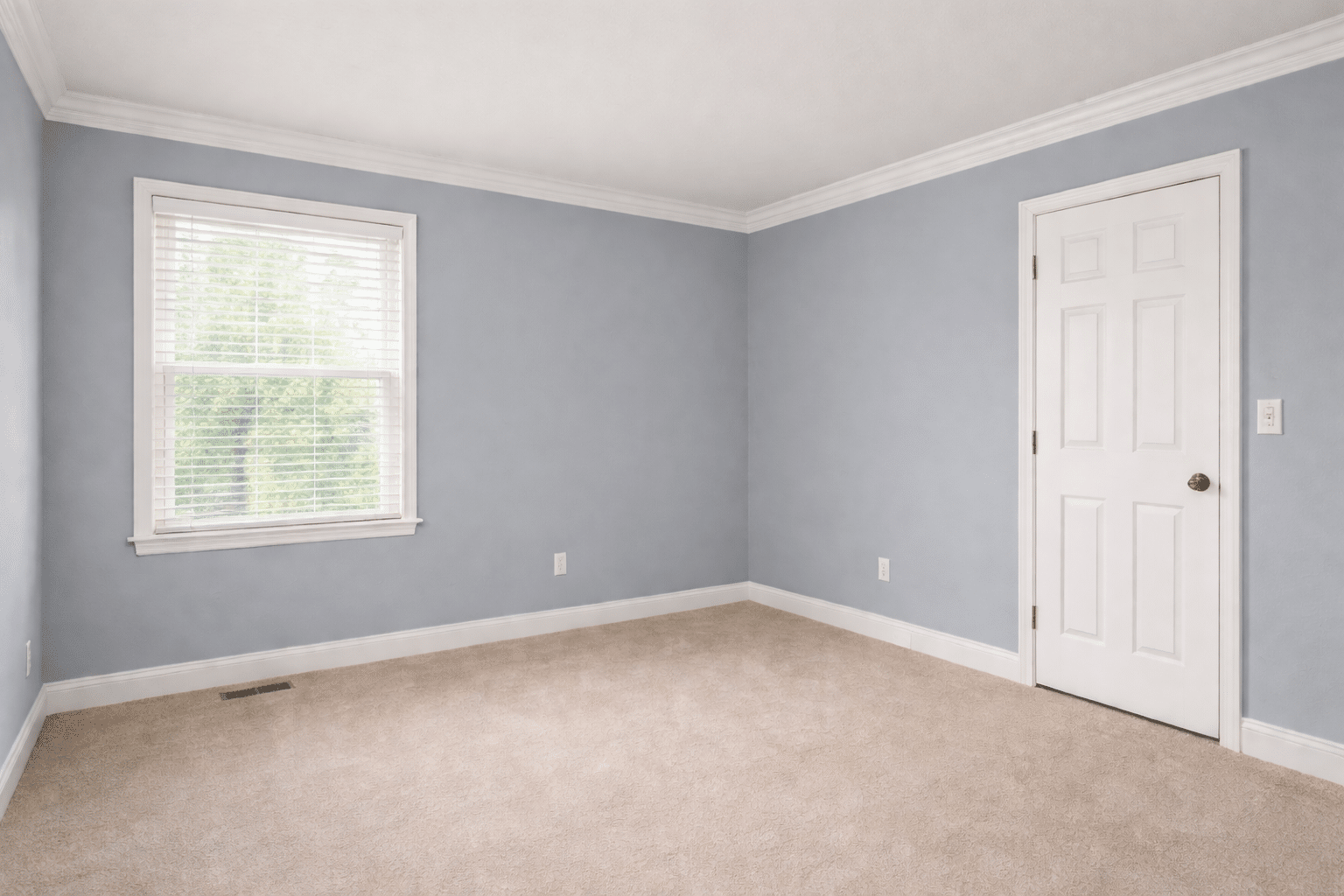
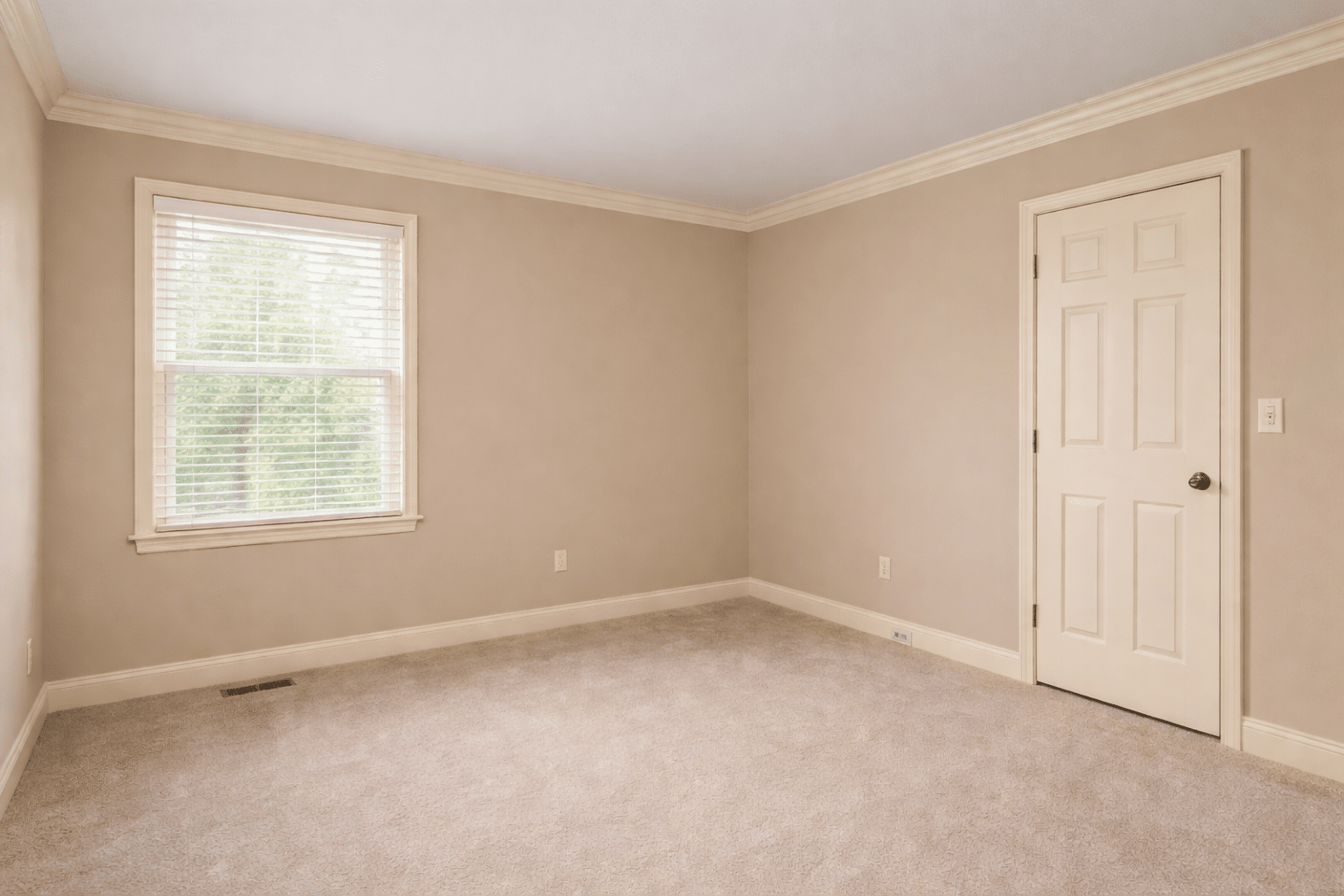
Option 2 – Repaint Your Walls (But Keep Your Trim Color)
If you want to keep your existing trim and baseboard color, first see if you can identify its undertones. Next, you want to choose new walls colors that have similar undertones to your trim color and other fixed materials in the room (flooring, stone, tile, etc.). A safe approach is to match warm trim with neutral or warm wall colors, and cool-toned trim with cool wall colors. This will make the paint colors in your room look much more harmonious.
3. Size Problems (Not Style Problems)
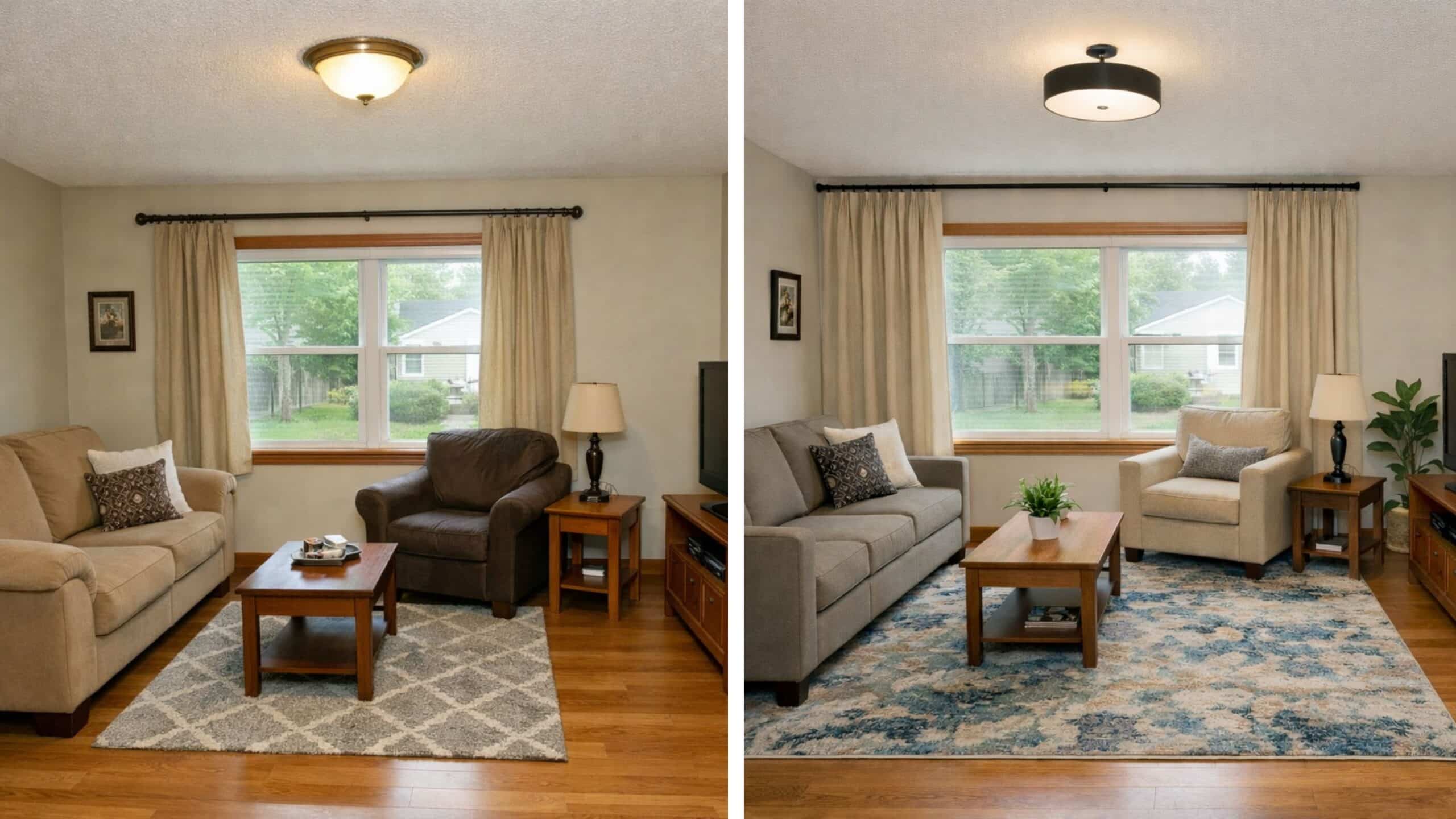
This one is huge…and massively misunderstood. Most people think they need to buy all new furniture in a different style, or trendy new decor to make their home look more current, when the real problem has to do with size (or scale).
Here are a few examples:
- Undersized light fixtures
- Curtains hung too low or too short
- Rugs that are too small for the room
- Furniture that is the wrong size for the space
These issues make a space feel awkward, unfinished, and you guessed it, dated. And because scale isn’t something most homeowners are trained to notice, it often gets misdiagnosed as a “style” or “taste” problem instead.
A few meaningful changes in size and scale can make a dated room look much more current (see example before and after below)
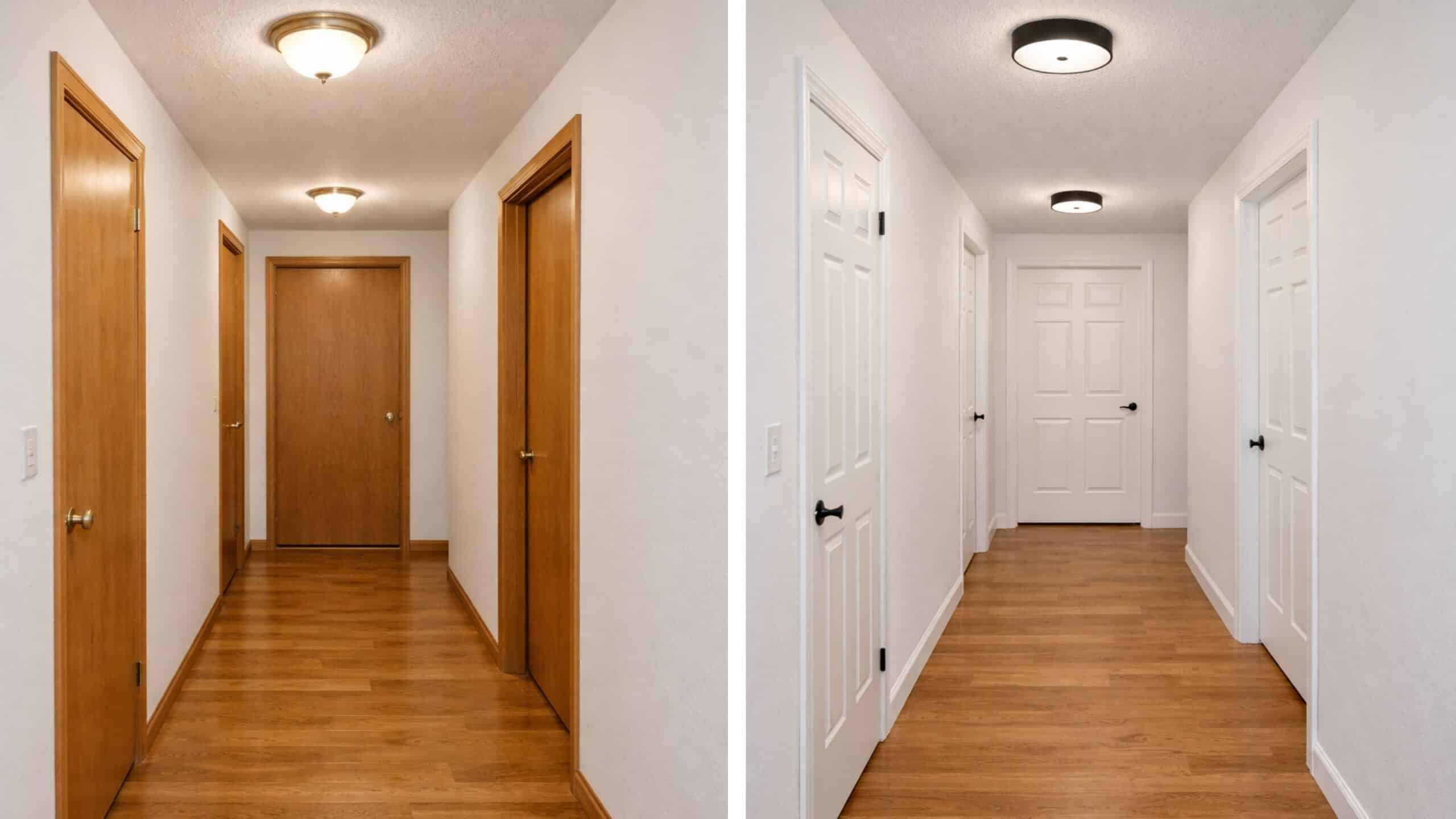
4. Builder-Grade Details Repeated Everywhere
Builder-grade details aren’t inherently bad. One hollow-core door? Fine. One basic light fixture? No big deal.
But when those same details are repeated throughout the entire home — generic trim, basic doors, standard hardware — the repetition becomes a visual sign that things aren’t custom.
That’s when a home starts to feel dated, even if nothing is technically wrong. It’s just that these elements are holding back your home, and keeping it from looking elevated and fresh.
Upgrading doors, trim, and hardware can dramatically transform how finished and modern a home feels, without changing its architecture or layout.
5. Missing Layers
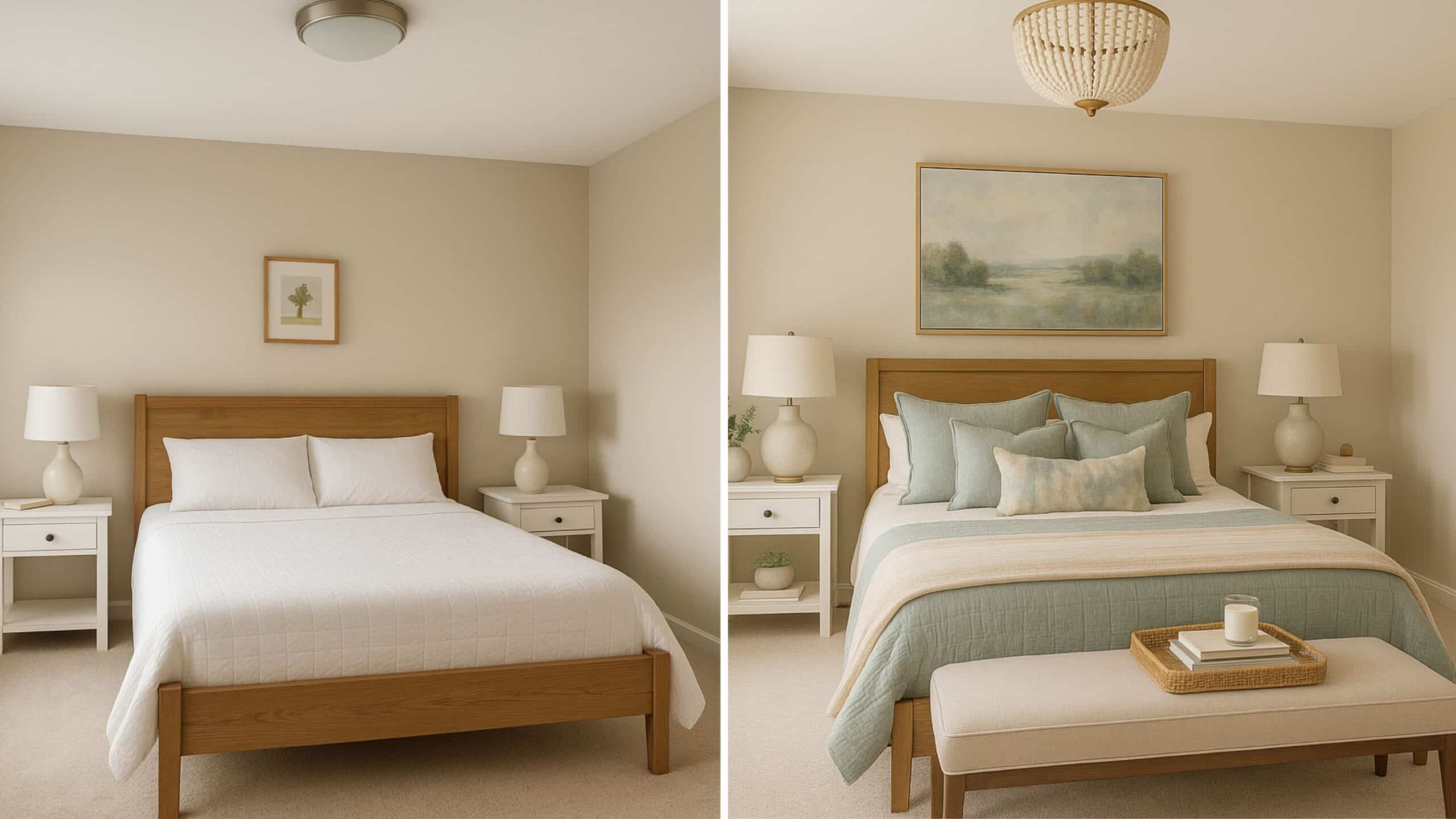
When your rooms are missing decorative layers, they will feel flat. Flat homes feel unfinished. Unfinished homes look dated.
This isn’t about adding more stuff…it’s about completeness. Missing layers often include:
- Window treatments
- Throw pillows
- Area rugs
- Plants
- Art
- Decorative accessories
- Secondary lighting (lamps, sconces)
When those layers are missing, the home lacks depth, softness, and a cohesive style…even if the furniture and finishes you have are beautiful.
Why Trends Rarely Fix a Dated Home
It’s tempting to chase trends when something feels off or dated in your home. But trends don’t usually solve the underlying issues…they often highlight them.
If you try to add in trendy tile with outdated cabinets and hardware, or trendy paint colors paired with mismatched trim, or trendy decor in a room that’s lacking a clear style, your home won’t magically look less dated.
That’s why trend-driven updates so often disappoint. They’re applied on top of problems instead of addressing the root cause.
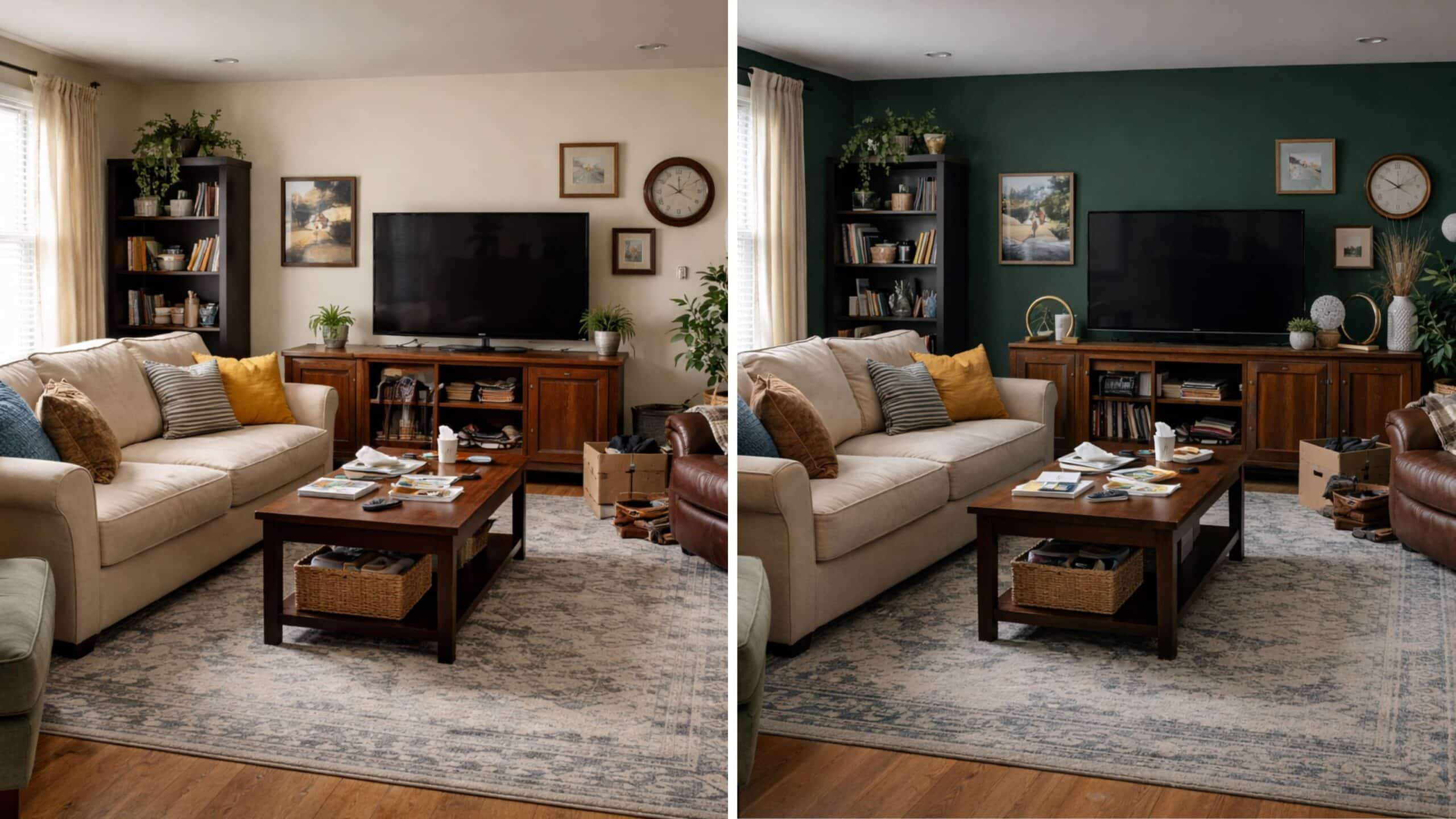
Here’s a great example of a living room that’s lacking a clear decorating style. The furnishings are all nice, but the room feels disjointed, and a bit dated. Adding a trendy new wall color and a few trendy decorative accessories does help to modernize the space slightly. But, the underlying issues with this room design are still there, so it still has an overall dated look.
How Designers Diagnose a Dated Home (Quick Checklist)
Here’s a simple way to start seeing your home through a designer’s lens:
- Is the lighting modern and correctly sized?
- Do the paint colors work well together?
- Are finishes consistent and intentional?
- Does each room have a clear style and enough layers?
- Are custom details used thoughtfully in the home, or is everything builder-grade?
This isn’t a to-do list. It’s a diagnostic tool…a way to identify where the problems actually are.
What to Do After You’ve Identified the Problem
Diagnosis comes before action. Once you understand what’s actually making your home feel dated, you can:
- Start with high-impact updates
- Avoid random fixes
- Spend money where it actually moves the needle
If you want help turning that clarity into a plan, here’s 10 of the best ways to update a dated home without remodeling — and without wasting money on things that don’t help.
Clarity Is the Real Upgrade
Feeling like your home is dated doesn’t mean you failed, or that you need to start over.
Most homes don’t need more stuff. They need clarity and a plan.
Remember the dated living room from the beginning of this post? Let’s compare the same room with all of the changes we mentioned. The difference is night and day!
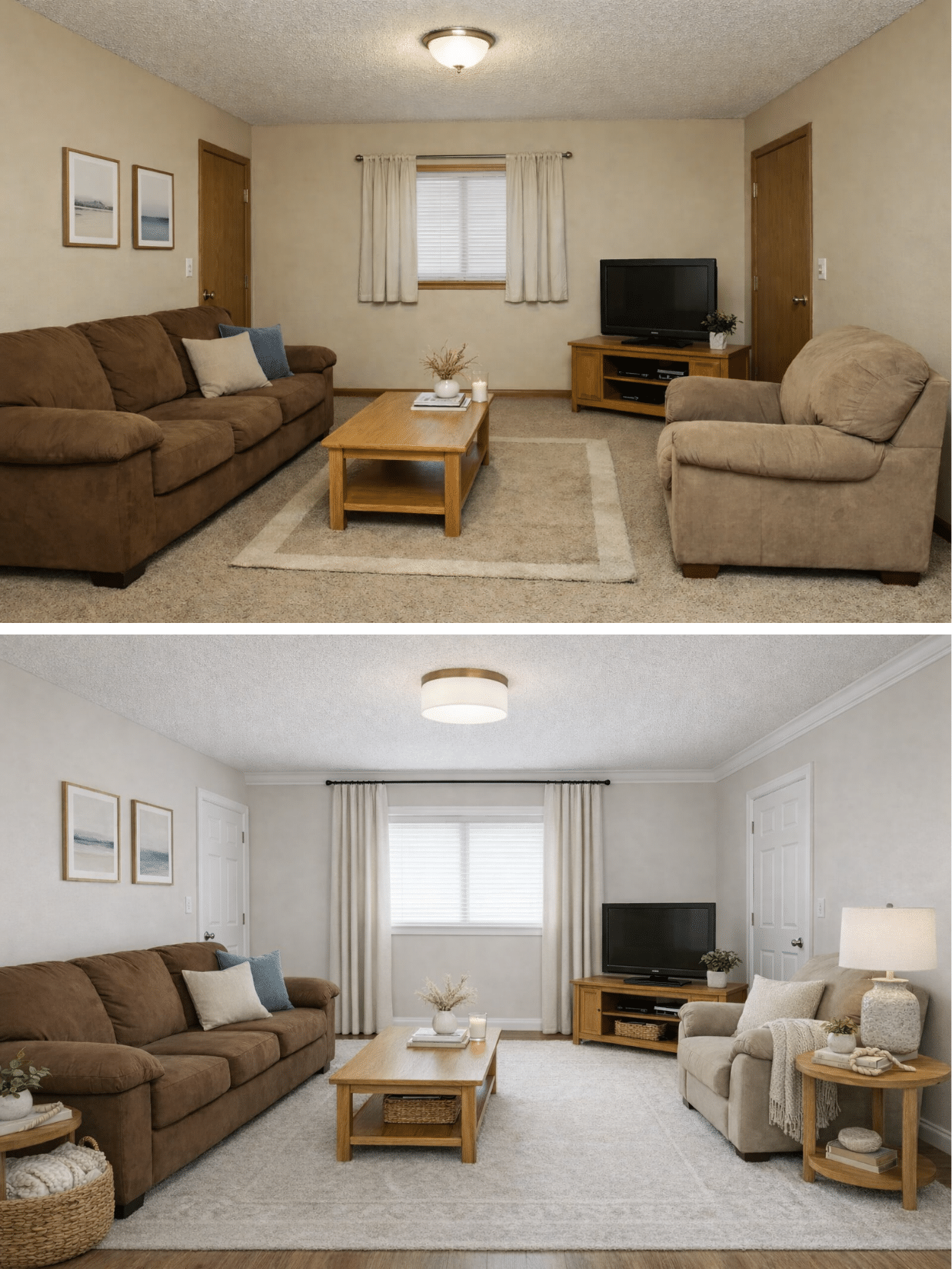
When you understand what your home is communicating visually, small, strategic changes can shift everything — how the space looks, how it feels, and how confident you feel making decisions.
And if you want guidance turning that diagnosis into a clear, step-by-step plan, that’s exactly what I teach inside Room Design Recipe. This program helps homeowners move from “something feels off” to “this finally makes sense.”
Remember, the most timeless homes aren’t necessarily the trendiest ones. They’re the ones designed with intention. Check out my post on timeless decorating to learn more.
Want Help Fixing What’s “Off”?
If this post helped you realize why your home feels dated, but you’re still unsure what to tackle first, you’re exactly where most homeowners get stuck.
The truth is, you don’t need more stuff. You need a strategy…a way to bring your vision to life with clarity and confidence.
That’s why I created my FREE guide: “7 Secrets of Successful Home Decorating”
Inside, you’ll discover:
- The key design ingredients that make any space feel polished
- How to fix the top mistakes that leave rooms looking “off”
- 25 additional bonus tips to elevate your space, without buying more stuff
👉 Get the free Secrets of Successful Home Decorating guide here
(and finally know what your home actually needs)





Very informative post. Lighting and paint choices truly impact the overall look of a space.
This is a useful guide for homeowners trying to refresh their interiors. Thanks for sharing!
Nice breakdown of common design mistakes that make homes look outdated. Very helpful read.