There’s something about the holidays that makes you suddenly notice every little thing in your house you’ve been meaning to fix or redecorate for the last six months. That awkward empty corner in your dining room. Your coffee table that has never looked quite right. The guest bedroom that just doesn’t feel as pulled together as you’d like.
And now you’ve got people coming over soon, and the pressure to make your home look better is building! Well, before you start panic-shopping at HomeGoods, I’ve got some good news. You don’t need to completely redecorate your house or spend a fortune to spruce up your home.
As an interior designer, I can tell you that some of the most impactful decorating changes often have very little to do with buying new furniture or expensive decor. Instead, it’s about understanding how the things in your home work together to create a visually beautiful space.
Here are 6 easy ways to spruce up your home and make it feel more beautiful, polished, and welcoming before the holidays. Some of these will take just a few minutes, and you can probably do most of them with things you already own!
Prefer to watch? In the video below, I’ll walk you through all six decorating tips and show you before-and-after examples of how these simple changes can transform a room.
1. Tighten Up Your Color Palette
One of the fastest ways to make your home look more pulled together is to create a cohesive color palette.
And that means you have to stop introducing a new color every time you buy something. I know, that cute pillow at HomeGoods was calling your name. But just because you love something doesn’t necessarily mean it belongs in your living room or bedroom.
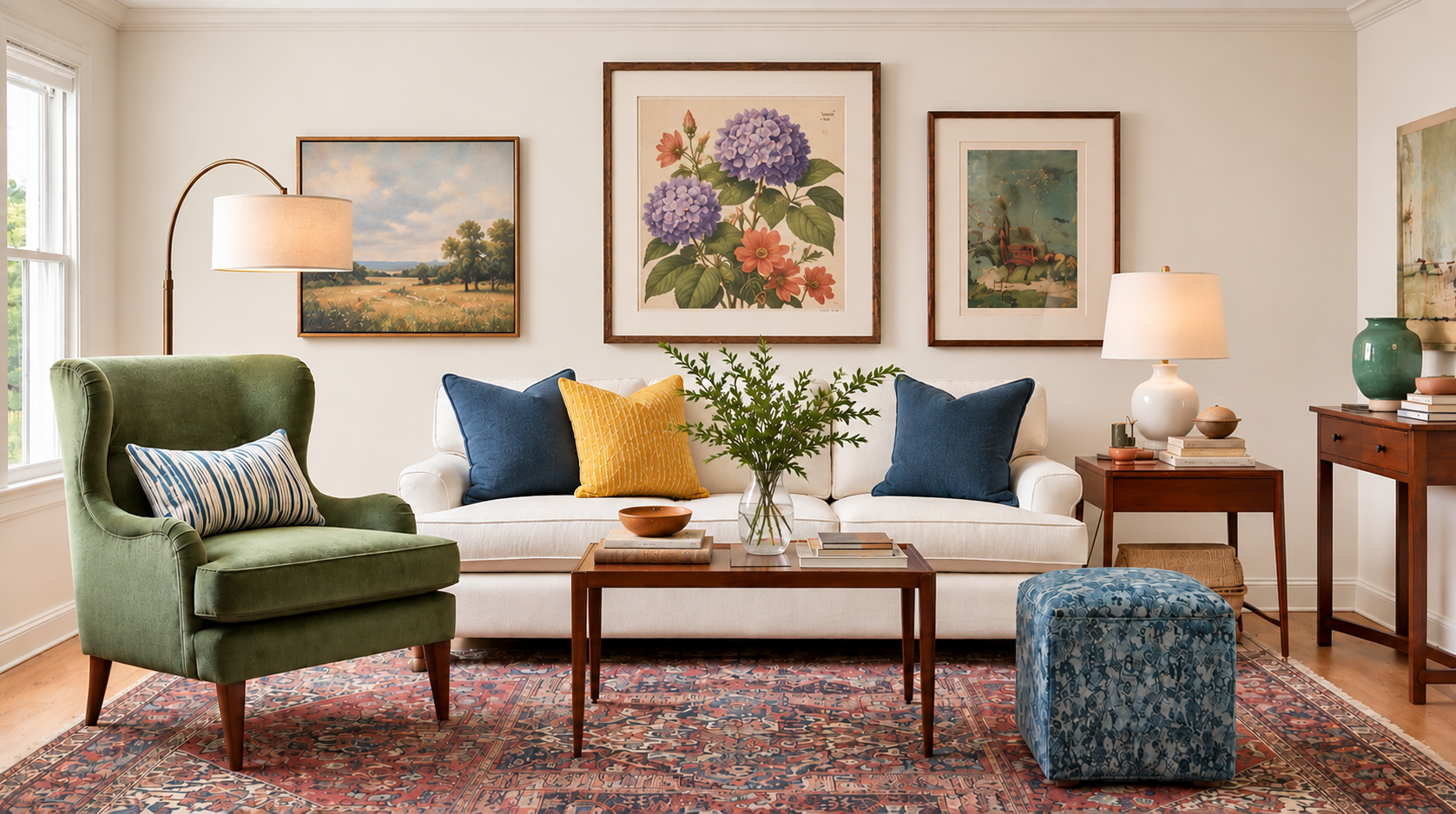
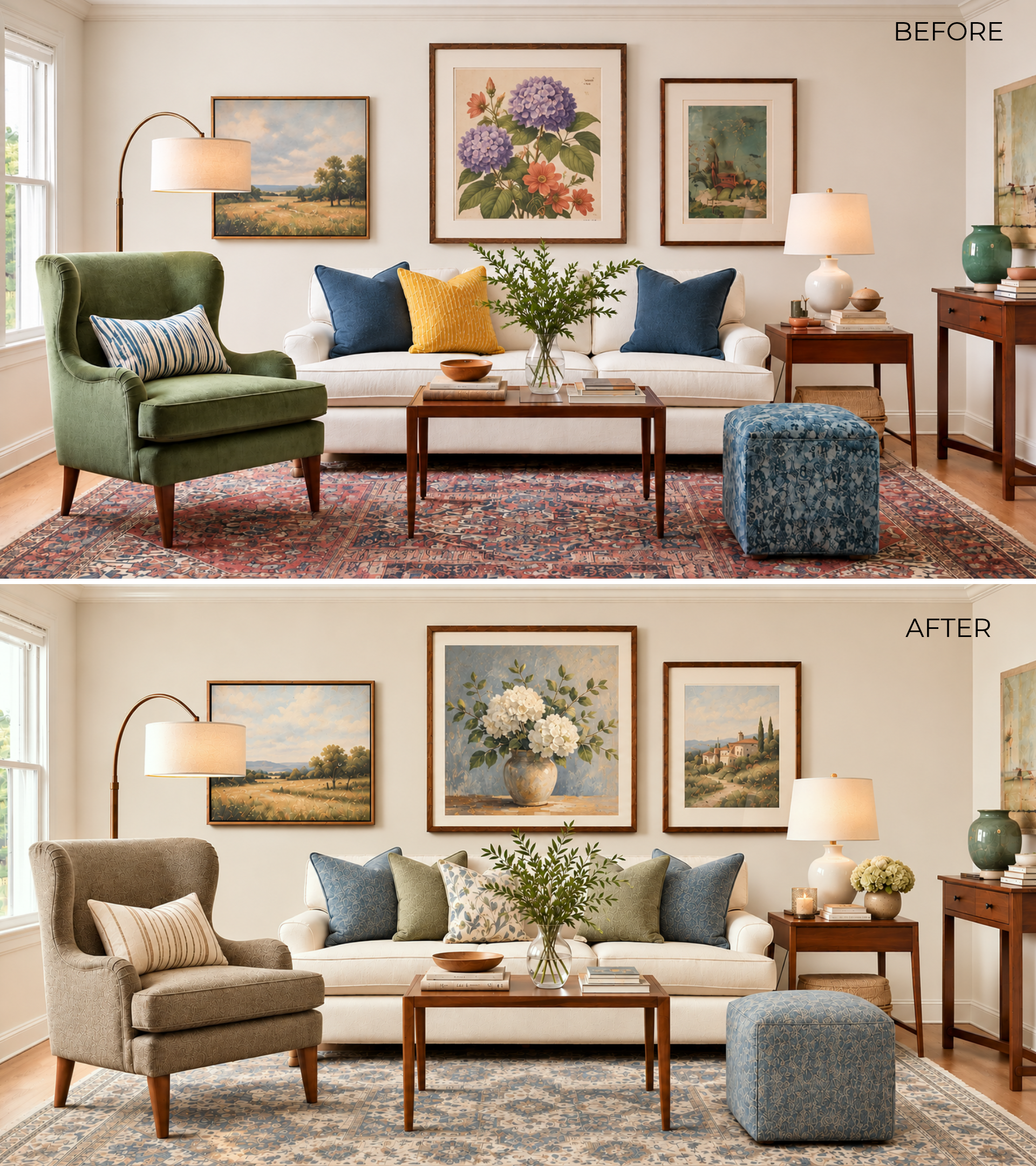
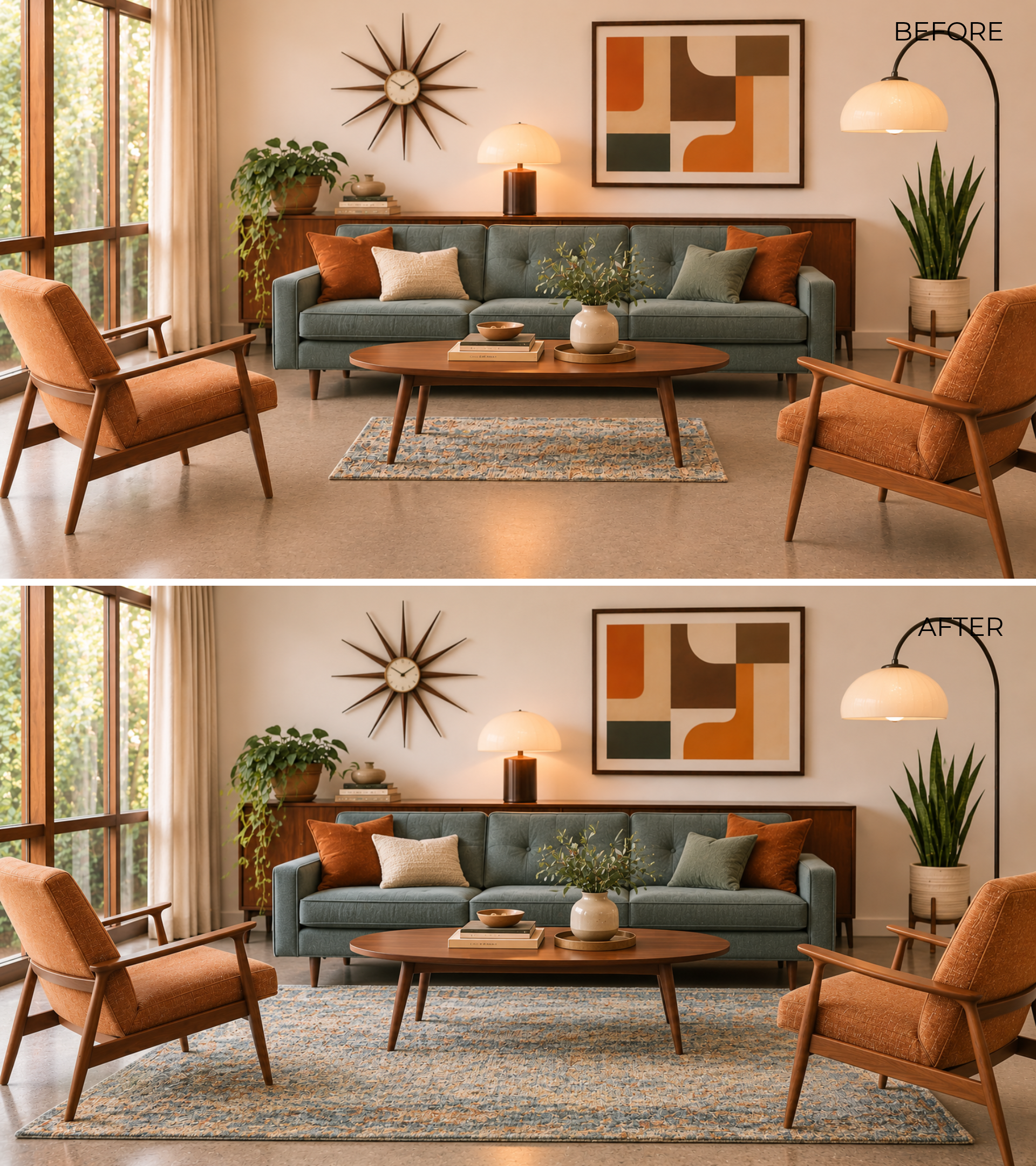
Here’s what I see happening in a lot of homes. You’ve got blue pillows, a green accent chair, a red rug, and artwork with a completely different set of colors in your living room. None of those things are necessarily bad on their own. But when there’s nothing connecting them, the room starts to feel like a collection of separate purchases rather than one cohesively decorated space.
Choose three or four main colors
Here is what to do instead.
Look around your room and identify three or four main colors you’d like to use. You don’t have to make this harder than it needs to be. You can pull those colors directly from something you already own, like an area rug, your throw pillows, or a favorite piece of artwork.
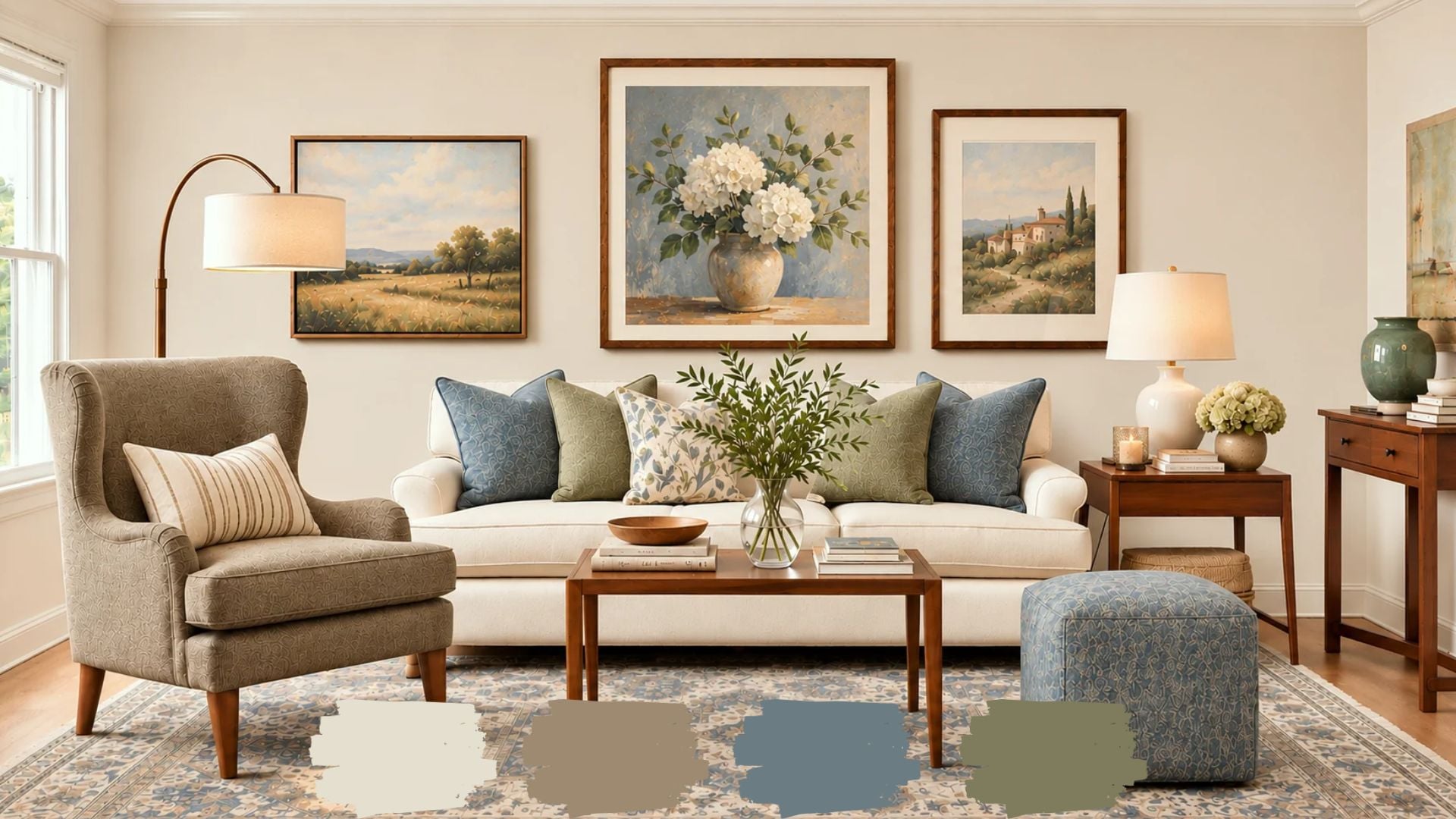
For example, your color palette might consist of cream, taupe, muted blue, and soft green, along with some warm wood tones. Now comes the important part…
Repeat those colors throughout the room
This is the part that really makes all the difference in a cohesive room.
- If you’ve got blue in your artwork, bring a little blue into your throw pillows or decorative accessories.
- If you’ve got green in your rug, repeat that color in a vase, throw blanket, or accent chair.
- If you’ve got warm wood furniture, try repeating a similar wood tone somewhere else in the room.
When colors show up more than once, your eye naturally moves around the room and your brain starts making connections between different objects. This design principle is called repetition, and it’s one of the keys to creating a cohesive home.
Take a look at the difference between a room with several unrelated accent colors and the same room with a more specific color palette. The furniture doesn’t need to change for the room to look dramatically more pulled together.
What about adding colorful holiday decorations?
I know some of you are about to bring out every red, green, and gold decoration you’ve collected since 1998. No problem!
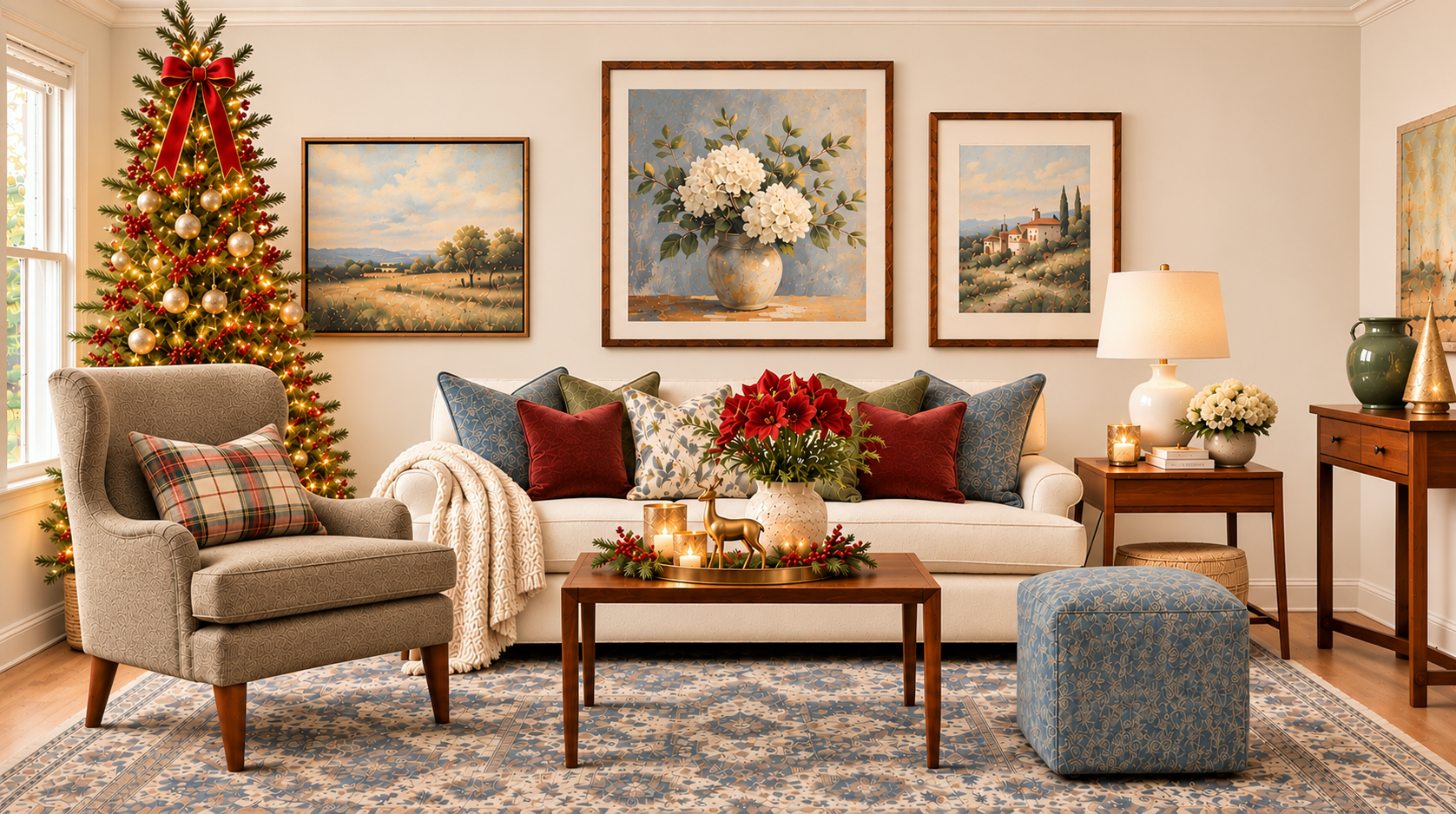
Your holiday decorations don’t have to match your everyday color palette perfectly. But when the room underneath has a cohesive color scheme, it’s so much easier to layer in seasonal decorations without everything feeling chaotic.
2. Replace Lots of Little Decor With Fewer, Larger Pieces
Let’s talk about all those little decorative accessories and picture frames scattered around your home. The tiny vases and bowls, the little candles, the small picture frames, the decorative figurine you bought at that cute boutique because it was on sale…and somehow, over the years, they’ve all multiplied.
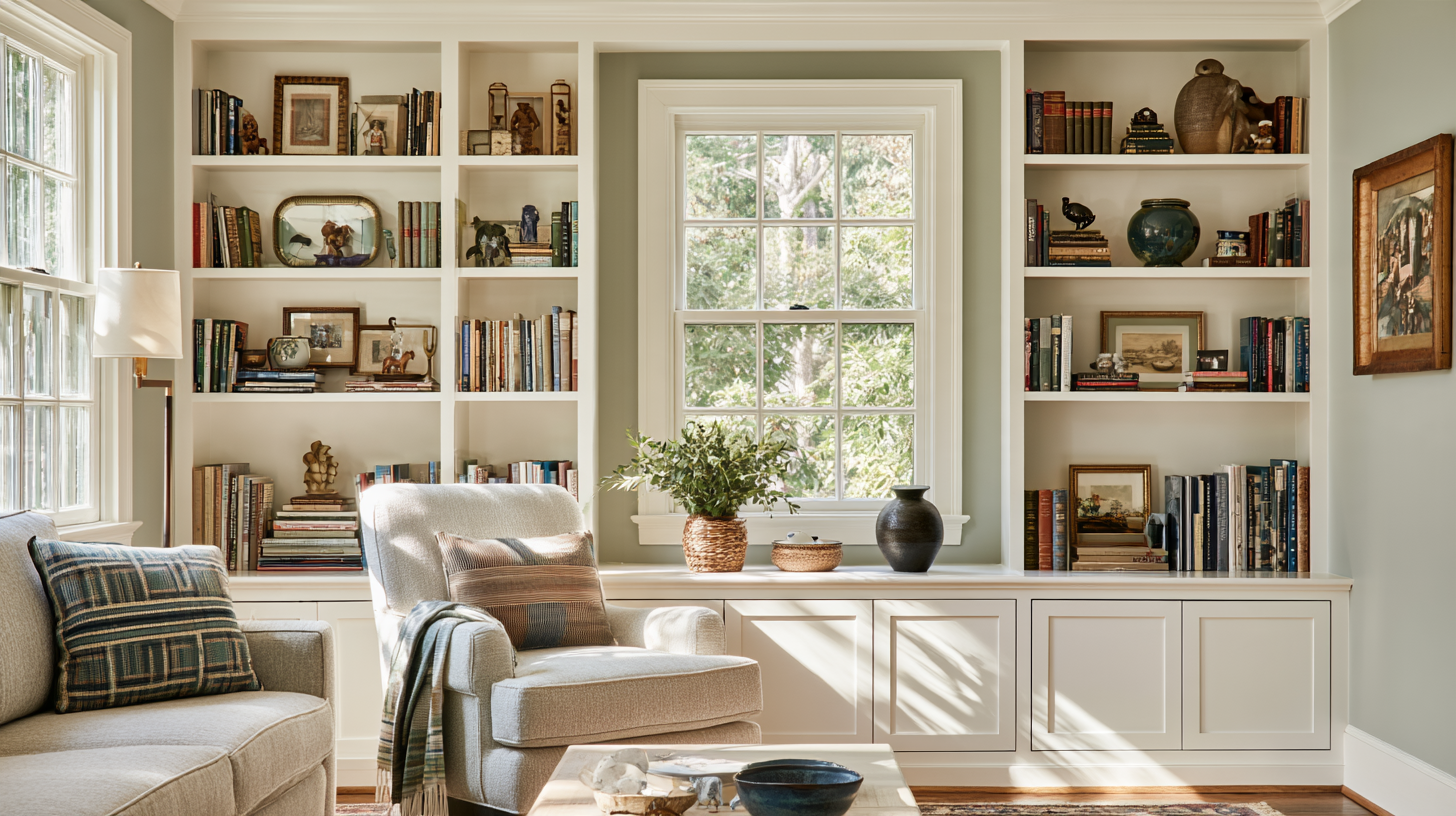
Even when everything is neatly arranged on a shelf or table top, having too many small objects scattered around can make a room feel cluttered.
Why? Because every individual object is competing for your attention, and your eyes don’t know where to look. This creates something designers refer to as visual clutter.
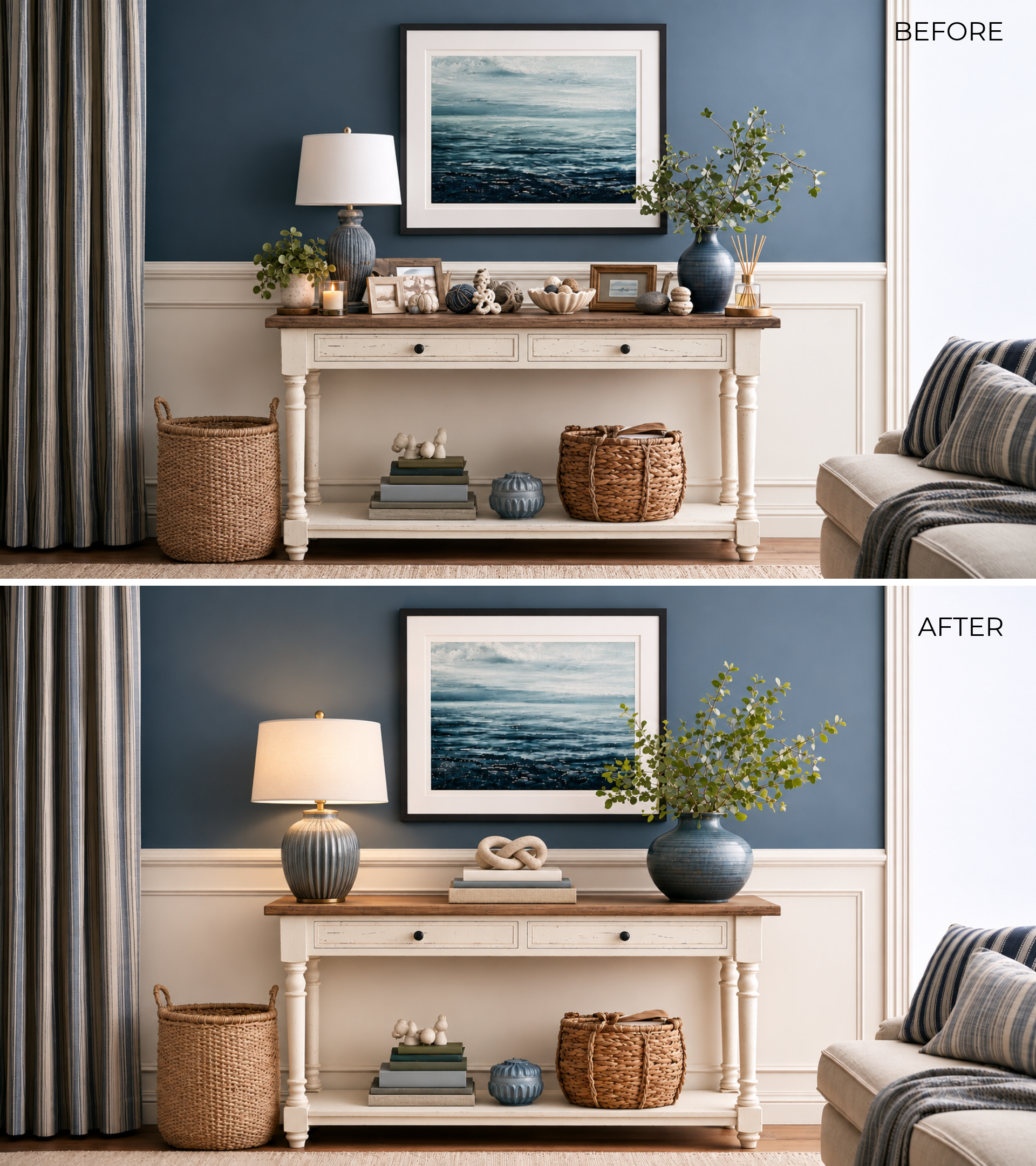
One of the easiest ways to make your home look more polished is to replace several small accessories with fewer, more substantial pieces. Instead of having ten little things on your console table, for example, try using three or four larger decorative elements, such as:
- A substantial vase filled with greenery or branches
- A stack of decorative books
- A beautiful bowl or sculptural object
- A table lamp
Using fewer, larger pieces gives your eyes fewer individual objects to process, making the entire arrangement feel calmer and more intentional.
What if you love your smaller decorative accessories?
I’m certainly not suggesting you throw away all of your small decorative items or family photos. Instead, try grouping some of them together. When you place several small accessories together on a decorative tray, it helps them visually read as one larger arrangement (rather than a scattering of unrelated pieces).
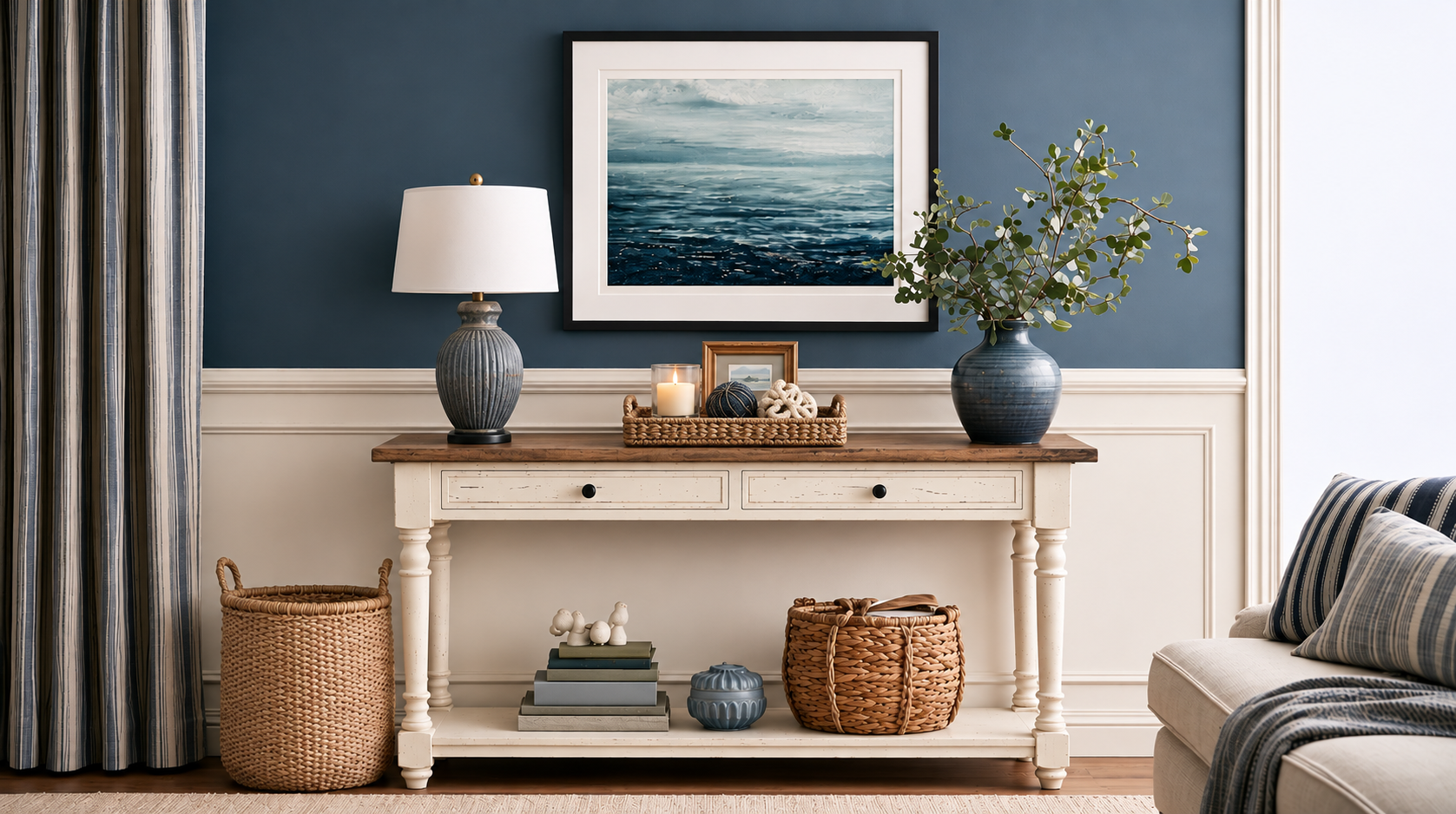
And remember, just because there’s an empty spot on a bookshelf or table doesn’t mean you have to fill it. Empty space, also known as negative space in interior design, gives your decorative items room to breathe and let’s you appreciate the things you have on display a little more.
Sometimes the best decorating decision is to leave something alone or unfilled.
3. Fix Anything That’s Too Small for the Space
One of the most common decorating mistakes I see homeowners make is choosing furniture, rugs, and art that are way too small for the space. And once you know what to look for, you won’t be able to unsee it!
Size and proportion play a huge role in how nice a room looks and feels. You might not consciously recognize that your rug or artwork is too small, but your brain senses that something isn’t quite right with the proportions, and the room will feel off.
Here are three areas I want you take a closer look at in your home.
Area rugs
If your living room rug looks like a little postage stamp floating in the middle of your furniture, it’s probably too small. An area rug should visually connect your furniture, not look like a placemat for your coffee table.
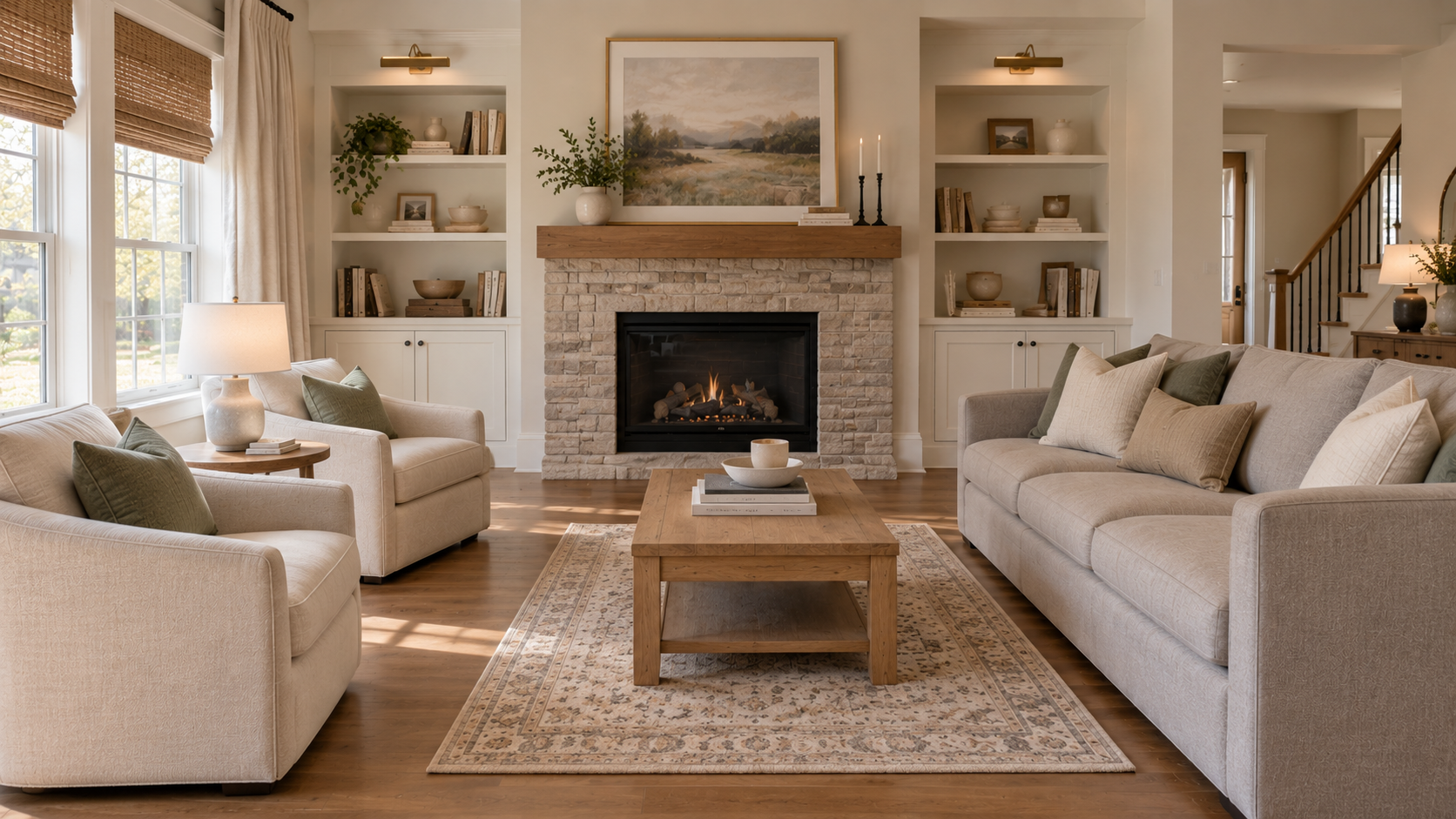
In most living rooms, I recommend buying a rug that’s large enough for at least the front legs of your main seating pieces to sit on it. That’s usually going to mean an 8′ x 10′ or 9′ x 12′ rug, rather than a 5′ x 8′ or 4′ x 6′.
Check out some of my favorite area rugs.
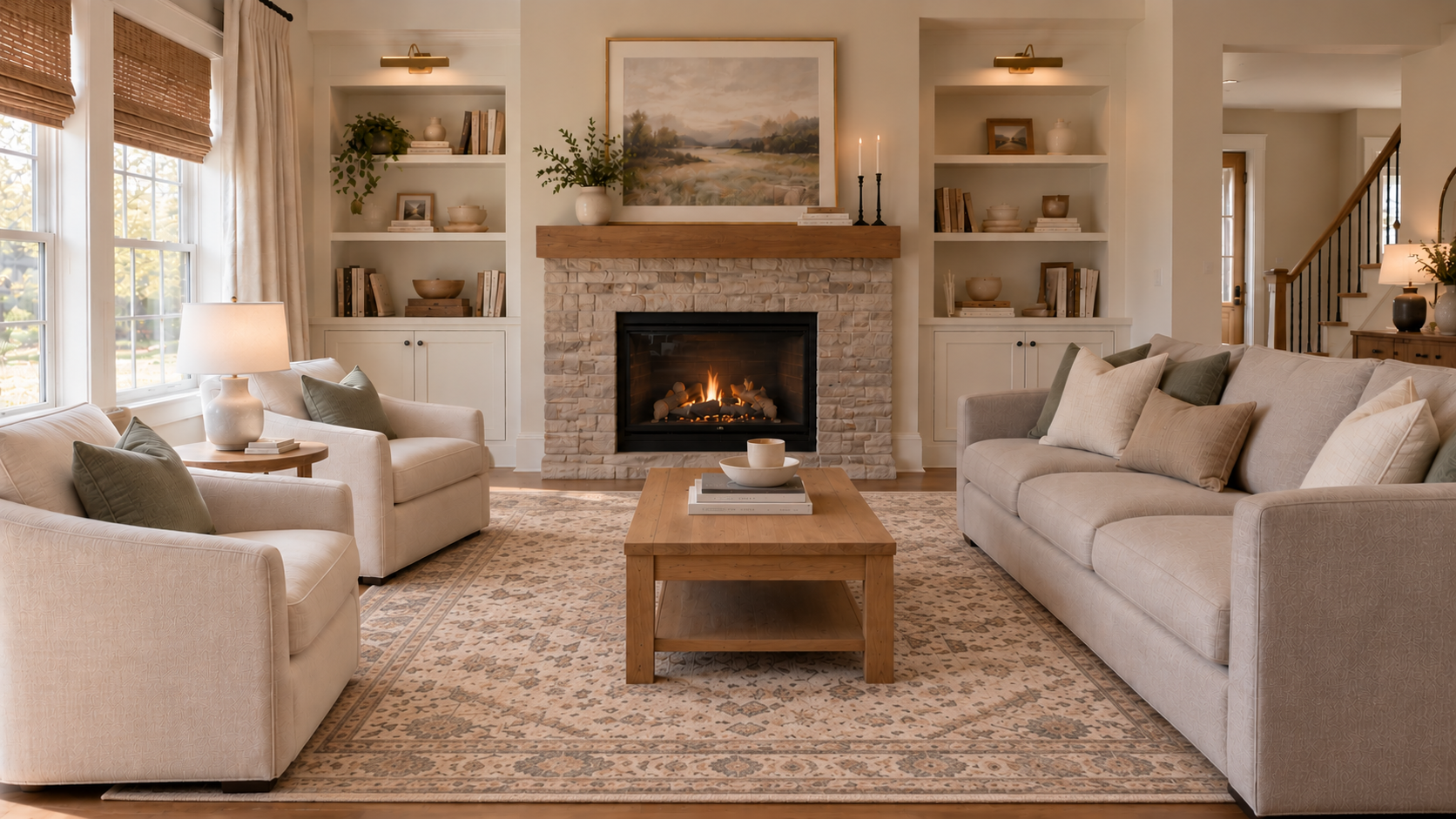
When your rug is the correct size to corral your seating arrangement together, the entire room will feel more pulled together and cohesive.
Coffee tables
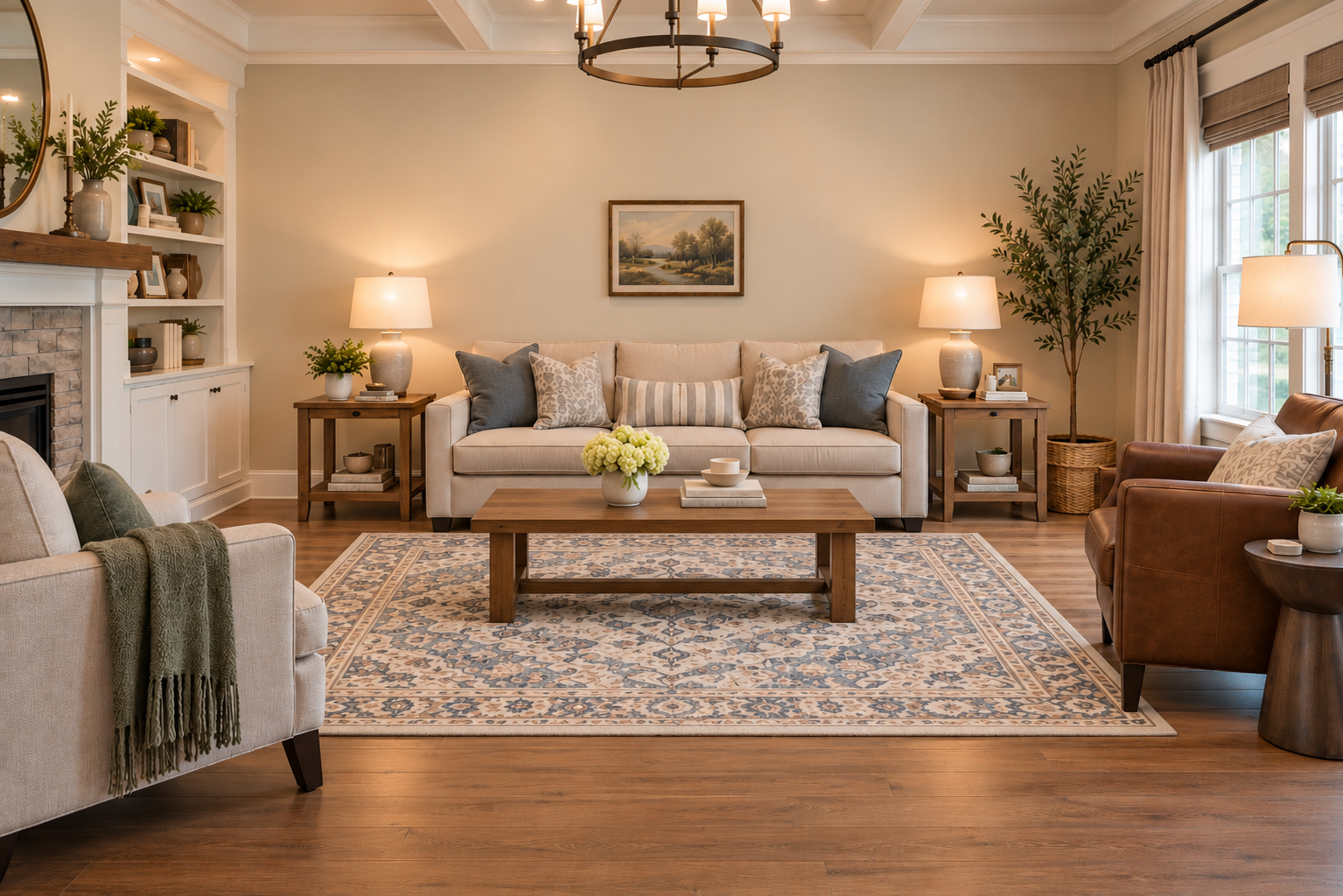
A tiny coffee table in front of a large sofa can make the entire seating arrangement feel out of balance.
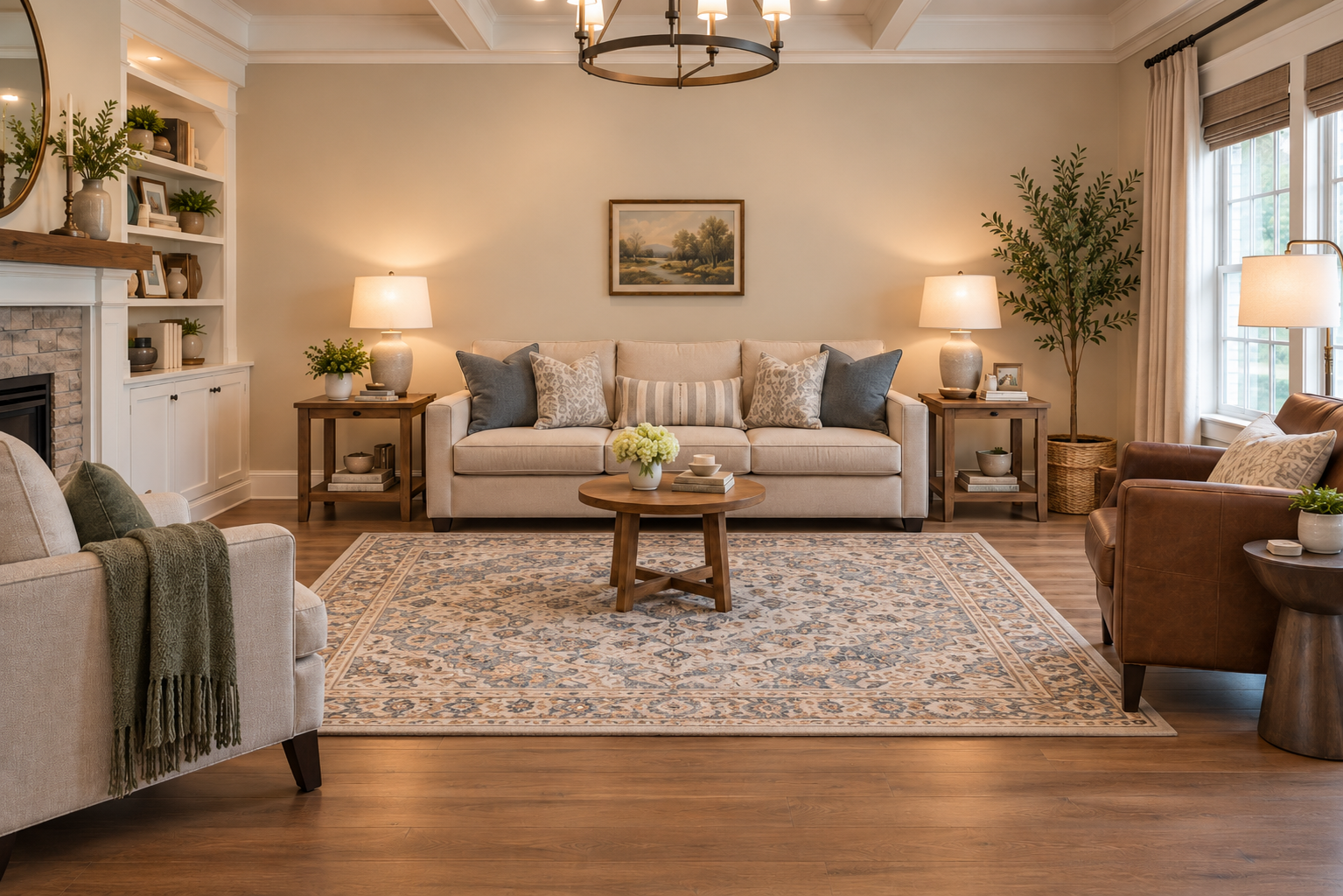
As a general rule of thumb, your coffee table should be approximately two-thirds the length of your sofa. For example, if you have a 90-inch sofa, a coffee table that’s around 60 inches long would be a good starting point. Of course, you’ll also need to consider the size of your room and seating arrangement, and be sure to leave enough space to comfortably move around the table.
Artwork
Artwork that’s too small is another common decorating mistake, especially above beds, sofas, and console tables.
A good rule of thumb is to choose artwork that’s about two-thirds to three-quarters the width of the furniture it hangs above. For example, if you have a 60-inch-wide console table, look for artwork that’s around 40 to 45 inches wide.
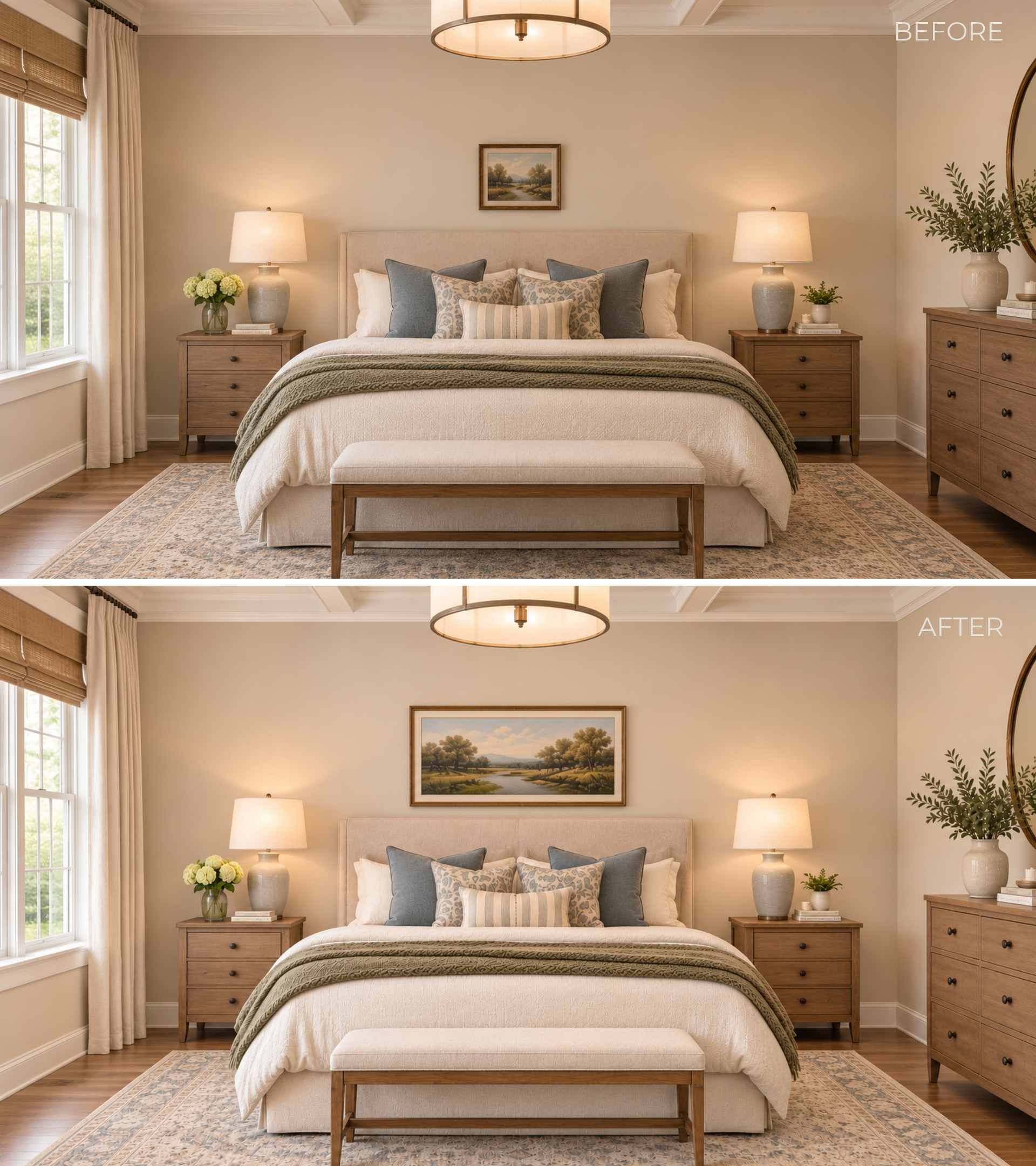
Check out my wall art size guide for more tips on choosing the right size art for your space.
And you don’t necessarily need just one large piece of art. A grouping of two or three smaller pieces can work beautifully, as long as the overall arrangement (including the spaces between the pieces) fills approximately the same width.
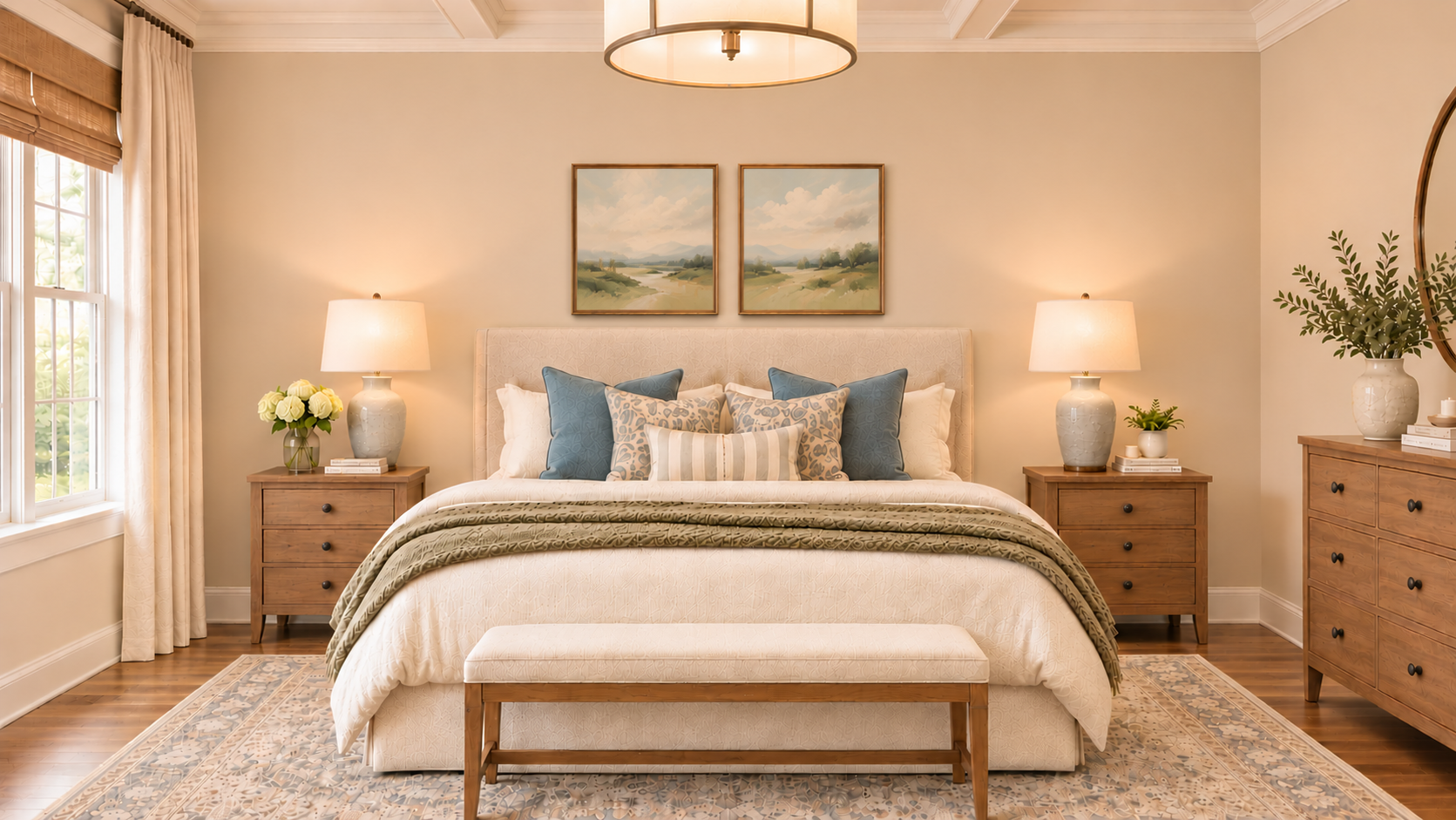
The goal isn’t to buy the biggest thing you can find. It’s to make sure the size of each piece makes sense in relation to what’s around it.
4. Make Your Lighting Consistent
One of my biggest decorating pet peeves is mismatched lightbulbs. It’s so easy to change, and it drives me nuts when I see it!
You’ve got one table lamp giving off a nice warm glow, your overhead lights are a neutral white, and the floor lamp on the other side of the room looks like it belongs in a dentist’s office. Not exactly the cozy atmosphere we’re going for!
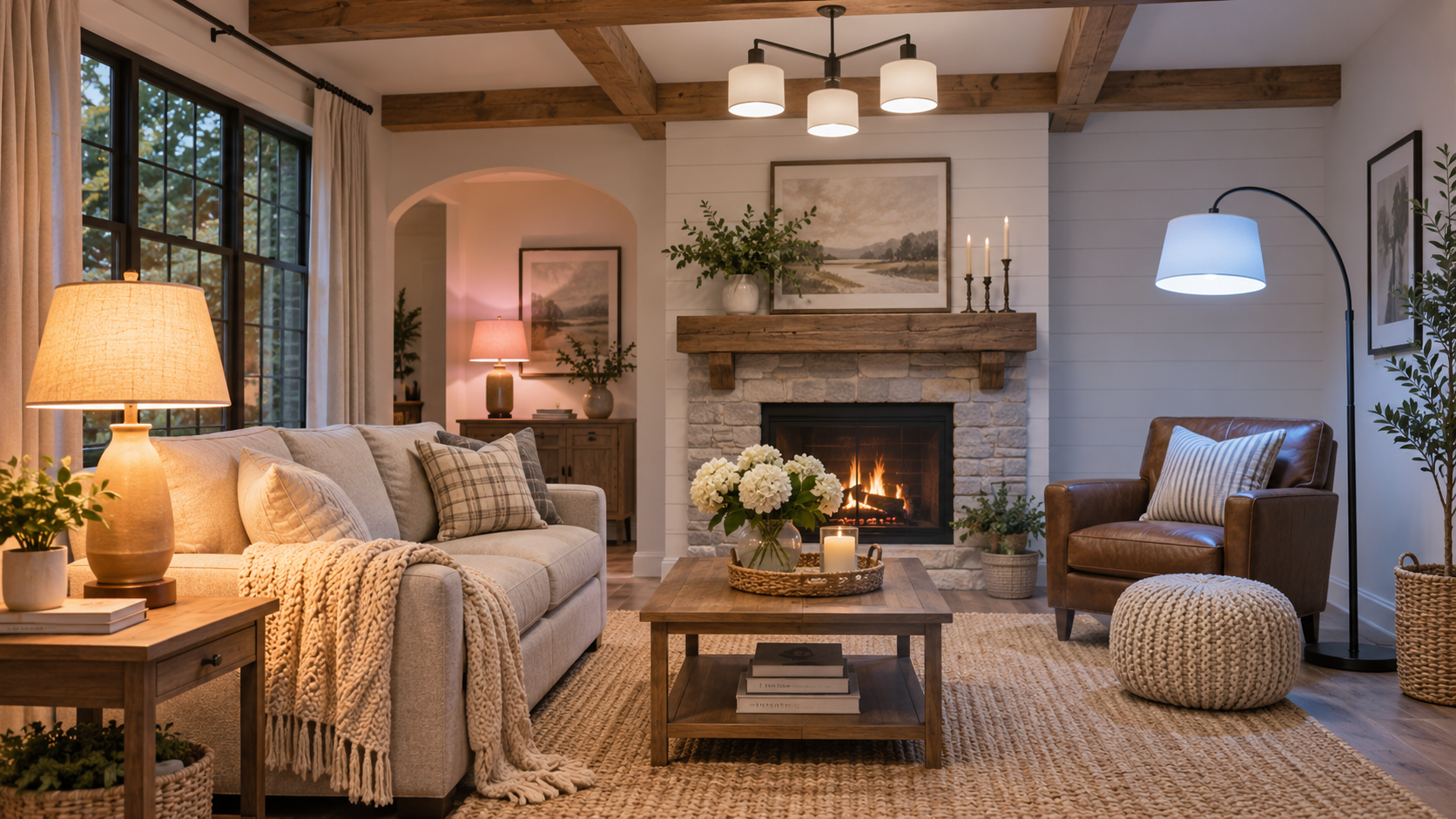
Now, I know that lightbulb shopping has gotten a little more complicated over the years, especially with all the different color temperatures available. But using a consistent color temperature in your rooms can make a huge difference in how your home looks and feels.
What color temperature should you use in your home?
Lightbulb color temperature is measured in Kelvin (K). The lower the number, the warmer and more yellow the light appears. Higher numbers produce a cooler, whiter or more bluish light. Here’s a quick comparison:
| Color Temperature | Appearance | Best For |
|---|---|---|
| 2700K | Soft, warm white | Cozy living rooms, bedrooms, and dining rooms |
| 3000K | Slightly whiter warm light | Living spaces, kitchens, and bathrooms |
| 4000K | Cooler, neutral-to-cool white | Utility spaces and some task lighting |
For most rooms in your home, I recommend using lightbulbs with a color temperature between 2700K and 3000K.
I love the cozy, inviting atmosphere that 2700K bulbs create, but some people prefer the slightly whiter appearance of 3000K bulbs. Either can work beautifully, and it’s really just personal preference. The important thing is to be consistent within the room.
When you mix noticeably different color temperatures, the lighting can feel uneven and disconnected. It can also change how your paint colors, furniture, and fabrics appear in different parts of the room. So, take a few minutes to check the lightbulbs in your table lamps, floor lamps, and overhead fixtures. If they’re noticeably different, swap them out for bulbs with matching color temperatures.
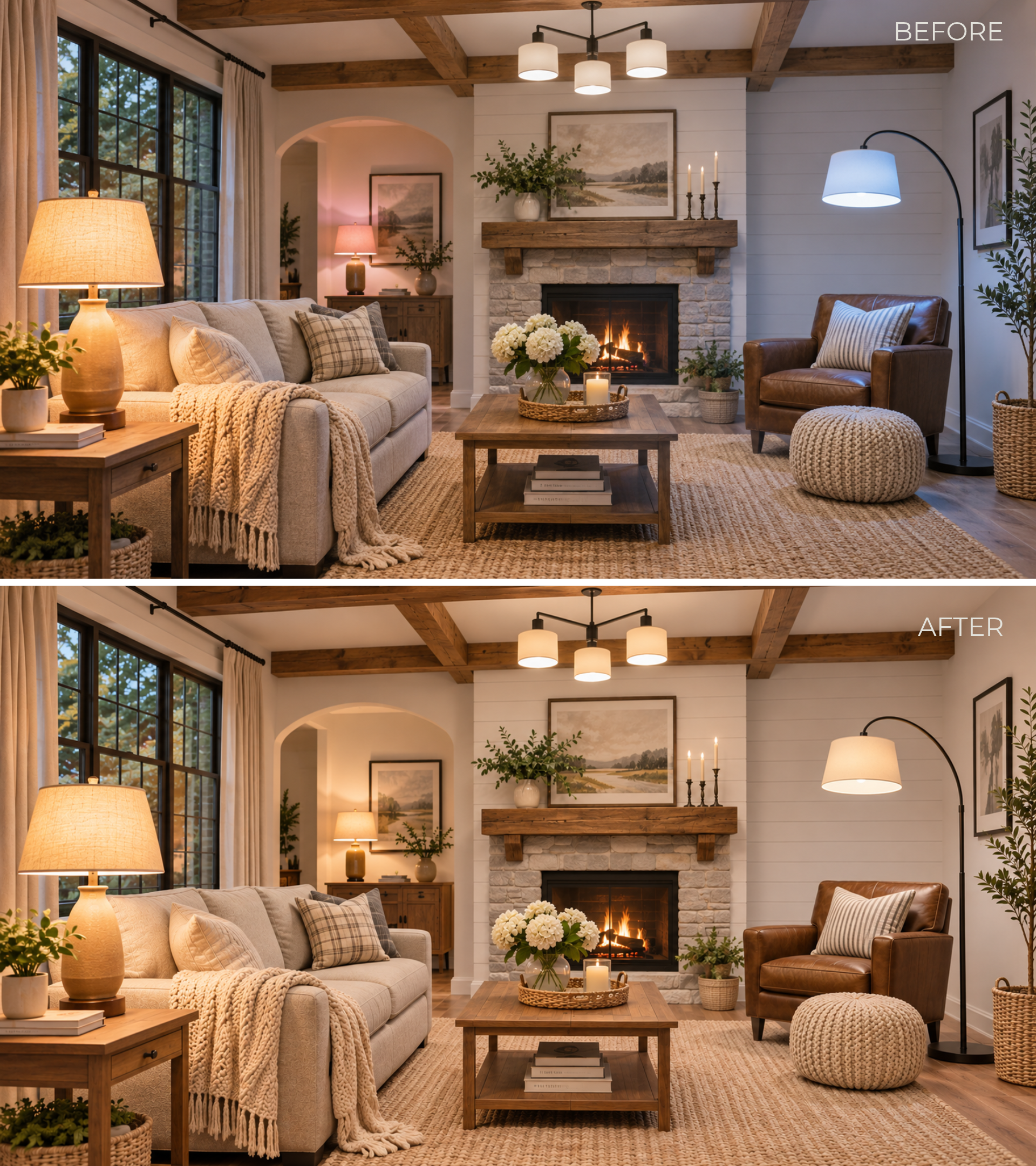
It’s a relatively inexpensive change that can make a surprisingly big difference, especially during the holidays when you’re spending more time indoors in the evenings.
5. Restyle Your Most Visible Surfaces
One of the quickest and most impactful ways to spruce up your home is to restyle the surfaces you see and use every day. I’m talking about your coffee table, entryway console, dining room sideboard, bookshelves, and kitchen and bathroom countertops.
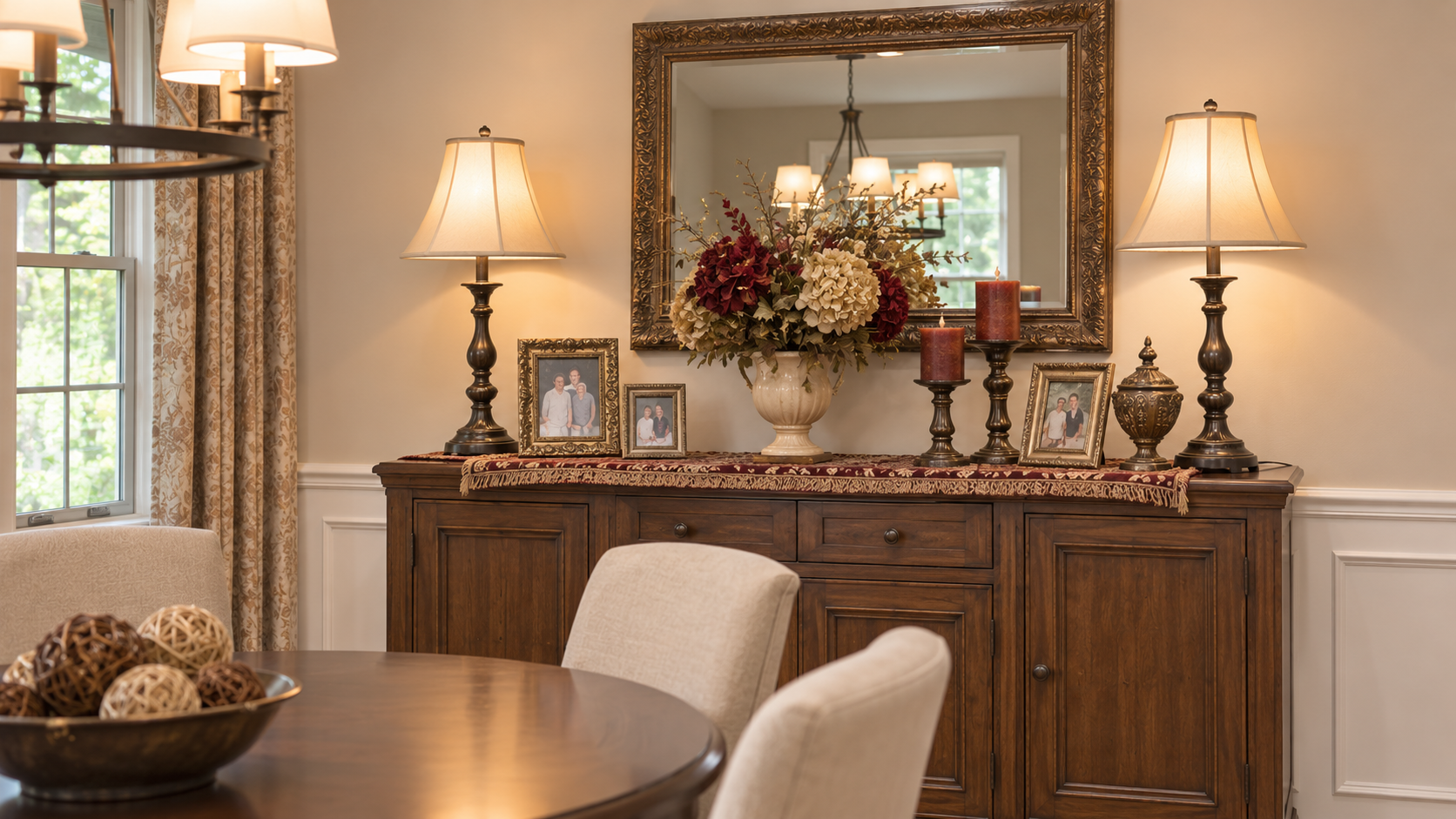
Basically, all those places where stuff tends to accumulate, or where you arranged some decor five or ten years ago and haven’t touched it since. Or, you can focus on the spaces your guests will see and notice when they visit. Rather than trying to rearrange everything that’s already there, I recommend starting with a clean slate.
My simple approach to styling surfaces
Step 1: Clear everything off.
It’s so much easier to see the possibilities when you’re not working around an existing arrangement.
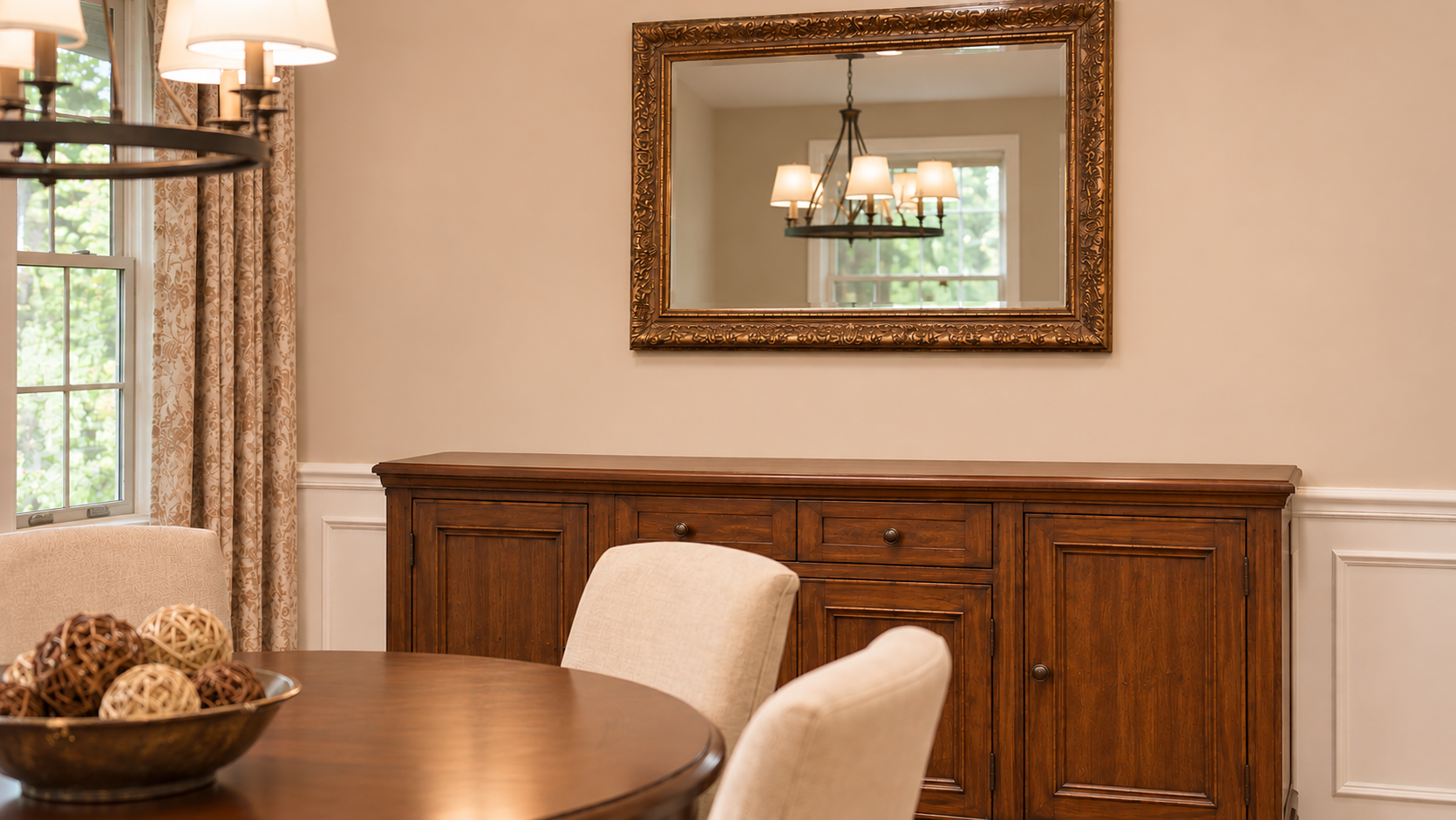
Step 2: Add a piece with some height.
This might be a table lamp, a tall vase with greenery, or a sculptural decorative object.
Step 3: Introduce some medium-height and lower pieces.
Try a stack of books, a decorative bowl, a candle, or a small sculpture.
Step 4: Vary your shapes and textures.
If you’ve got rectangular books and a square tray, try introducing a round bowl or an organically shaped vase. Mixing materials like wood, ceramic, glass, and woven fibers can also make an arrangement more interesting.
Step 5: Step back and evaluate.
Does the arrangement feel balanced? Is there enough empty space? Can you still comfortably use the surface for its intended purpose?
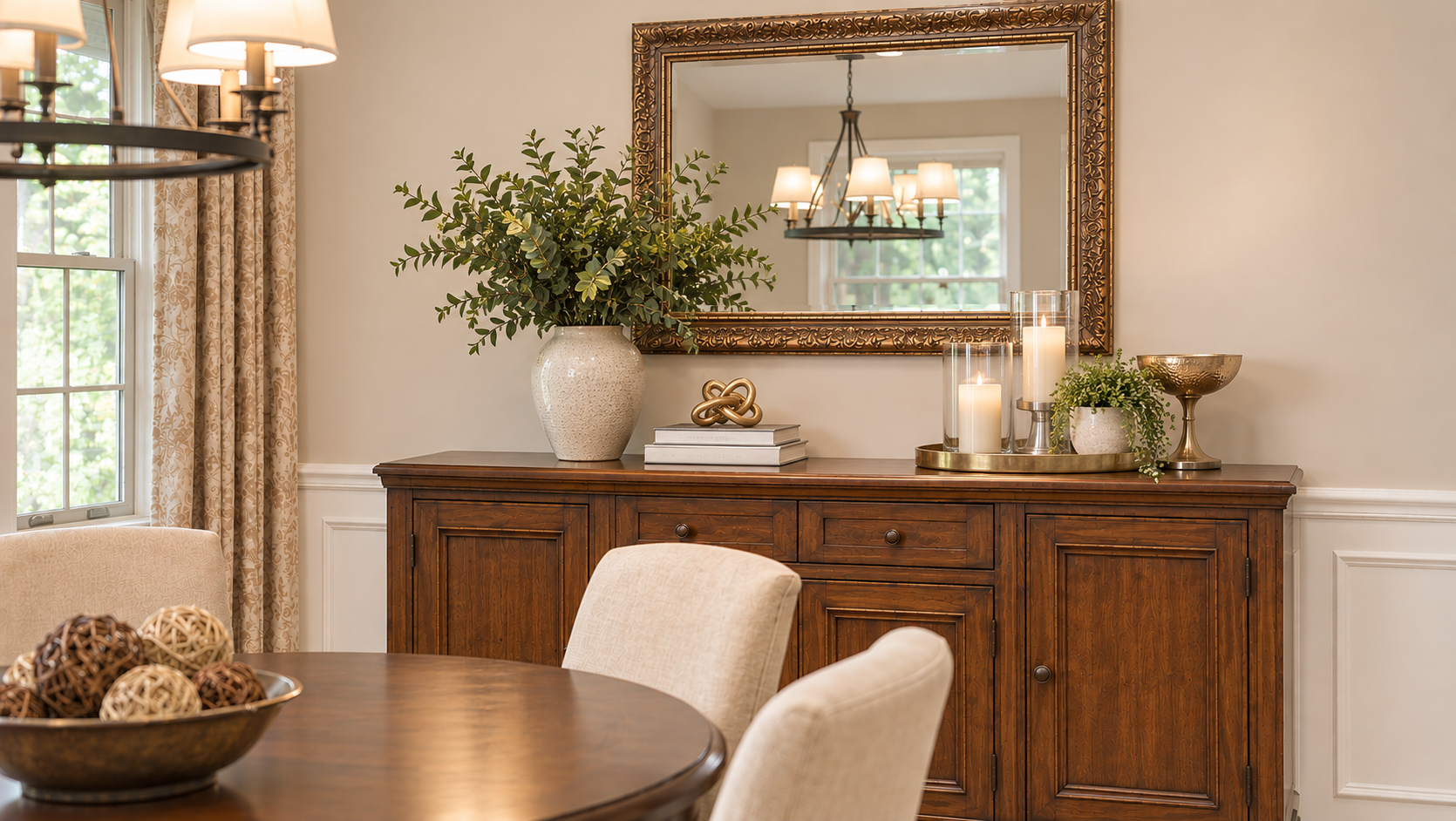
Varying the heights of your accessories creates movement for your eyes. Instead of everything sitting at the same level, your eye naturally travels up and down through the arrangement, making it more visually interesting.
Shop your own home before buying anything new
That vase that’s been sitting on your bedroom dresser for the last three years might look amazing on your entryway table. A decorative bowl from your dining room might be exactly what your coffee table needs.
Sometimes, simply moving things from one room to another can give your home a fresh, updated look without spending a dime.
And when you start bringing out your holiday decorations, use the same approach. Rather than putting a little Christmas decoration on every available surface, try creating a few larger, styled arrangements. They’ll make much more of an impact, and your home will feel festive without feeling cluttered.
Not sure what kind of decor to use in your home? Grab a copy of my FREE Home Decor Essentials Guide. It will show you the 10 must-have decor pieces that every home needs to look professionally styled.

6. Add Plants and Florals
When a room feels a little bare, cold, or unfinished, one of the first things I look for is greenery. Plants and florals are such an important ingredient in interior design because they do so much more than add a pop of color.
Think about all the things in your room. You’ve got straight walls, rectangular windows, square tables, and furniture with lots of hard edges. Plants and floral introduce natural, organic shapes that help soften all those straight lines. They also add texture, color, and a sense of life to a space.
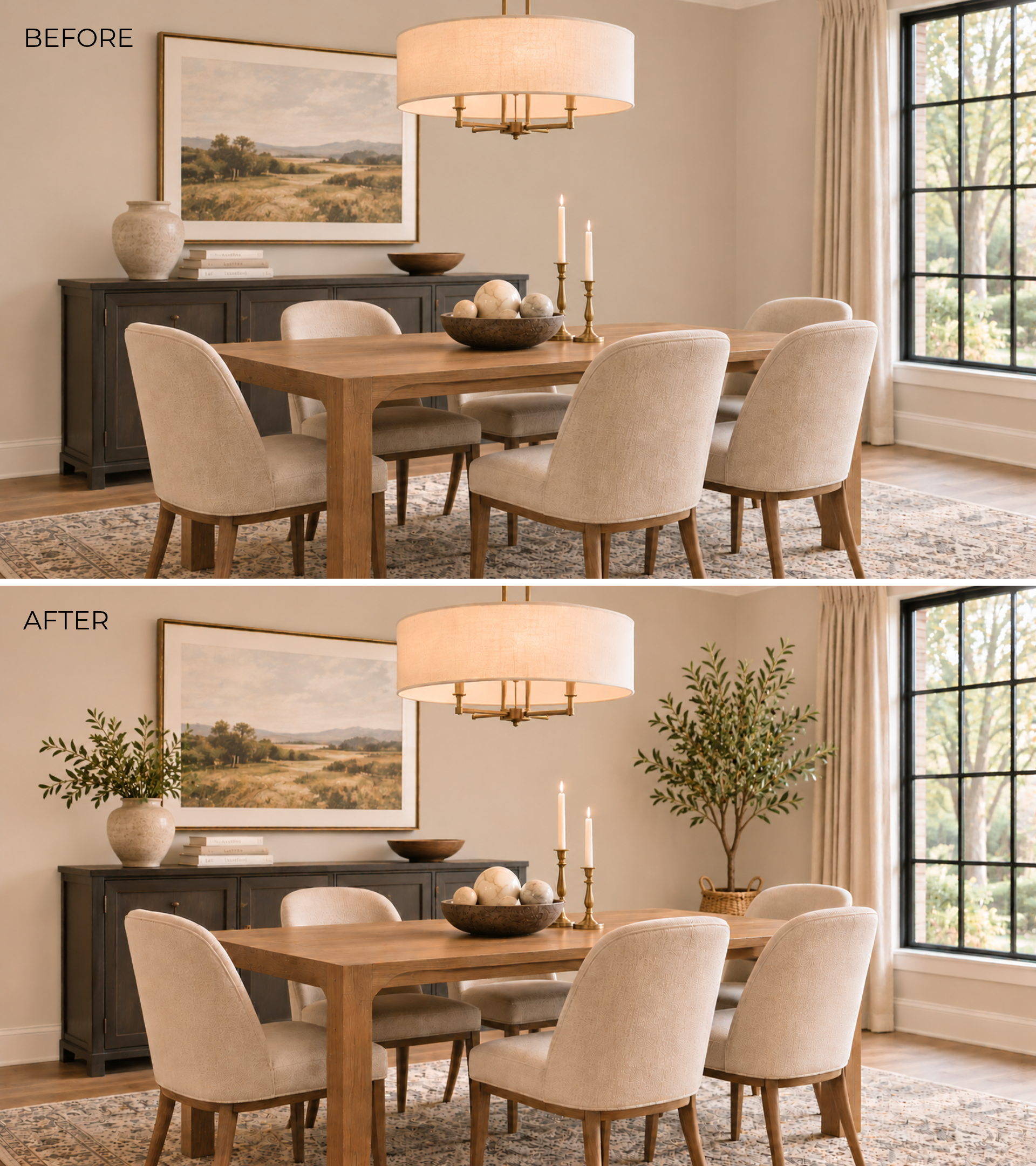
This dining room is missing any greenery, so it feels a little bare and lifeless. A large floor plant in the empty corner can make the room feel much more cozy and complete.
How many plants should you have in a room?
Depending on the size of the room, I generally recommend having two or three touches of greenery or florals and using different sizes.
For example:
- A larger floor plant or tree in an empty corner of the room
- A smaller potted plant on a bookshelf or side table
- A vase filled with branches or florals on your coffee table or dining room rable
By distributing greenery throughout the room, you’re also creating a sense of repetition, which helps visually connect different areas of the space.
And before you tell me you can’t keep real plants alive, I get it. I kill plants, too! Faux plants are absolutely fine, and there are some really convincing options available these days.
Bring in some seasonal greenery
The holidays are the perfect time to incorporate more natural elements into your home, and many people notice how much cozier their home looks with all of the added greenery.
Pine branches, cedar, eucalyptus, or a simple arrangement of evergreen clippings in a vase can make your home feel festive without adding a lot of extra decorative accessories. Try a vase of evergreen branches on your entryway table, a garland on your fireplace mantel, or a bowl filled with pinecones on your coffee table. These natural elements will add a ton of warmth and texture to your existing decor, and help enhance your home for the holidays.
How to Spruce Up Your Home on a Budget
Sprucing up your home doesn’t require a big decorating budget. Start with these simple changes, using what you already own whenever possible.
- Remove decorative accessories that don’t work with your existing color palette.
- Reduce visual clutter by grouping smaller items and removing unnecessary decor.
- Look for artwork, rugs, or furniture that might be too small for the space.
- Check that your lightbulbs have consistent color temperatures.
- Clear and restyle your most visible surfaces.
- Add a few touches of greenery or seasonal branches.
You don’t need to tackle all six of these decorating tips at once, especially if you’ve got holiday guests arriving in a few days, or you’re working with a tight budget. I’d recommend focusing on the rooms your guests will see first or spend the most time in, like your entryway, living room, dining room, and guest bathroom.
Start with the things you can change using what you already own. Make a note of any larger items you’d like to replace eventually, but don’t feel pressured to do it all right now.
What If Your Home Still Doesn’t Look Quite Right?
Sprucing up your home doesn’t have to involve buying new furniture, repainting your walls, or spending an entire weekend decorating.
A beautiful home isn’t necessarily about having the nicest furniture or the most expensive accessories. It’s about understanding how things work together to create a beautifully designed room. Color repetition, size and proportion, lighting, balance, texture — these are the design principles that make a room feel polished, cohesive, and finished.
And if you’ve been buying decor and moving things around but your room still doesn’t look the way you want or feels unfinished, there’s probably a reason. You just need to figure out what it is, so you can make the right changes for your room.
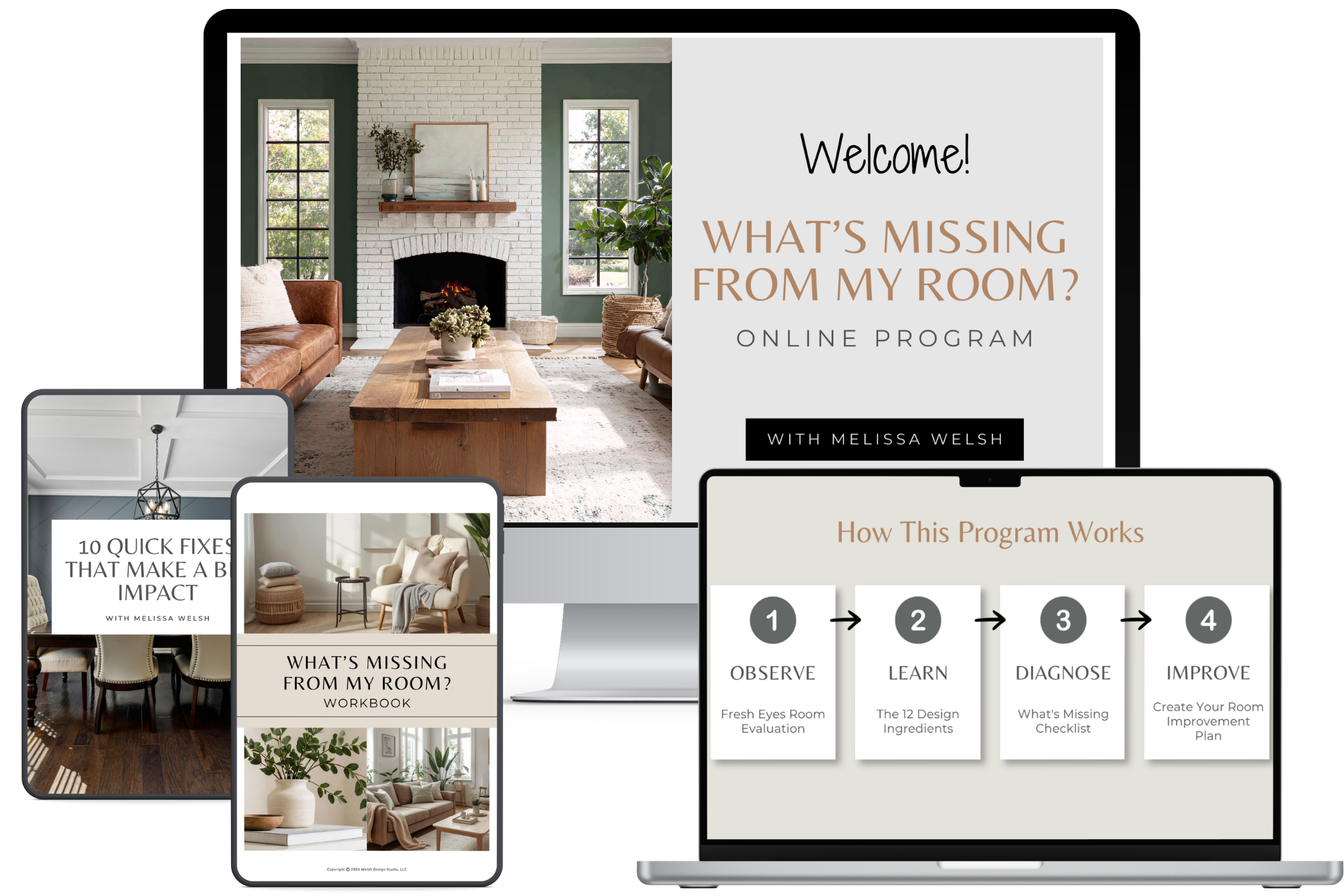
That’s exactly why I created my program, What’s Missing From My Room?
I’ll give you my exclusive checklist and teach you how to evaluate your room the way an interior designer would, using the 12 essential design ingredients that beautiful, well-decorated rooms have in common.
You’ll be able to identify what’s already working in your room, figure out what’s missing, and create a plan so you know exactly what to focus on next. No more guessing, buying random decorative accessories, or wondering why your room doesn’t feel finished.
The best part about understanding these decorating principles is that they’ll help you create a home you love not just for the holidays, but all year long.
Now I’m curious…which of these six decorating tips does your home need the most? Let me know in the comments below!